Author: Mama Kim

  • Oi Muchim (Korean Spicy Cucumber Salad) Recipe

    Oi Muchim (Korean Spicy Cucumber Salad) Recipe

    What is oi muchim

    Oi muchim is a Korean cucumber banchan that appears on nearly every Korean table, from casual home meals to restaurant spreads. The name tells you what it is: “oi” means cucumber, “muchim” means seasoned or mixed. You’ll find it alongside kimchi, namul, and other small side dishes meant to balance the meal.

    This isn’t a creamy cucumber salad or a pickled version. It’s crisp cucumbers tossed with gochugaru, garlic, sesame oil, and rice vinegar. The cucumbers stay crunchy. The seasoning clings to every slice. The knife cut matters as much as what you toss them with. Thin diagonal slices create more surface area, which means more seasoning in every bite and a better texture against your teeth.

    You can make oi muchim in fifteen minutes, but only if you understand the steps. Skip the salting or cut the cucumbers wrong, and you’ll end up with a watery, bland bowl that tastes like an afterthought.

    The right cucumber makes the difference

    Korean cucumbers are short, thin, and have almost no seeds. Persian cucumbers are the closest substitute you’ll find in most grocery stores. Both have thin skin you don’t need to peel, crisp flesh, and very little water content compared to other varieties.

    English cucumbers will make this salad watery and limp. The same goes for standard slicing cucumbers. They hold too much water, and even salting won’t pull out enough to keep the salad from turning into a soggy mess within an hour.

    Look for cucumbers that are firm when you press them, no longer than six inches, and about an inch in diameter. The skin should be smooth and dark green. If they feel soft or have wrinkled ends, they’re old and won’t stay crisp no matter what you do.

    If you can only find larger Persian cucumbers, that’s fine. Just use fewer of them. Two large Persian cucumbers equal three small Korean ones.

    Ingredients

    This recipe serves 2 to 4 people as a banchan. Double it if you’re serving a larger group or want leftovers.

    Allergen note: Contains sesame.

    For the cucumbers

    • 2 to 3 small Korean cucumbers or Persian cucumbers (about 300g total)
    • 1 tsp salt

    For the seasoning

    • 1 to 2 tbsp gochugaru (Korean chili flakes)
    • 2 garlic cloves, minced
    • 1 tbsp sesame oil
    • 1 tbsp rice vinegar
    • 1 tsp sesame seeds
    • 1 green onion, sliced thin
    • ½ tsp sugar (optional)

    The sugar is there to balance the vinegar and garlic, not to make the salad sweet. You can leave it out if you prefer a sharper flavor.

    How to cut the cucumbers

    Cut each cucumber in half lengthwise. Lay each half flat side down on your cutting board. Slice on the diagonal into thin pieces, about 3 to 4mm thick. You want them thin enough to be tender but thick enough to stay crisp.

    The diagonal cut is not decorative. It creates more surface area than straight cuts, which means the seasoning coats better and the texture is more interesting. When you bite into a diagonal slice, your teeth meet less resistance. Straight-cut rounds feel blunt and clumsy in comparison.

    If your slices are uneven, the thin ones will go limp while the thick ones stay underseasoned. Try to keep them consistent. It takes an extra thirty seconds and makes the whole dish better.

    Why you salt the cucumbers first

    Salt draws water out of the cucumbers through osmosis. This step is not optional. If you skip it, the cucumbers will release water after you add the seasoning, and you’ll end up with a diluted, soupy salad that tastes flat.

    Toss the sliced cucumbers with one teaspoon of salt in a bowl. Let them sit for ten to fifteen minutes. You’ll see water pool at the bottom. Take a handful of cucumbers and squeeze them over the sink. They should feel drier and slightly more flexible, but still firm.

    Pat them with a clean kitchen towel if they still feel wet. You want them damp, not dripping. The cucumbers will taste lightly seasoned from the salt, which is exactly right. Don’t rinse them or you’ll wash away that base layer of flavor.
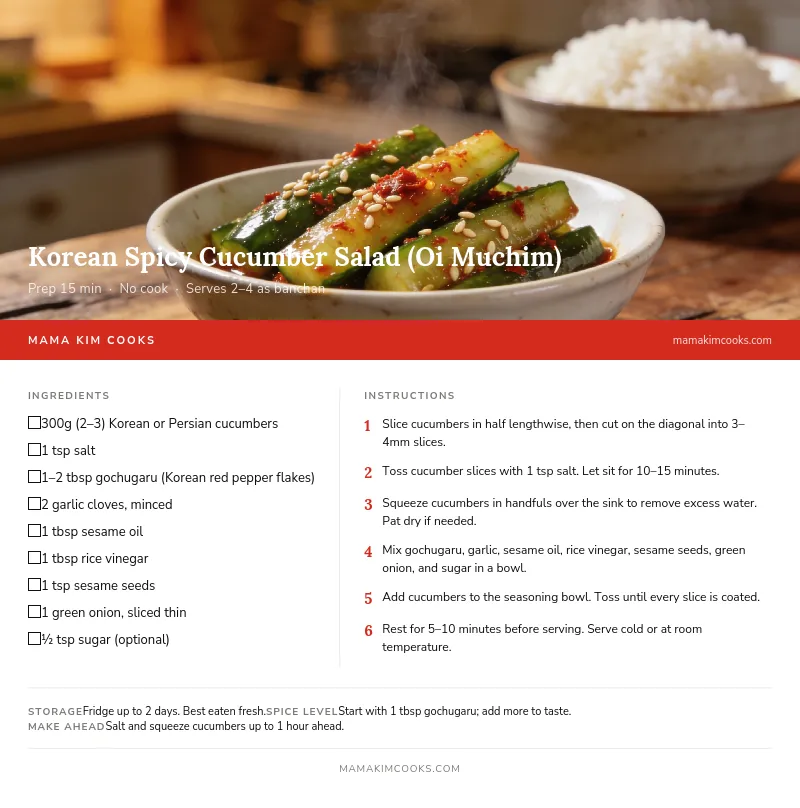
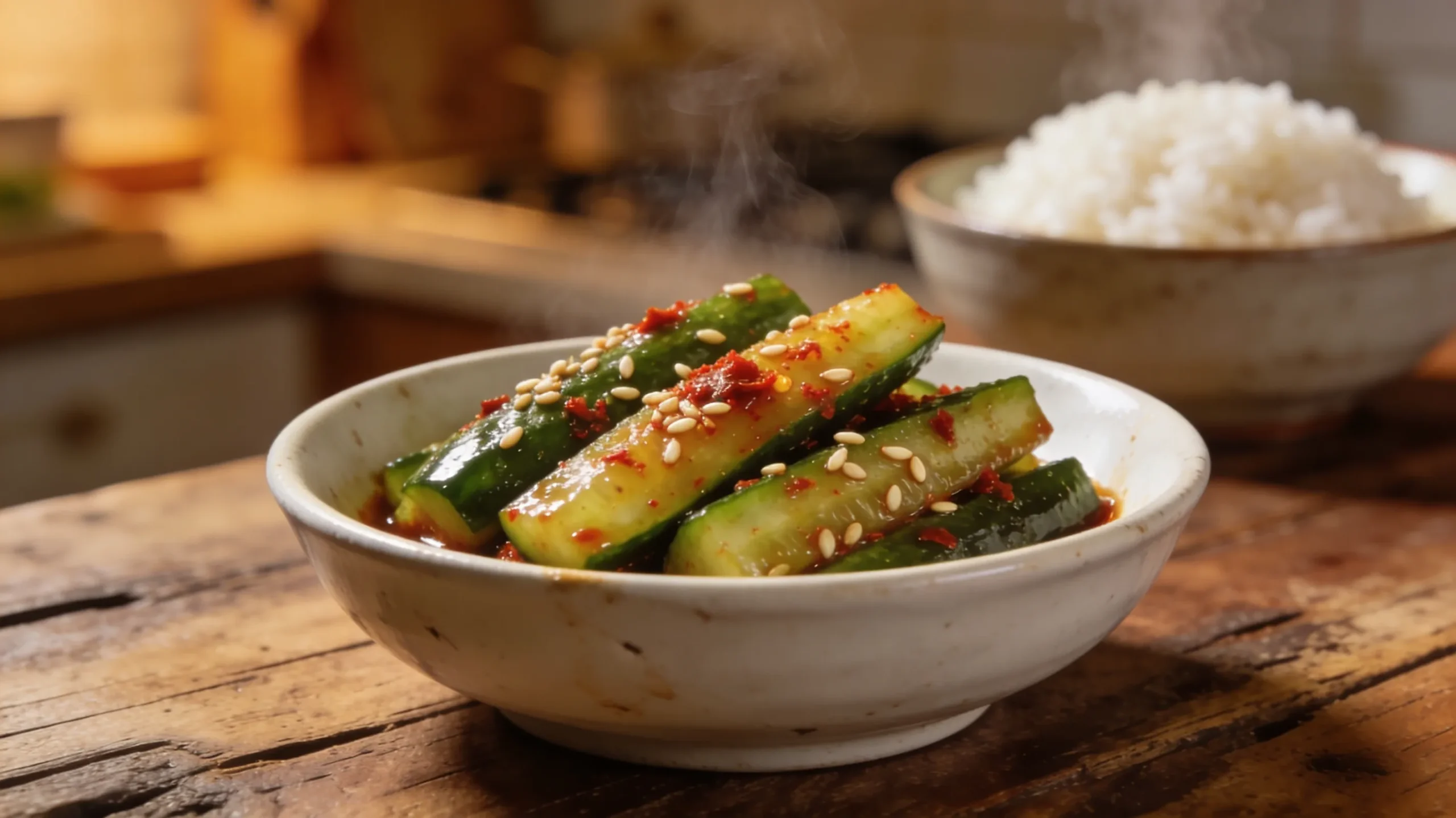
    Korean spicy cucumber salad (oi muchim) recipe card with ingredients and instructions

    Recipe

    Ingredients

    • 2 to 3 small Korean or Persian cucumbers (about 300g)
    • 1 tsp salt
    • 1 to 2 tbsp gochugaru
    • 2 garlic cloves, minced
    • 1 tbsp sesame oil
    • 1 tbsp rice vinegar
    • 1 tsp sesame seeds
    • 1 green onion, sliced thin
    • ½ tsp sugar (optional)

    Prep time: 15 minutes (including salting time)

    Servings: 2 to 4 as banchan

    Instructions

    1. Slice the cucumbers in half lengthwise, then cut each half on the diagonal into thin slices, about 3 to 4mm thick.

    2. Toss the cucumber slices with 1 teaspoon of salt in a bowl. Let sit for 10 to 15 minutes.

    3. Squeeze the cucumbers in handfuls over the sink to remove excess water. Pat dry with a clean kitchen towel if needed.

    4. In a separate bowl, mix the gochugaru, minced garlic, sesame oil, rice vinegar, sesame seeds, green onion, and sugar (if using).

    5. Add the cucumbers to the seasoning bowl. Toss with your hands or a spoon until every slice is coated.

    6. Let the salad rest for 5 to 10 minutes before serving. This gives the flavors time to settle into the cucumbers.

    Serve cold or at room temperature.

    Adjusting the heat level

    Start with one tablespoon of gochugaru if you’re not sure about heat. That will give you a mild warmth with more sweetness than burn. Two tablespoons is moderate. Three tablespoons is properly spicy.

    Good gochugaru should be bright red and slightly coarse, not fine like cayenne. It has a fruity, smoky flavor that doesn’t just taste like heat. If your gochugaru is dull brown or brick-colored, it’s old and won’t taste right.

    Korean chili flakes are less sharp than other chili flakes. The heat builds slowly instead of hitting you all at once. You can always add more after tasting, but you can’t take it out once it’s in.

    How long it keeps and when to serve it

    Oi muchim is best within a few hours of making it. The cucumbers stay crispest in that window. You can keep it in the fridge for one to two days, but it will release more water as it sits and lose some of its crunch.

    If you’re making it ahead, store the cucumbers and seasoning separately. Toss them together thirty minutes before you plan to serve.

    This salad belongs on the table with grilled meats, bibimbap, rice bowls, or any meal that needs something cool and sharp to cut through richer flavors. It’s part of a banchan spread, not a standalone dish. Serve it in a small bowl alongside two or three other sides and let people take as much as they want.

    The cucumbers will still taste good on day two, just wetter and softer. Pour off the liquid before serving if that happens.
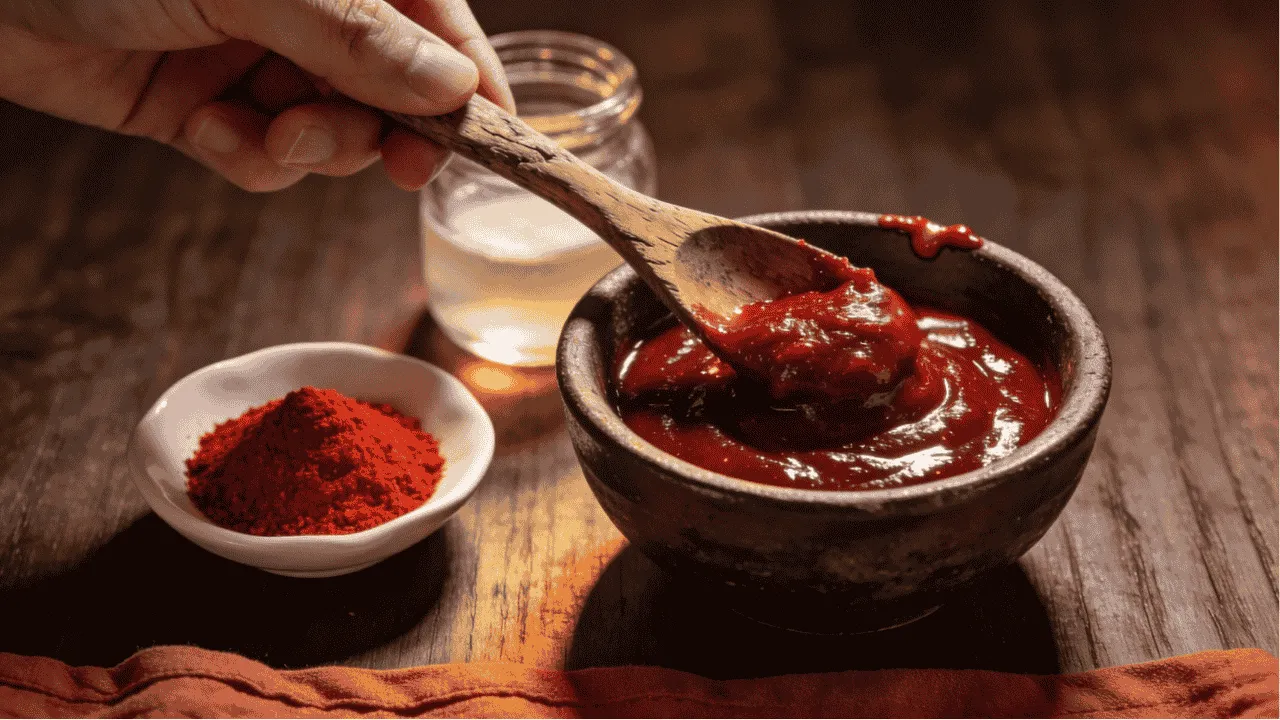
  • How to Make Gochujang Paste Without Fermenting Anything

    How to Make Gochujang Paste Without Fermenting Anything

    Gochujang (Korean fermented chili paste) has a reputation for being difficult to make. The traditional method involves fermented soybean powder, glutinous rice, earthenware crocks, and months outdoors. Most home cooks will never attempt it. But the quick version is quick and accessible to most homecooks.

    I use fine gochugaru for this recipe, not coarse. Fine gochugaru dissolves cleanly in hot water with no gritty patches. Coarse flakes stay textured no matter how long you stir. It tends to cost a little more, but for a paste this simple, the texture is the whole thing.

    This paste works anywhere you would reach for store-bought gochujang. Here is how to make it.

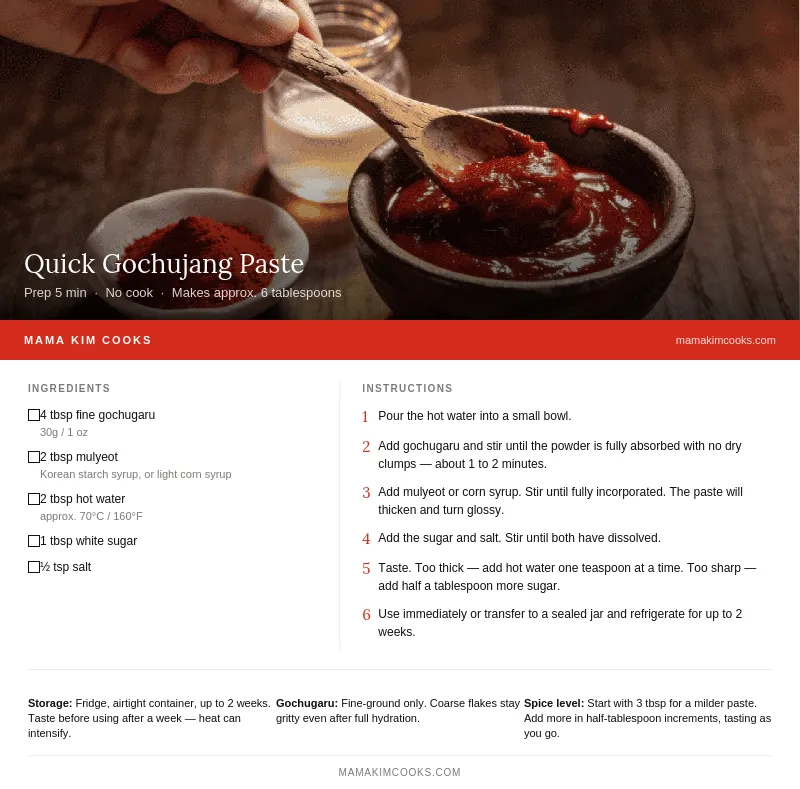
    Quick Gochujang Paste recipe card showing ingredients and step-by-step instructions

    RECIPE NAME: Quick Gochujang Paste

    Description: A five-ingredient Korean chili paste made with fine gochugaru, starch syrup, sugar, salt, and hot water. No fermentation needed. Ready in under five minutes and works as an all-purpose paste for bibimbap, stews, marinades, and dipping sauces.

    Prep time: 5 minutes

    Cook time: 0 minutes

    Total time: 5 minutes

    Servings: Makes approximately 6 tablespoons (90ml / 3 fl oz)


    Ingredients:

    • 4 tablespoons fine gochugaru (Korean dried chili flakes) — about 30g (1 oz)
    • 2 tablespoons mulyeot (Korean starch syrup) — or light corn syrup
    • 2 tablespoons hot water (around 70°C / 160°F — off the boil for one minute)
    • 1 tablespoon white sugar
    • ½ teaspoon salt

    Instructions:

    1. Pour the hot water into a small bowl.
    2. Add the gochugaru and stir immediately. Keep stirring until the powder has fully absorbed the liquid and no dry clumps remain — about one to two minutes.
    3. Add the mulyeot or corn syrup and stir until completely incorporated. The paste will thicken and turn glossy.
    4. Add the sugar and salt. Stir until both have dissolved.
    5. Taste. If the paste feels too thick, add hot water one teaspoon at a time and stir through. If the heat is too sharp, add another half tablespoon of sugar.
    6. Use immediately, or transfer to a sealed jar and refrigerate.

    Notes:

    • Storage: Keeps in the fridge for up to two weeks in an airtight container. The colour deepens slightly over time and the heat can intensify — taste before using if it has been sitting more than a week.
    • Gochugaru type: Fine-ground only. Coarse gochugaru will not absorb the water evenly and will leave a gritty paste regardless of how long you stir.
    • Heat level: Start with 3 tablespoons of gochugaru for a milder paste. Add more in half-tablespoon increments, tasting as you go. Easier to calibrate at the start than to fix after mixing.
    • Starch syrup: Mulyeot is available at Korean grocery stores and online (H-Mart stocks it across the US). Light corn syrup is a direct substitute. It has the same texture, same neutral sweetness.
    • Make ahead: This paste can be made up to two weeks ahead and refrigerated. It is ready to use straight from the fridge.

    What Is Gochujang Paste?

    Traditional gochujang is made from gochugaru, glutinous rice, meju garu (dried fermented soybean powder), and salt, traditionally fermented outdoors in earthenware crocks for months. The result is complex, intensely savoury, and one of the three foundational Korean fermented pastes alongside doenjang (Korean fermented soybean paste) and ganjang (Korean soy sauce).

    This recipe is not that. It is a quick, unfermented version built on the same flavour principle without the fermentation or the specialist ingredients. The method is used by Korean home cooks who want a fresh paste for immediate use.

    There is a common misconception that any recipe involving gochujang requires fermentation. It does not. When you use store-bought gochujang in a dish, the fermentation has already happened. When you make a quick paste like this one, you are building the flavour profile from scratch without that step. The result is lighter in fermented depth but gives you something commercial gochujang cannot: complete control over the heat level from the start.

    The paste works across a wide range of uses like bibimbap, tteokbokki (Korean spicy rice cakes), stews, marinades, and dipping sauces. Anywhere the recipe calls for gochujang, this paste can step in.


    Ingredients and What They Do

    Gochugaru is the foundation. It is the sole source of heat in this paste, which is exactly why the heat is controllable. Gochugaru (Korean dried chili flakes) is milder and more nuanced than cayenne or standard chili powder. It has a fruity, slightly smoky quality that raw heat does not. Use fine-ground gochugaru specifically. Coarse flakes are better suited for kimchi and marinades (this is my personal opinion though) where texture is part of the dish. In a paste, coarse flakes remain gritty no matter how long you stir. Fine gochugaru hydrates fully in hot water and produces a smooth, even paste.

    Mulyeot (Korean starch syrup) gives the paste its gloss, body, and binding quality. This is the ingredient that makes the paste look like gochujang rather than a bowl of wet chili powder. Mulyeot is available at Korean grocery stores and online, but light corn syrup substitutes directly.

    Hot water activates the gochugaru. Cold water will not hydrate fine chili powder evenly. You will see uneven colour and dry patches that do not disappear with stirring. Water at around 70°C (160°F), roughly one minute off a full boil, is the right temperature. The gochugaru absorbs it within one to two minutes of stirring.

    White sugar dissolves immediately into the hot paste and balances the heat without adding its own flavour. It is structural, not decorative.

    Salt sharpens everything. Add it after the other ingredients are combined so you can taste and calibrate before committing.


    Tips for Getting the Paste Right

    Temperature is not optional. Hot water is the difference between a smooth paste and a gritty one. The gochugaru needs heat to hydrate fully. If you use warm water, you will see uneven colour and dry patches throughout. Water one minute off the boil — around 70°C (160°F) — absorbs into fine gochugaru within two minutes of stirring.

    Set the heat level at the start The gochugaru quantity is the only variable that changes the heat. Three tablespoons produces a paste most cooks find manageable. Four tablespoons gives real heat. Once the paste is mixed, adjusting the heat means adding more dry gochugaru and re-hydrating. It is much easier to calibrate before you begin. Start lower, taste, and add more if needed.

    To bring it closer to commercial gochujang Traditional gochujang has fermented soybean depth this paste will not fully replicate. If you want to close that gap, half a teaspoon of white miso stirred in after mixing adds a quiet savoury note without any additional Korean-specific ingredients. It is optional and not part of the original five-ingredient method, but it helps when the paste is the primary seasoning in a dish.

    Consistency for different uses Use the paste as-is for bibimbap. For marinades or stews, it will thin naturally into the liquid. For a dipping sauce, add one to two teaspoons of water and stir. It will loosen without losing colour or flavour.


    Frequently Asked Questions

    Is this gochujang recipe the same as store-bought?

    Not exactly. Commercial gochujang is often fermented with glutinous rice and meju garu (dried fermented soybean powder), which gives it a deep umami character this paste does not fully replicate. What this paste delivers: the same heat, colour, and general flavour profile, with complete control over spice level and no specialist ingredients. For most everyday cooking, the difference is workable.

    Why does this recipe use hot water instead of cold?

    Fine gochugaru needs heat to hydrate properly. Cold water will not dissolve the powder evenly and you will end up with a paste that looks uneven and feels gritty on the tongue. Water at around 70°C (160°F) absorbs into the gochugaru within one to two minutes of stirring and produces a smooth, uniform paste.

    Can I use coarse gochugaru instead of fine?

    Yes, you can use coarse gochugaru. Coarse gochugaru is the right choice for kimchi and marinades where texture is expected. In a paste, the flakes stay gritty even after full hydration. For this recipe, fine gochugaru is specifically what makes this paste smooth.

    Where do I find mulyeot in the US?

    Korean grocery stores stock it in the condiments aisle. H-Mart carries it reliably across the US. It is also available online. If you cannot find it, light corn syrup is a direct substitute — same consistency, same neutral sweetness, available at any supermarket. Do not use dark corn syrup, which has a distinct molasses flavour that will compete with the gochugaru.

    How long does homemade gochujang paste keep?

    Up to two weeks in the fridge in an airtight container. The colour deepens slightly over time and the heat can intensify as it sits. Taste it before using if it has been stored for more than a week, you may want to add a small amount of sugar to rebalance.

    Does this gochujang paste contain alcohol?

    Not this recipe. Many store-bought gochujang products include alcohol as a preservative. It appears in the ingredient list as ethyl alcohol or fermented ethyl alcohol on several widely available brands. This homemade paste contains none. The five ingredients are gochugaru, starch syrup, sugar, salt, and water.

  • Why Korean Fried Chicken Is So Crispy (And How It’s Different)

    Why Korean Fried Chicken Is So Crispy (And How It’s Different)

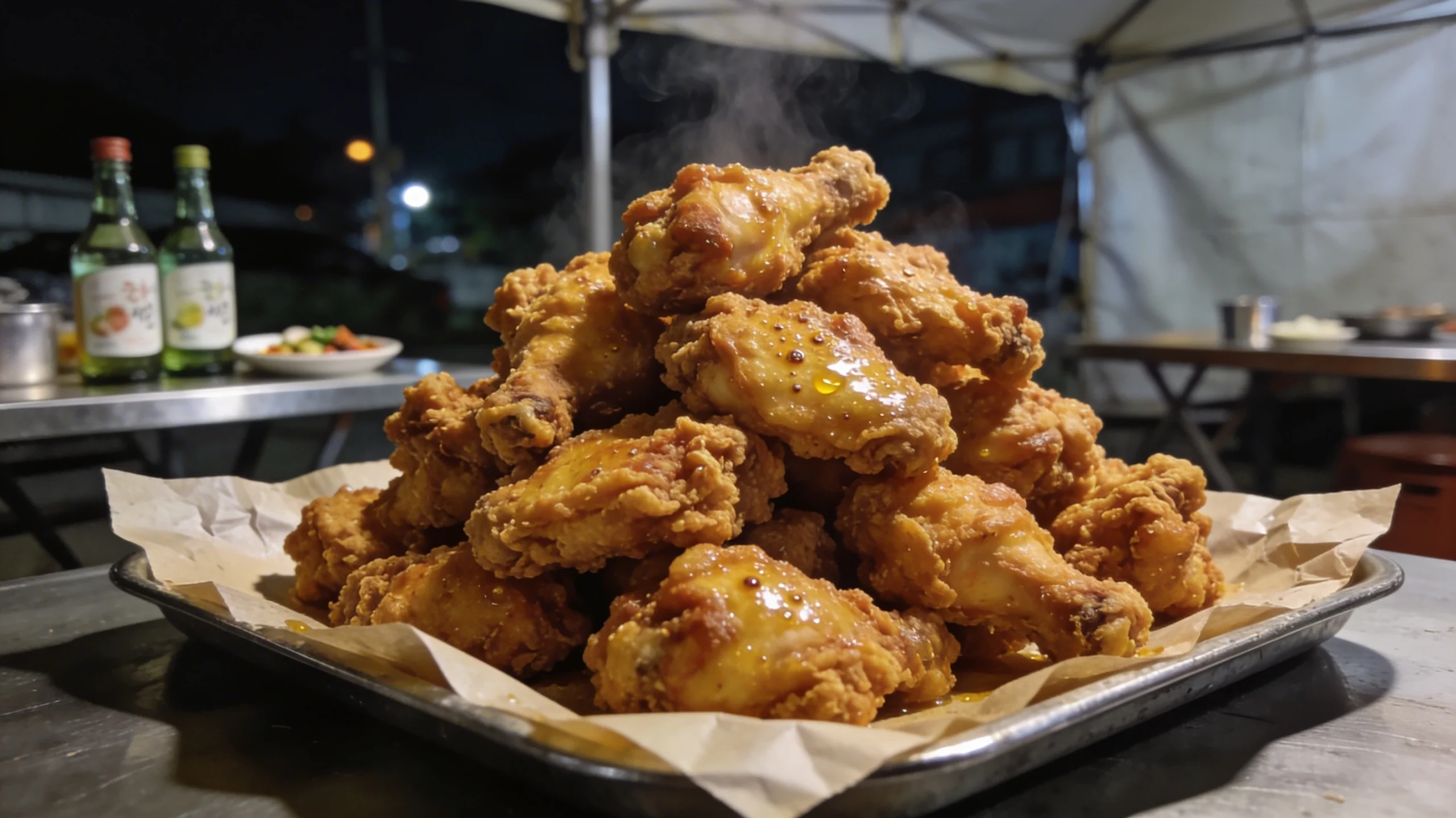
    If you’ve ever bitten into Korean fried chicken and wondered why the coating shatters so cleanly, why it stays crisp even when drowned in sauce, why it feels lighter than what you grew up calling fried chicken — the answer is technical, deliberate, and completely different from the American or Japanese approach.

    If you don’t know what I’m talking about. You need to try it today.

    Korean fried chicken is double-fried, uses a thinner batter, and fries at a lower initial temperature. These three methods work together to create a coating that’s thin, brittle, and engineered to resist sogginess. It’s not just crispy. It’s structurally crisp.

    Double-frying is the foundation

    The first fry happens at a lower temperature, usually around 160°C (320°F). The chicken cooks through, and fat renders out. The coating firms up but doesn’t brown much. Then the chicken rests.

    The second fry happens at a higher temperature, between 180–190°C (350–375°F). This time, the goal is pure surface treatment. The coating dries out completely, browns fast, and develops that glass-like crunch. The interior has already been cooked, so you’re not risking underdone meat while you chase the right exterior.

    Double-frying does two things at once: it removes moisture from the coating more thoroughly than a single fry ever could, and it creates a layered structure where the outer surface has been heat-shocked into brittleness. The result is a shell that snaps audibly when you bite it.

    American fried chicken is typically fried once, at a steady medium-high heat. The coating is thicker, softer, and more bready. It absorbs moisture from the meat as it sits. Japanese karaage also fries once, though at a higher heat and with a lighter starch coating. But it doesn’t go through that second structural transformation that Korean chicken does.

    The batter is thin and starch-heavy

    Korean fried chicken batter is not thick. It’s often a mix of potato starch, cornstarch, and a small amount of flour, whisked with cold water or a lightly carbonated liquid. Some recipes skip flour entirely.

    Starch fries differently than flour. Flour contains gluten, which creates chew and structure. Starch doesn’t. It crisps up brittle and light. The coating on Korean fried chicken is more like a shell than a crust. It doesn’t absorb oil or steam the way a flour-heavy batter does.

    The thinness matters because a thick coating traps moisture. Even if you fry it twice, a dense batter will hold onto steam between the layers. Korean chicken batter is applied in a thin, even layer. When it hits the oil, it sets fast and fries dry.

    American-style fried chicken often uses buttermilk, flour, and sometimes breadcrumbs. The coating is thick and fluffy. Japanese karaage uses potato starch too, but it’s applied dry, more like a dusting than a wet batter. Korean chicken splits the difference. It is wet enough to coat evenly, starchy enough to fry brittle.

    Lower temperature on the first fry makes all the difference

    That first fry at 160°C does something most people don’t realise. It gives the moisture inside the chicken time to escape without the coating seizing up too fast. If you fry at high heat from the start, the outside hardens before the inside has finished releasing steam. That steam has nowhere to go, so it gets trapped under the coating. Later, it softens the crust from the inside.

    By starting low, the chicken gently expels moisture while the coating sets slowly. By the time the second fry happens, the chicken is already dry inside. The high heat is just finishing the surface.

    This also explains why Korean fried chicken holds up under sauce better than other styles. The coating isn’t porous. It’s sealed. When you toss it in yangnyeom or ganjang sauce, the glaze sits on top of the shell rather than soaking in. You get sweet, spicy, sticky chicken that still cracks when you bite it.

    How it compares to other styles

    American fried chicken is all about the coating. It’s thick, flavourful, soft when fresh, and meant to be eaten right away. The juices from the chicken seep into the breading, which is part of the appeal. It’s comforting, rich, heavy.

    Japanese karaage is often marinated first — usually in soy sauce, ginger, and garlic — then dusted in potato starch and fried once at high heat. The coating is light and crisp, but it doesn’t have the structural crunch of Korean chicken. It’s meant to be eaten hot and fresh, often with a squeeze of lemon. It doesn’t hold up as well once it cools.

    Korean fried chicken is designed differently. It’s meant to last. It’s meant to be shared, to sit on the table while you talk, to stay crisp even after being tossed in sauce. The double-fry and starch-based batter make that possible.

    Why the texture is different

    When you bite into Korean fried chicken, the coating doesn’t compress. It shatters. The inside is juicy, but the exterior stays dry. There’s no grease pooling on your fingers, no soft patches where the batter absorbed oil.

    That’s because the batter has been fried to the point where almost all its moisture is gone. The thin application means there’s less mass to hold onto oil. The starch content means it crisps instead of puffing.

    The double-fry also creates micro-layers in the coating. The first fry sets the structure. The second fry blisters and hardens the outer surface. What you end up with is a coating that has both crunch and snap.

    The crispness is engineered, not accidental

    Korean fried chicken is crispy because every step in the process has been optimised for that outcome. The batter composition, the frying temperature, the rest period between fries, the thinness of the coating. None of it is arbitrary.

    It’s a method that prioritises texture over everything else. The chicken itself is seasoned lightly, if at all, before frying. The flavour comes from the sauce, or from eating it with pickled radish and cold beer. The coating’s job is to stay crisp, and it does that better than almost any other fried chicken style in the world.

    If you’ve been chasing that texture at home and coming up short, it’s probably not your technique. It’s the method. Korean fried chicken isn’t just fried chicken done well. It’s fried chicken done differently.

  • Is Kimchi Vegetarian? Why Most Store-Bought Versions Aren’t (And How to Find the Ones That Are)

    Is Kimchi Vegetarian? Why Most Store-Bought Versions Aren’t (And How to Find the Ones That Are)

    If you’re asking is kimchi vegetarian, the answer is usually no.

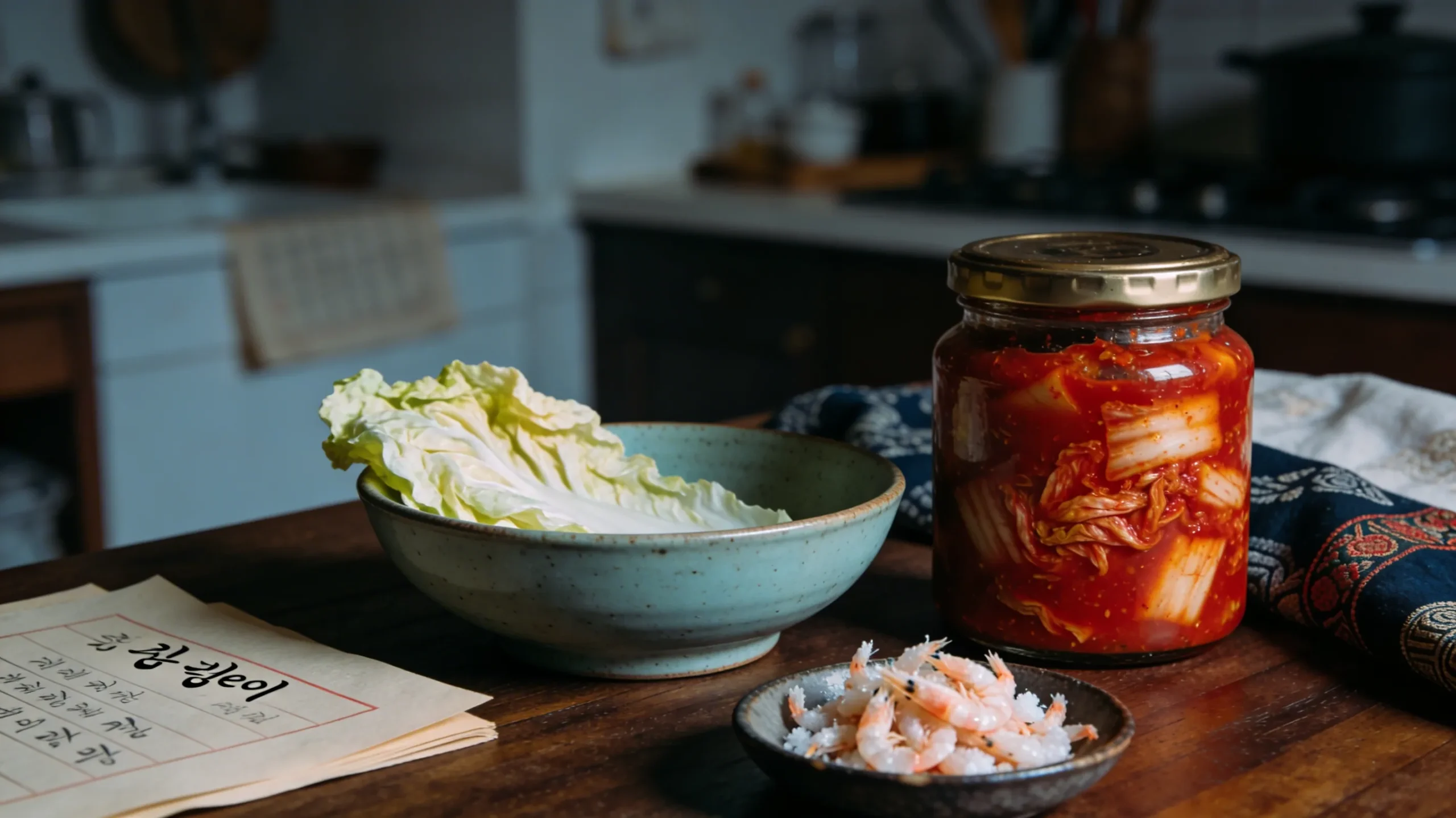
    Traditional kimchi (even the white ones) contains jeotgal, a salted and fermented seafood ingredient used for seasoning and fermentation. Jeotgal can be made from anchovies, shrimp, oysters, or other shellfish. This means that even though kimchi looks like a simple fermented vegetable dish, it contains animal products.

    What is jeotgal and why is it in kimchi?

    Jeotgal (젓갈) is a category of salted seafood that has been fermented for weeks or months. The most common types you’ll find in kimchi are saeujeot (salted shrimp) and myeolchijeot (salted anchovies). Sometimes recipes call for aekjeot, which is the clear liquid extracted from fermented seafood.

    Jeotgal does three things in kimchi.

    First, it adds umami. It’s that deep, savoury flavour that makes kimchi taste complex rather than just spicy and sour.

    Second, the salt content helps with fermentation and preservation. Third, the natural enzymes in the seafood encourage the fermentation process and contribute to the texture of the final product.

    This is not a modern shortcut. Jeotgal has been part of Korean kimchi-making for centuries. It’s a core ingredient, not an optional add-in.

    How to tell if kimchi contains seafood

    If you’re shopping for kimchi and need to know whether it’s vegetarian, you need to read the ingredient list. Here’s what to look for:

    Korean ingredient names to watch for:

    • 새우젓 (saeujeot) — salted shrimp
    • 멸치액젓 (myeolchi aekjeot) — anchovy fish sauce
    • 까나리액젓 (kkanari aekjeot) — sand lance fish sauce
    • 젓갈 (jeotgal) — general term for salted seafood
    • 액젓 (aekjeot) — fish sauce or seafood extract
    • 굴 (gul) — oyster

    English ingredient names to watch for:

    • Salted shrimp
    • Anchovy sauce
    • Fish sauce
    • Seafood extract
    • Shrimp paste
    • Oyster

    Some brands write “anchovy extract” or “fermented anchovy sauce” in English. Others only list the Korean name. If you see any of these, the kimchi is not vegetarian.

    What about mu saengchae or white kimchi?

    This is a common misconception. Baek kimchi (white kimchi) and mu saengchae (seasoned radish salad) look vegetarian because they don’t have gochugaru (red chili flakes). But most traditional versions still contain jeotgal for flavour and fermentation.

    Mu saengchae in particular can be tricky. It’s often served as a light, crunchy side dish and doesn’t taste fishy at all. But check the ingredients because many recipes include a small amount of saeujeot or aekjeot to round out the sweetness and vinegar.

    Vegetarian kimchi does exist

    Vegetarian kimchi is made by replacing jeotgal with other sources of salt and umami. Common substitutions include:

    • Doenjang (fermented soybean paste) — adds umami and salt
    • Ganjang (soy sauce) — contributes saltiness and fermentation-friendly sodium
    • Kelp or dashima — used to make a vegetable-based broth for umami
    • Mushroom powder — adds savoury depth
    • Plain sea salt in higher quantities

    These versions ferment just fine. They taste different from traditional kimchi — less funky, a bit cleaner — but they’re still sour, spicy, and fully fermented.

    Where to buy vegetarian kimchi

    Some Korean brands now make certified vegetarian or vegan kimchi. Look for labels that say “vegan” or “no seafood” in English. If you’re shopping at a Korean grocery store, ask staff to help you read the ingredient list.

    Online options make it easier to filter by dietary needs. Many specialty kimchi companies in the U.S., U.K., and Australia offer vegan versions and clearly label them on their websites.

    If you’re buying from a small batch maker at a farmers market or local shop, ask directly. Homemade kimchi recipes vary, and some cooks already make theirs without jeotgal.

    Making your own vegetarian kimchi

    If you can’t find store-bought vegetarian kimchi or want full control over the ingredients, making it at home is straightforward. Use a standard napa cabbage kimchi recipe and replace the jeotgal with one tablespoon of doenjang and two tablespoons of soy sauce per medium cabbage. Add a piece of dashima to the porridge base if you’re using one.

    The fermentation process is identical. Salt the cabbage, rinse it, coat it in the seasoning paste, pack it into a jar, and let it sit at room temperature for one to five days depending on how sour you want it. Then move it to the fridge.

    Your kimchi will ferment without seafood. The flavour will be less complex in the first few days, but after two weeks in the fridge, it develops its own character.

    Does “no visible seafood” mean vegetarian?

    No. Just because you don’t see chunks of shrimp or anchovy in the kimchi doesn’t mean it’s vegetarian. Jeotgal is usually finely minced or used as a liquid extract. It dissolves into the seasoning paste.

    This trips up a lot of people who assume that if kimchi doesn’t look or smell fishy, it must be plant-based. The seafood is there, you just can’t see it.

    A note on cross-contamination and strict dietary needs

    If you’re vegetarian for religious, ethical, or allergy reasons, know that many Korean restaurants and home kitchens use the same tools and surfaces for all types of kimchi. If cross-contamination is a concern, ask whether the kimchi was made in a dedicated vegetarian space.

    Some Buddhist temple kimchi (사찰 김치, sachal kimchi) is made without any animal products and also excludes garlic and onions. This is a safe option if you need certainty and can find it.

    If you are Muslim, your main concern would be to check whether alcohol is used as an ingredient. Many store-bought kimchi products use alcohol-based seasonings.

    Why this matters

    Kimchi is served with almost every Korean meal. If you’re vegetarian and eating Korean food regularly, knowing which kimchi you can eat makes a real difference. It’s not about rejecting tradition, it’s about making informed choices that fit your needs.

    Traditional kimchi tastes the way it does because of jeotgal. Vegetarian kimchi tastes different, and that’s fine. Both versions are real kimchi. One just happens to contain seafood, and the other doesn’t.

  • 20 Korean Street Foods Worth Knowing and Eating

    20 Korean Street Foods Worth Knowing and Eating

    Steam curling off a paper cup of fish cake broth. A griddle of hotteok turning golden in the cold. The red glow of tteokbokki sauce under fluorescent strip lights. Korean street food is best understood from a pojangmacha (Korean street food tent) on a cold night, when you are hungry and everything smells good and doesn’t cost you a leg.

    This guide covers 20 of the most popular Korean street food finds at markets and pojangmacha across Korea. Some are savoury, some are sweet, and a few are both. Most can be made at home.

    Whether you first spotted these in a K-drama or you have been eating them your whole life, this is the full picture.

    1. Tteokbokki (Spicy Korean Rice Cakes)

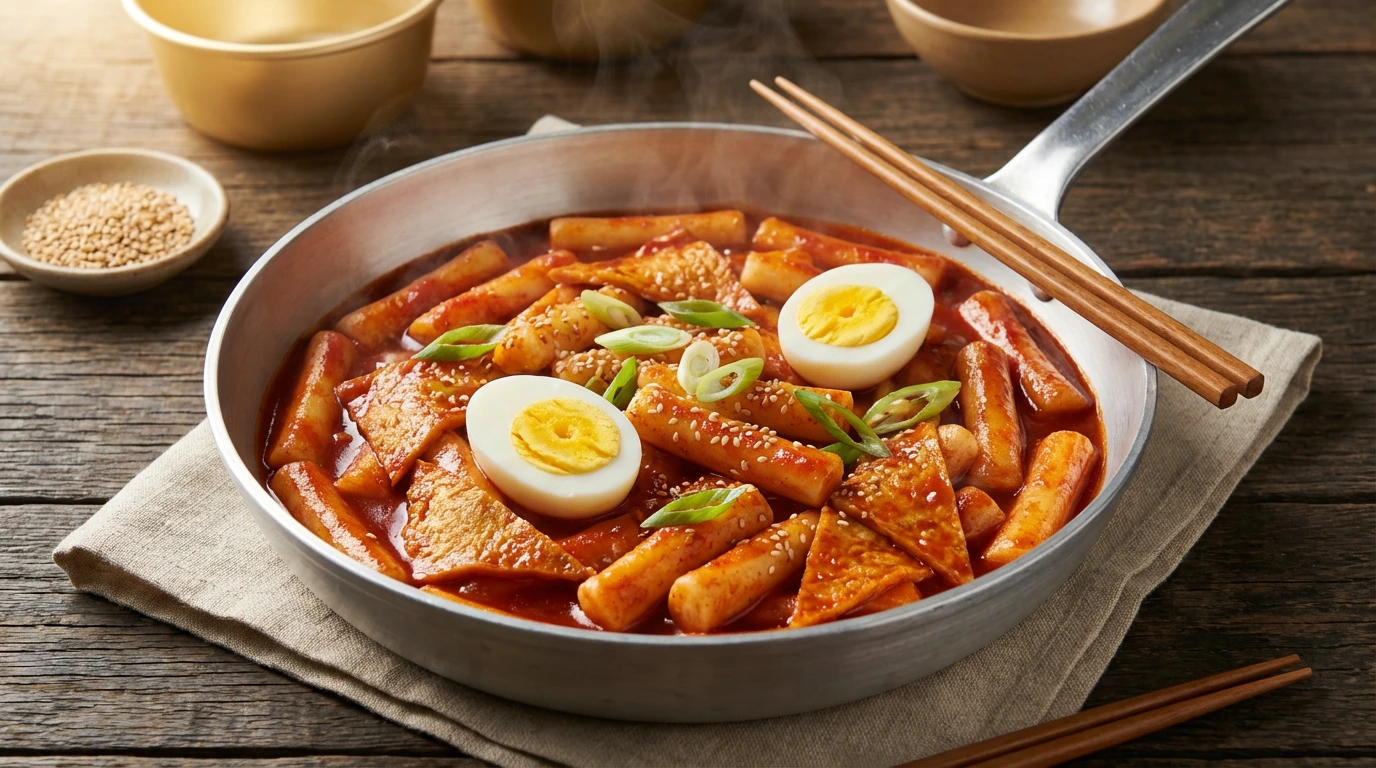
    Tteokbokki (spicy Korean rice cakes) is the single most popular Korean street food. Chewy cylinders of garaetteok (Korean rice cake) sit in a sweet, spicy gochujang (Korean fermented chili paste) sauce alongside slices of eomuk (Korean fish cake) and boiled eggs. The sauce is thick, sticky, and clings to everything.

    You will find tteokbokki at nearly every Korean street food stall. At home, soak your rice cakes in water before cooking so they soften evenly. The whole dish comes together in under 30 minutes. If you want less heat, rose tteokbokki uses a cream-based sauce and is a popular variation.

    Tteokbokki in a pan — glossy gochujang sauce coating chewy rice cakes, fish cake triangles, halved boiled eggs, spring onions, and sesame seeds on a wooden table

    2. Eomuk (Fish Cake Skewers)

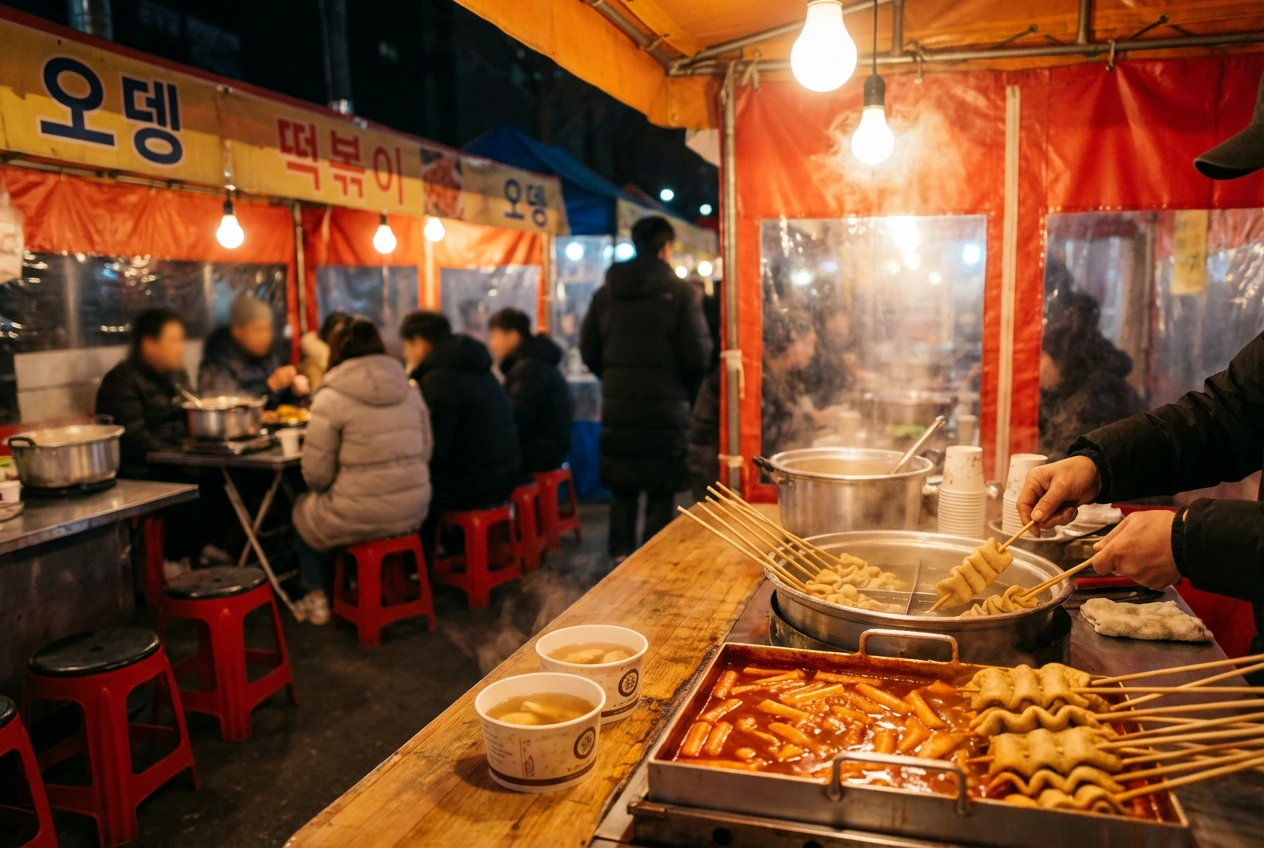
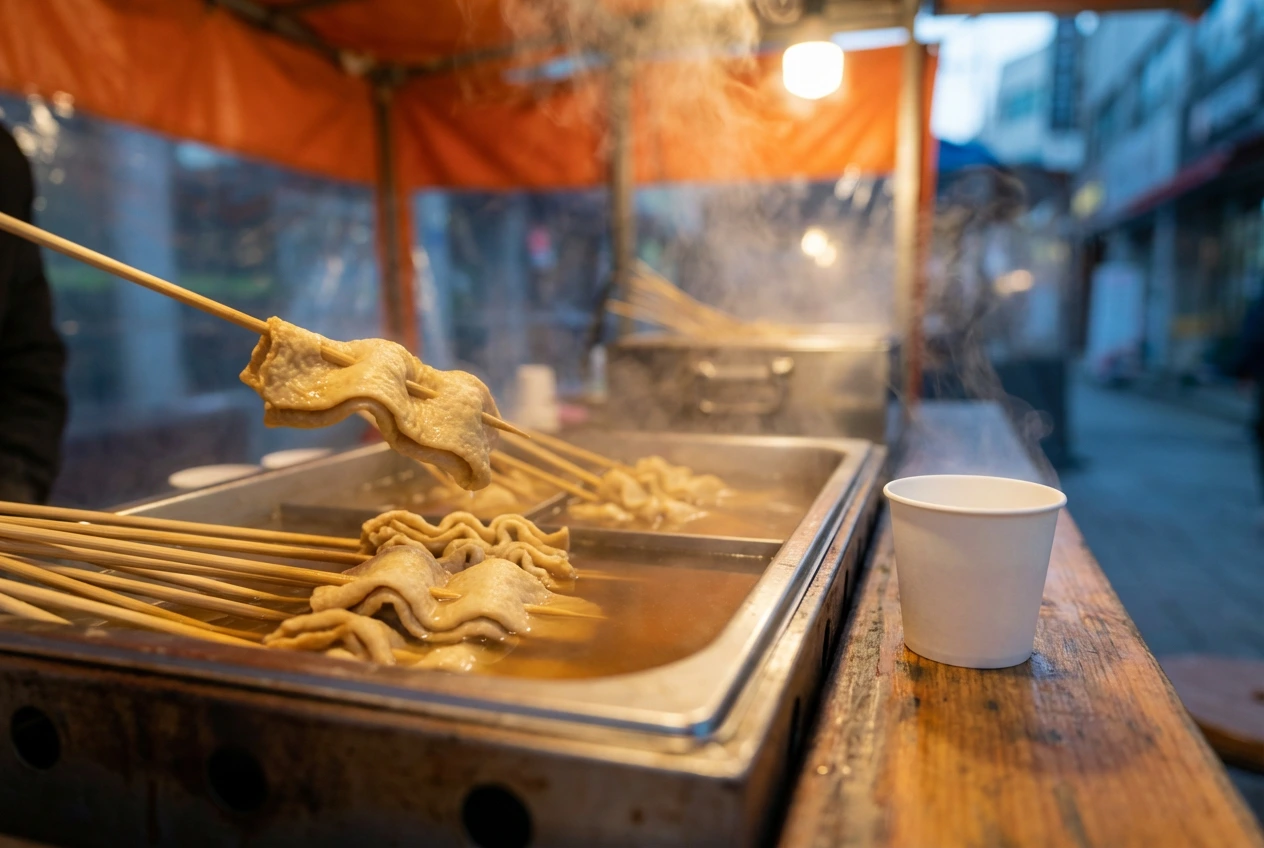
    Eomuk (Korean fish cake) skewers are sheets of fish cake threaded onto bamboo sticks in a zigzag fold, then simmered in a light anchovy and kelp broth. The fish cake is mild and slightly chewy. The broth is the real draw.

    Come autumn in Korea, I would always default to eomuk to fill the craving for something warm and savoury. There is nothing complicated about it. You stand at the stall, hold the skewer, sip the broth from a paper cup, and that is the whole experience. At home, frozen fish cake sheets from any Korean grocery store work well. Simmer them in dashima (kelp) and dried anchovy broth for ten minutes.


    3. Eomuk Tang (Fish Cake Broth)

    Eomuk tang is the warm broth that eomuk skewers cook in, served free at most street stalls in a shared pot with ladles and paper cups. It is made from dried anchovies, kelp, and sometimes radish.

    Many visitors overlook the broth and focus on the skewers. That is a mistake. Vendors keep the pot simmering all day, and by evening it has real depth. Recreate this at home with myeolchi (dried anchovies) and dashima in about 20 minutes. It doubles as a base for noodle soups.

    Eomuk (Korean fish cake) skewers simmering in broth at a pojangmacha street stall, with a cup of the free soup on the side

    4. Hotteok (Sweet Stuffed Pancake)

    Hotteok (Korean sweet stuffed pancake) is a fried dough disc filled with brown sugar, cinnamon, and crushed nuts. The sugar melts during cooking and turns into a molten, caramelised syrup inside. Chinese merchants brought the concept to Korea in the late 19th century. It became one of the country’s most loved winter street foods.

    My go-to has always been hotteok regardless of season. It is filling, it is tasty, and it is cheap. The original is sweet, but there is a famous vegetable hotteok at Namdaemun Market, approved and recommended by Lee Young Ja, one of my all-time favourite Korean comedians. At home, use a yeasted dough and a flat press to flatten each piece on the pan.


    5. Kimbap (Korean Seaweed Rice Rolls)

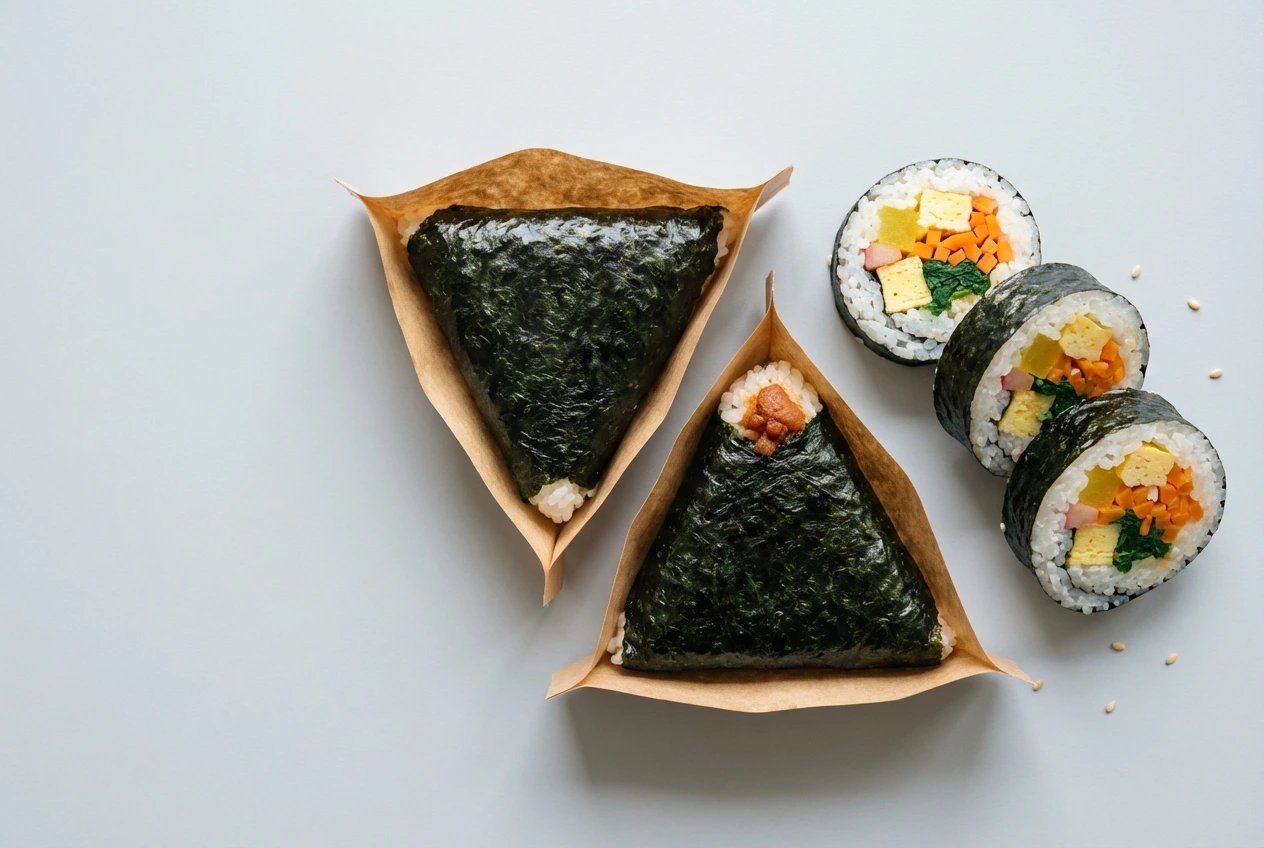
    Kimbap, also written as Gimbap, is rice and fillings rolled tightly in dried seaweed (gim), then sliced into bite-sized rounds. Common fillings include pickled radish (danmuji), spinach, carrot, egg, and beef or crab stick. It is Korea’s go-to packed lunch, picnic food, and portable street snack.

    Kimbap is not sushi. The rice is seasoned with sesame oil and salt, not vinegar. The fillings are cooked, not raw. At a street stall, kimbap is usually pre-made and sold by the roll, wrapped in foil. At home, the rolling technique takes a few tries. Start with fewer fillings until you get the feel of it.


    6. Samgak Gimbap (Triangle Kimbap)

    Samgak gimbap is a triangular rice ball wrapped in seaweed, filled with tuna mayo, kimchi, bulgogi (Korean marinated grilled beef), or other fillings. It is sold at every convenience store in Korea and costs roughly 1,000 to 1,500 won (under $1.50 USD).

    Think of it as Korea’s answer to the Japanese onigiri, with its own fillings and flavour profile. The seaweed wrapper has a pull-tab system that keeps the gim crisp until you open it. This is a grab-and-go staple, not really a “cook at home” food, though triangular moulds are available online.

    Sliced gimbap rounds and samgak gimbap triangles arranged on a grey surface, showing their fillings in cross-section

    7. Sundae (Korean Blood Sausage)

    Sundae (Korean blood sausage) is a steamed sausage made with pig intestine, glass noodles, barley, and pig’s blood. It is sliced into thick rounds and served with salt and a dried shrimp dipping powder. The texture is soft, dense, and unlike any Western sausage.

    For many visitors, sundae is the most unfamiliar item on a Korean street food stall. The flavour is mild and earthy, with a slightly grainy bite from the barley and noodle filling. Traditionally a working-class food, sold from carts and at market stalls. Either you love it on the first try or you need a second one.


    8. Soondae Guk (Blood Sausage Soup)

    Soondae guk is a rich, bone-based soup loaded with sliced sundae, offal, and sometimes noodles. It is a full meal, not a snack, and sits somewhere between street food and restaurant food. Many of the best soondae guk spots are small, counter-service places near traditional markets.

    The broth is milky and deep. Diners season their own bowl at the table with salt, pepper, and chopped chillies. This is a dish you are far more likely to eat at a dedicated soondae guk restaurant than make at home. If you see one near a Korean market, go in.


    9. Twigim (Korean-Style Fried Fritters)

    Twigim (Korean-style deep-fried fritters) covers a whole category of battered and fried items sold at street stalls: sweet potato, squid, boiled egg, vegetables, and glass noodle rolls. The batter is light wheat-based, and the fritters come with a soy-based dipping sauce or a drizzle of tteokbokki sauce.

    Twigim stalls usually sit right next to tteokbokki stalls for a reason. Dipping a crispy sweet potato fritter into that spicy red sauce is one of the best bites in Korean street food. At home, slice vegetables thinly, keep the batter cold, and fry at 170°C (340°F).


    10. Gimmari (Fried Glass Noodle Seaweed Rolls)

    Gimmari is dangmyeon (Korean glass noodles made from sweet potato starch) wrapped in dried seaweed, then battered and deep-fried. The result is a crispy shell around slippery, chewy noodles. It is a textural contrast that works better than it sounds.

    Gimmari is almost always sold alongside tteokbokki, and the standard move is to dunk it into the tteokbokki sauce. Cheap, simple, and deeply satisfying as a side snack. At home, cook the glass noodles, roll them in half-sheets of gim (dried seaweed), dip in a thin batter, and fry until golden. Takes about 15 minutes.


    11. Pajeon (Korean Pancake)

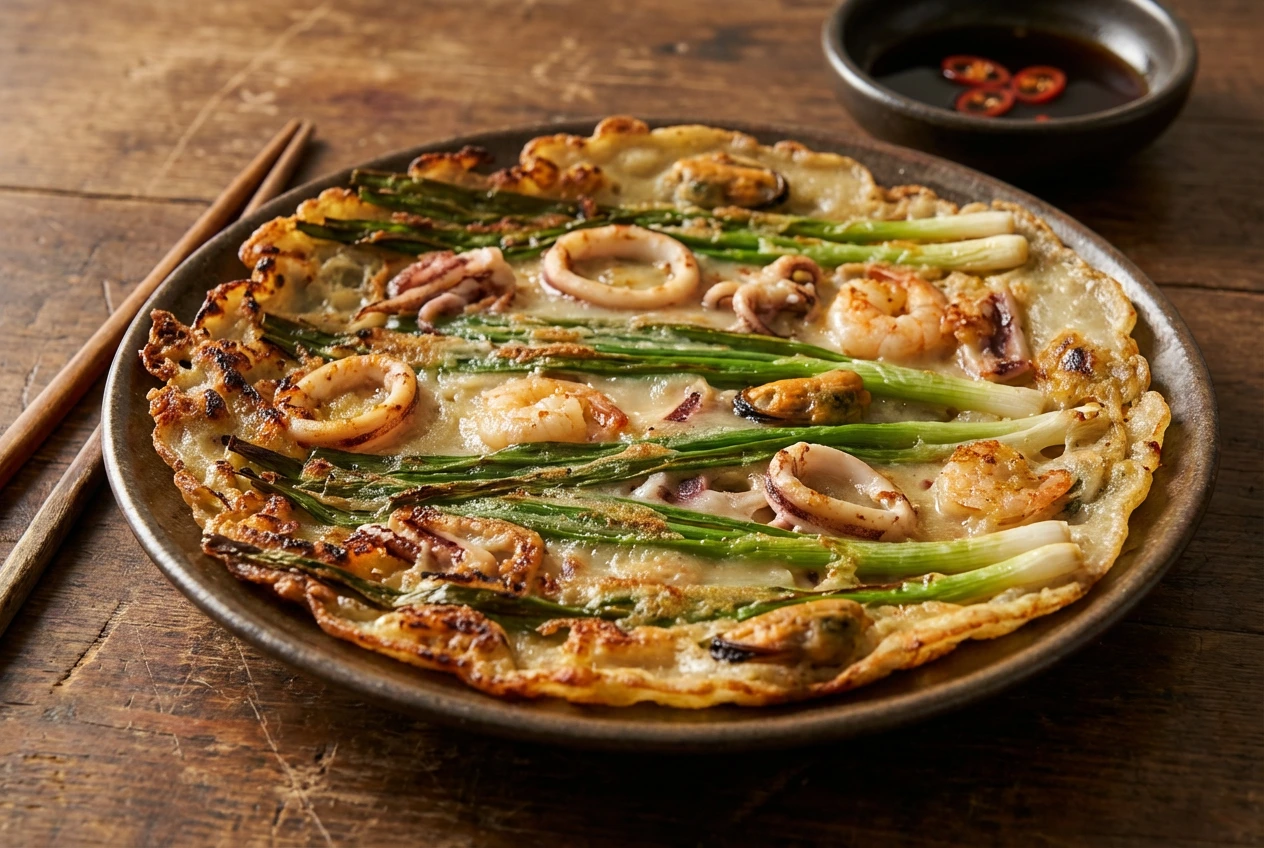
    Pajeon (Korean-style pancake) is a savoury pancake loaded with many ingredients. The most popular is kimchi, spring onion, or seafood. They are bound by a simple flour-and-egg batter. The outside fries up crispy while the inside stays soft and onion-sweet. It is eaten with a soy-vinegar dipping sauce.

    Pajeon is both a street food and a home cooking staple. The seafood version, haemul pajeon (Korean seafood and spring onion pancake), adds shrimp, squid, and sometimes oysters. Koreans say the sound of pajeon frying sounds like rain, which is why it is a rainy-day food. At home, use your flattest pan and press the batter thin for maximum crispiness.

    Haemul pajeon (Korean seafood and spring onion pancake) on a dark ceramic plate with a soy dipping sauce, showing crispy edges and visible squid, shrimp, and spring onion

    12. Mandu (Korean Street Dumplings)

    Mandu (Korean dumplings) at street stalls come steamed, pan-fried, or deep-fried. Fillings typically include ground beef, tofu, kimchi, and vegetables. Street mandu are larger than you might expect, often fist-sized, and sold three or four to an order with a soy and vinegar dipping sauce. The huge mandu is often called Wang Mandu or “King Dumpling”.

    The difference between good mandu and average ones comes down to the filling-to-wrapper ratio. You want a thin wrapper and a generous, seasoned filling. Frozen mandu from Korean grocery stores are a reliable shortcut. Pan-fry in a little oil, add water, and cover to steam through.


    13. Dakganjeong (Crispy Fried Chicken Bites)

    Dakganjeong (Korean crispy fried chicken bites) is double-fried chicken tossed in a sticky, sweet-spicy sauce made with gochujang, garlic, and honey or sugar. The coating stays crunchy even under the glaze. That crunch is the whole point.

    One misconception about Korean fried chicken: it is the sauce that makes or breaks the dish.

    The frying gets the crunch right, but if the sauce is flat or too sweet, the whole thing falls apart.

    Not all Korean fried chicken is made equal, so do not be discouraged if your first experience does not match the hype. At home, the double-fry method is non-negotiable. Fry once at 160°C (320°F), rest, then fry again at 180°C (356°F).


    14. Dakkochi (Chicken Skewers)

    Dakkochi is bite-sized chicken pieces on bamboo skewers, grilled or pan-fried, then brushed with a sweet soy or spicy sauce. It is one of the cheapest Korean street foods, often 1,000 to 2,000 won a stick.

    The chicken is usually thigh meat, which stays juicy over high heat. Some stalls offer a choice of sauces: sweet soy, spicy gochujang, or garlic butter. At home, marinate chicken thigh pieces in ganjang (Korean soy sauce), garlic, and a little honey, thread onto soaked wooden skewers, and grill or pan-fry for about 8 minutes total.


    15. Korean Corn Dog

    Korean corn dogs are not American corn dogs. The batter is often rice flour or a yeasted, bread-like dough that fries into a thick, pillowy crust. Fillings go beyond hot dogs: mozzarella, rice cakes, or a sausage-and-cheese combination are common. Some versions get rolled in sugar, french fry pieces, or ramen crumbs before frying.

    Korean corn dogs went global around 2020 and now appear at Korean street food chains worldwide. At home, get the dough thick enough to coat the stick without sliding off. Fry at 170°C (340°F) until deep golden.


    16. Gyeran Bbang (Egg Bread)

    Gyeran bbang is a soft, slightly sweet bread roll with a whole egg baked into the top. The bread is fluffy and cake-like. The egg cooks until the yolk is just set. It is sold from small, purpose-built ovens at street stalls and is a popular winter breakfast snack.

    The combination sounds plain, but the contrast between sweet bread and savoury egg works. Gyeran bbang is warm, portable, and filling. At home, make it in a muffin tin: pour sweet batter halfway up, crack an egg on top, and bake at 180°C (356°F) for about 15 minutes.


    17. Bungeobbang (Fish-Shaped Pastry)

    Bungeobbang is a fish-shaped pastry filled with sweet red bean paste (pat) and cooked in a cast-iron mould. The outside is thin, crispy, and slightly sweet. The filling is thick, earthy, and warm. It is one of Korea’s most recognisable winter street treats.

    Modern versions come filled with custard cream, chocolate, or sweet potato, but the original red bean filling is still the standard. At a street stall, eat it tail-first. That is where the filling is thickest. At home, you need a bungeobbang mould (fish-shaped waffle iron), available at Korean kitchenware stores or online.


    18. Tornado Potato (Hoeori Gamja)

    Tornado potato (hoeori gamja) is a whole potato cut into a continuous spiral on a skewer, stretched out, and deep-fried until golden and crunchy. It is dusted with seasoning: cheese, onion, barbecue, or honey butter are popular options. Pure spectacle food.

    The visual alone makes it one of the most photographed Korean street foods. The taste is exactly what you would expect from very thin, very crispy fried potato with flavoured powder. A spiral-cutting tool makes this easy at home. Fry at 180°C (356°F) and season immediately while the oil is still tacky.


    19. Tteok Skewers

    Tteok skewers are small cylindrical rice cakes threaded onto sticks, grilled or fried, and coated in a sweet-spicy gochujang glaze or a soy-based sauce. They are chewy, sticky, and full of flavour. Think of tteokbokki in handheld form.

    These are a common snack at street stalls and school-zone food carts. The rice cakes char slightly on the grill, giving them a smoky edge you do not get from boiled tteokbokki. At home, use store-bought garaetteok cut into short pieces, skewer them, and pan-fry until golden. Brush the sauce on at the end so it does not burn.


    20. Ramyeon at a Pojangmacha

    Eating ramyeon (Korean instant noodles) at a pojangmacha late at night is less about the food and more about the context. The noodles are the same packets you buy at any store. But cooked in a battered aluminium pot on a gas burner inside a plastic-walled tent, eaten on a wobbly folding table, they taste different.

    Pojangmacha ramyeon usually gets an egg cracked into it and sometimes rice cakes or mandu on the side. If you have seen it in a K-drama, you already know the scene. At home, the best upgrade to instant ramyeon is a soft-boiled egg and a handful of sliced spring onions. Keep it simple.


    Frequently Asked Questions

    What is the most popular Korean street food?

    The most popular Korean street food is Tteokbokki. It appears at virtually every market, food stall, and pojangmacha in Korea. Eomuk skewers and hotteok are close behind, especially in the colder months

    Is Korean street food spicy?

    Some Korean street food are spicy. Tteokbokki, dakganjeong, and tteok skewers use gochujang and carry real heat. But hotteok, bungeobbang, gyeran bbang, eomuk, kimbap, and tornado potato have no chilli at all. Most stalls adjust spice on request. If you are from places like South East Asia or Latin America who are familiar with spices, you won’t feel the spiciness.

    Is Korean street food cheap?

    Korean street foods are largely inexpensive. Most items cost between 1,000 and 4,000 won ($0.75 to $3 USD). A full meal of tteokbokki, twigim, eomuk, and a drink can come in well under 10,000 won ($7.50 USD). Odeng tang broth is often free at stalls that sell eomuk. But, of course, tourist areas will have higher cost.

    Can I make Korean street food at home?

    Most items on this list are doable. Tteokbokki, pajeon, gimmari, dakkochi, and hotteok need basic ingredients and come together quickly. Others like bungeobbang require a specialty mould. Stock your pantry with gochujang, gochugaru (Korean dried chili flakes), ganjang, sesame oil, and garaetteok rice cakes, and you are most of the way there.

  • Tteok, the Korean Rice Cake That Shows Up at Every Major Moment

    Tteok, the Korean Rice Cake That Shows Up at Every Major Moment

    In Korea, rice cakes show up at almost every moment that matters. A baby’s first birthday. Lunar New Year morning. The Chuseok table in autumn. A wedding. A funeral. The Korean word for all of these is tteok (Korean rice cake), and it covers far more ground than most people outside Korea realize. If your only reference point is the chewy cylinders in a plate of tteokbokki (spicy Korean rice cakes), you are seeing one branch of a very large tree.

    I used to think the same thing, honestly. Tteok meant tteokbokki, and that was it. Then I had tteok grilled over an open flame and dipped in honey, and suddenly the category opened wide. But the one that really changed my understanding was tteokguk (Korean rice cake soup): just a simple, clear broth with sliced rice cakes, and it was so warm and satisfying that I couldn’t believe how easy it was to make.

    This guide covers the full world of Korean food rice cake varieties, from everyday street food to ceremonial dishes shaped by hand. You will learn what tteok actually is, the major types, how they taste, and where to find them.


    What Is Tteok? (The Short Answer)

    Tteok is the Korean word for rice cake. It is not a single dish but a broad category of foods made from rice flour, either steamed, pounded, or shaped. Some varieties are savoury, some are sweet, and some are eaten as part of religious rituals. There are over a hundred recognized types across Korea’s regional traditions. The word covers everything from chewy cylinders cooked in spicy sauce to delicate steamed cakes filled with red bean paste.


    Tteok in Korean Culture: More Than a Snack

    Rice cakes are woven into Korean life in ways that go far beyond the kitchen. In Korea, tteok is present at births, deaths, and nearly every milestone in between.

    On a baby’s first birthday (doljanchi), families prepare towers of colourful tteok to share with guests. The act of distributing rice cakes is itself meaningful: the more people who eat them, the more blessings the child receives. At Seollal (Korean Lunar New Year), the entire country eats tteokguk. Finishing a bowl is said to add a year to your age. It is one of the most universally observed food traditions in Korea, cutting across regions, wealth, and generation.

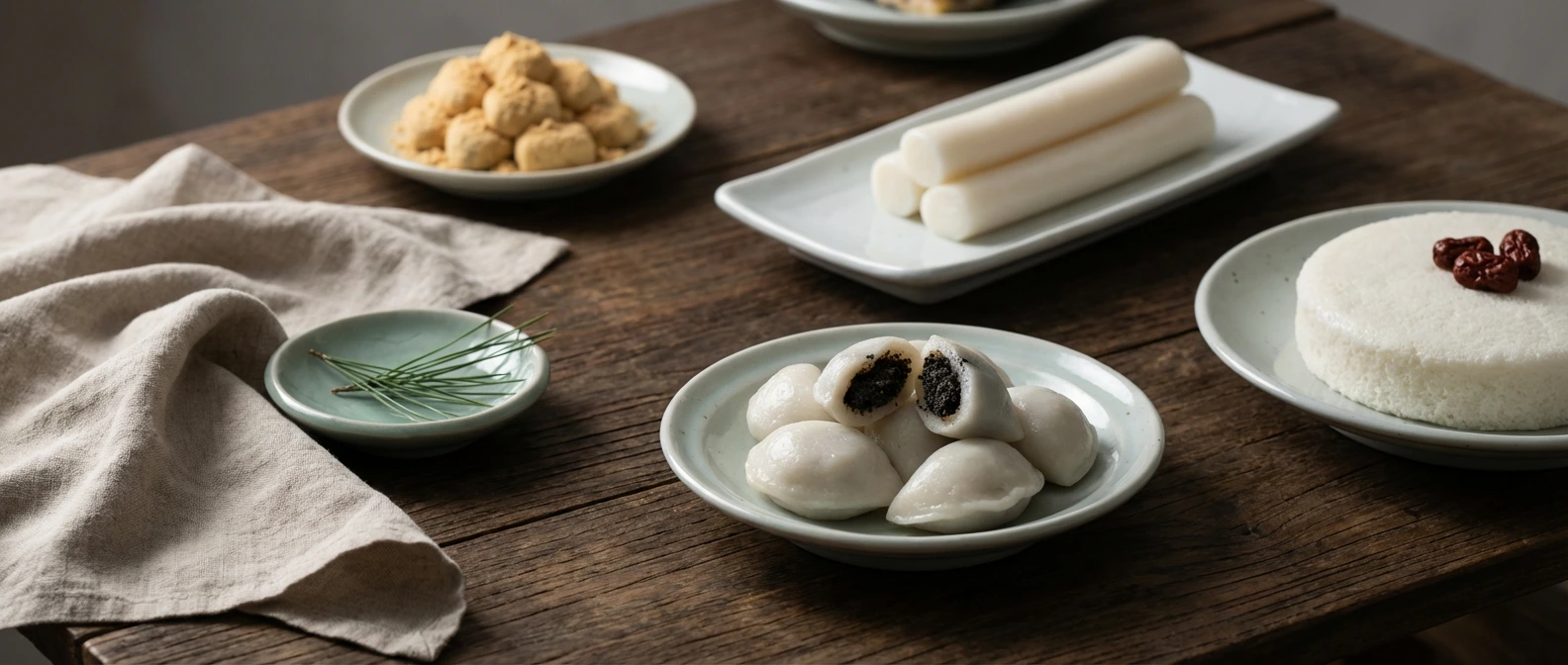
    During Chuseok (Korean harvest festival), families gather to make songpyeon (Korean half-moon rice cakes eaten at Chuseok) together by hand. The rice cakes are stuffed with sesame seeds, sweet red bean, or chestnut paste, then steamed over a bed of pine needles. There is a well-known saying that the person who shapes the prettiest songpyeon will find a good spouse. Parents teach children, grandparents supervise, and the kitchen fills with hours of conversation. The songpyeon itself is secondary to the gathering.

    At jesa (Korean ancestral memorial rites), specific tteok varieties are placed on the ceremonial table according to tradition. The arrangement of food matters. Rice cakes sit alongside jeon (pan-fried dishes), fruit, and soup, all prepared with care and intention. Jesa food carries cultural weight that goes beyond flavour, and tteok occupies a central position on that table.

    Even at weddings and funerals, tteok appears. At a traditional Korean wedding, pyebaek (a post-ceremony family ritual) features stacked rice cakes. At funerals, white baekseolgi (steamed white rice cake) is served because white symbolises purity and mourning. The specific variety chosen for an occasion is never random.


    The Main Types of Korean Rice Cakes

    Tteok comes in more forms than most newcomers expect. Here are four of the most common types you will encounter.

    Garaetteok (cylindrical Korean rice cake) is the variety most people recognize without knowing its name. These are long, smooth, white cylinders made from non-glutinous rice flour. Sliced crosswise, they become the coins floating in tteokguk. Left whole or cut into shorter lengths, they form the base of tteokbokki. Garaetteok has a firm, chewy bite and a clean, neutral rice flavour. It is the workhorse of Korean rice cake cooking.

    Songpyeon is seasonal. Shaped like a half-moon and pinched closed around a sweet filling, songpyeon is tied to Chuseok and rarely eaten outside that holiday. The pine needle steam gives it a subtle woodsy aroma that sets it apart from other tteok.

    Injeolmi is pounded glutinous rice cake coated in roasted soybean powder (kong-garu). It has a softer, stickier chew than garaetteok and a nutty, toasty taste from the powder coating. Injeolmi is popular as a snack, a dessert, and a topping for bingsu (Korean shaved ice). It is one of the most-loved tteok varieties across generations.

    Baekseolgi is a steamed rice cake with a soft, spongy crumb. Its name means “white snow cake,” and it looks the part: pure white, mild, and slightly sweet. Baekseolgi is the classic birthday tteok for a child’s first birthday and is also used at jesa. Its plainness is the point. It represents purity.


    Savoury vs. Sweet: The Divide Most People Miss

    If you have only eaten tteok in tteokbokki, your mental model is locked on savoury. Fair enough. Tteokbokki is Korea’s most famous street food, and it is the entry point for most non-Korean eaters. But the savoury side is actually the smaller half.

    The majority of traditional tteok leans sweet or neutral. Songpyeon is filled with sweetened sesame or red bean. Injeolmi is dusted in sweet soybean powder. Yakshik is a sweet glutinous rice cake made with chestnuts, jujubes, and honey. Hwajeon is a small pan-fried rice cake topped with edible flowers and drizzled with honey. These are closer to confections than to anything you would pair with gochujang (Korean fermented chili paste).

    Then there is the in-between territory. Grilled garaetteok dipped in honey sits right on the line. Tteokguk is savoury, but the rice cake itself is neutral and absorbs whatever broth surrounds it. The same cylinder of garaetteok can be street food or soup, depending on the cut and the sauce.

    This range is what makes tteok difficult to pin down for newcomers, and it is also what makes it interesting. Once you understand that tteok is a format, not a flavour, the category opens up.


    Tteok vs. Mochi vs. Nian Gao: What Is the Difference?

    Korean tteok, Japanese mochi, and Chinese nian gao are all made from rice, and all get called “rice cake” in English. That shared label creates confusion. They are not the same thing.

    Mochi is made from glutinous (sweet) rice that is steamed and then pounded until extremely smooth and elastic. The result is very soft, very stretchy, and almost gummy when fresh. Most mochi is sweet and eaten as a dessert or snack, often filled with red bean paste or ice cream.

    Nian gao (Chinese New Year cake) is a dense, sticky cake made from glutinous rice flour, often sliced and pan-fried. It is sweet, caramelised at the edges, and chewy through the centre.

    Tteok overlaps with both but is broader than either. Tteok uses both glutinous and non-glutinous rice flour, depending on the variety. Garaetteok (the type used in tteokbokki and tteokguk) is made from non-glutinous rice, which gives it a firmer, bouncier chew than mochi. Injeolmi, on the other hand, uses glutinous rice and is closer to mochi in texture. The textures, preparation methods, and culinary roles vary widely within the tteok category itself.

    The simplest way to remember it: mochi is one thing. Nian gao is one thing. Tteok is an entire family.


    Where to Buy Tteok

    Your best option is a Korean grocery store. Fresh garaetteok is often available in the refrigerated section, sometimes made in-house that morning. Fresh tteok has a noticeably better texture than frozen: softer bite, more pliable, and less likely to crack when you cook it. If your city has a Koreatown or a well-stocked Korean supermarket (H Mart, Lotte, Hannam Chain), check there first.

    Frozen tteok is the most reliable option for most people. Bags of sliced garaetteok for tteokguk and cylindrical pieces for tteokbokki are widely available in the freezer aisle of Korean and general Asian grocery stores. Frozen tteok keeps for months and cooks well straight from the freezer. No thawing needed for most recipes.

    Online retailers carry frozen tteok too, though shipping costs for frozen goods can be high. Search for “Korean rice cake tteokbokki” or “sliced rice cake tteokguk” on Korean grocery delivery sites.

    For specialty types like songpyeon or injeolmi, you will typically need a Korean bakery or a Korean grocery that makes fresh tteok. These varieties are harder to find outside Korean communities, and quality drops significantly in frozen form. If you spot them fresh, buy them that day.


    How to Store Tteok

    Fresh tteok lasts 2 to 3 days at room temperature and up to a week in the refrigerator. It hardens as it cools. That firmness is normal and reversible.

    Frozen tteok keeps for 3 to 6 months in the freezer. Keep the bag sealed tightly. If you buy fresh tteok and cannot use it within a few days, freeze it immediately. Spread the pieces on a baking tray in a single layer, freeze until solid, then transfer to a resealable bag. This prevents them from sticking together in a single block.

    To soften hardened tteok, soak it in room-temperature water for 30 minutes to an hour, depending on thickness. For faster results, soak in warm (not boiling) water for 15 to 20 minutes. Do not microwave dry tteok. It turns rubbery and uneven. Soaking restores the chew properly.


    Frequently Asked Questions

    What does tteok taste like?

    Most tteok has a mild, clean rice flavour. It tastes like freshly cooked rice compressed into a denser, chewier form. The flavour is intentionally neutral because tteok is designed to absorb sauces, broths, and seasonings. Sweeter varieties like injeolmi or songpyeon carry additional flavour from their coatings or fillings, but the rice base itself stays subtle.

    Is tteok the same as mochi?

    No. Tteok and mochi are both rice cakes, but they differ in ingredients, texture, and culinary use. Mochi is made exclusively from glutinous rice and is very soft and stretchy. Tteok includes varieties made from both glutinous and non-glutinous rice, which produces a wider range of textures from bouncy and firm (garaetteok) to soft and sticky (injeolmi). They are related concepts from different food cultures, not interchangeable products.

    Can you eat tteok raw?

    Tteok is cooked during production (steamed or pounded), so it is safe to eat without further cooking. Fresh tteok, still soft from the steamer, is eaten as-is in Korea. However, most store-bought tteok is sold chilled or frozen and has firmed up, so it benefits from being cooked again: boiled in soup, stir-fried in sauce, or grilled. Eating it cold and firm is safe but not particularly pleasant.

    Why is tteok so chewy?

    The chew comes from the starch structure of rice. When rice flour is steamed and pounded, the starch molecules align and form a dense, elastic network. Non-glutinous rice (used for garaetteok) produces a firm, bouncy chew. Glutinous rice (used for injeolmi) produces a softer, stickier chew. The pounding process is what creates the characteristic texture. The more the rice is worked, the chewier it becomes.

    Where can I buy tteok?

    Korean grocery stores are the best source. Check the refrigerated section for fresh garaetteok and the freezer aisle for frozen tteok in pre-cut shapes (cylinders for tteokbokki, ovals for tteokguk). General Asian supermarkets often carry frozen options as well. For specialty types like songpyeon or injeolmi, look for a Korean bakery or a store that makes tteok fresh. Online Korean grocery retailers also stock frozen tteok.

  • Tteokbokki: Spicy Korean Rice Cakes in Gochujang Sauce

    Tteokbokki: Spicy Korean Rice Cakes in Gochujang Sauce

    Tteokbokki smells like a Seoul side street in winter. Gochujang caramelising in a wide pan, steam lifting off glossy red rice cakes, the sweet-sharp hit of chili catching the back of your throat before you have even picked up a fork. This is Korea’s defining street food, sold from pojangmacha (Korean street food stalls) in shallow aluminium trays with toothpicks poking out at angles.

    The good news: it is one of the simplest Korean dishes you can cook at home. Five core ingredients, one pot, about 30 minutes. The sauce comes together in the same pan as everything else.

    Here is how to make it.


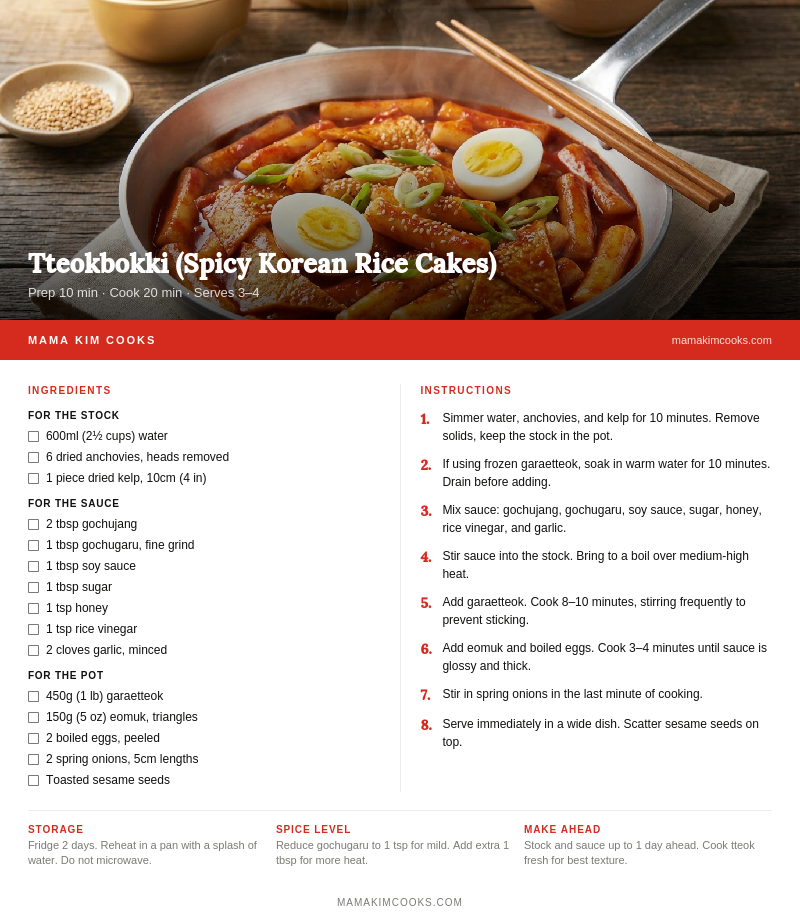
     Tteokbokki recipe card showing ingredients and step-by-step instructions

    Tteokbokki Recipe (Spicy Korean Rice Cakes)

    Description: Chewy Korean rice cakes simmered in a sweet, spicy gochujang sauce with fish cakes and boiled eggs. A classic Korean street food tteokbokki recipe, ready in 30 minutes.

    Prep time: 10 minutes

    Cook time: 20 minutes

    Total time: 30 minutes

    Servings: 3–4

    Ingredients

    For the stock:

    • 600ml (2½ cups) water
    • 6 dried anchovies, heads and intestines removed
    • 1 piece dried kelp, about 10cm (4 in) square

    For the sauce:

    • 2 tablespoons gochujang (Korean fermented chili paste)
    • 1 tablespoon gochugaru (Korean dried chili flakes), fine grind
    • 1 tablespoon soy sauce
    • 1 tablespoon sugar
    • 1 teaspoon honey
    • 1 teaspoon rice vinegar
    • 2 cloves garlic, minced

    For the pot:

    • 450g (1 lb) garaetteok (cylindrical Korean rice cakes)
    • 150g (5 oz) eomuk (Korean fish cake), cut into triangles or bite-sized pieces
    • 2 boiled eggs, peeled
    • 2 spring onions, cut into 5cm (2 in) lengths
    • Toasted sesame seeds for garnish

    Instructions

    1. Combine the water, dried anchovies, and kelp in a wide, shallow pot or deep pan over medium heat. Bring to a gentle simmer and cook for 10 minutes. Remove the anchovies and kelp with a slotted spoon. Keep the stock in the pot.
    2. If using frozen garaetteok, soak them in warm water for 10 minutes while the stock simmers. Drain before adding to the pot.
    3. Mix the sauce ingredients together in a small bowl: gochujang, gochugaru, soy sauce, sugar, honey, rice vinegar, and garlic. Stir until smooth.
    4. Add the sauce mixture to the anchovy-kelp stock in the pot. Stir until fully dissolved.
    5. Bring the pot to a boil over medium-high heat. Add the garaetteok. Cook for 8–10 minutes, stirring frequently to prevent sticking. The rice cakes will begin to soften and the sauce will start to thicken.
    6. Add the eomuk and boiled eggs. Continue cooking for another 3–4 minutes, stirring often. The sauce should reduce into a glossy, sticky coating that clings to every piece.
    7. Stir in the spring onions during the last minute of cooking.
    8. Transfer to a wide, shallow dish. Scatter sesame seeds over the top. Serve immediately while the rice cakes are soft and chewy.

    Notes

    • Storage: Refrigerate leftovers in an airtight container for up to 2 days. The rice cakes will firm up as they cool. Reheat in a pan with a splash of water over medium heat until the sauce loosens and the tteok softens again. Do not microwave: it makes the rice cakes rubbery.
    • Make ahead: The stock and sauce can be prepared up to a day in advance. Cook the tteokbokki fresh for the best texture.
    • Substitution: If garaetteok is unavailable, check the frozen aisle of any Asian supermarket. Sliced tteok (the oval coins for tteokguk) works in a pinch, though the chew will be different. Do not use Japanese mochi or Chinese nian gao.
    • Spice level: For mild tteokbokki, reduce gochugaru to 1 teaspoon or leave it out entirely. The gochujang alone provides moderate heat with more sweetness. For extra heat, add an extra tablespoon of gochugaru or drop in a sliced cheongyang gochu (Korean hot green chili pepper).

    ABOUT THE DISH

    What Is Tteokbokki?

    Tteokbokki (spicy Korean rice cakes) is street food stripped down to its essentials. Thick, chewy cylinders of garaetteok (cylindrical Korean rice cake) cooked in a red, sweet-and-spicy sauce built on gochujang (Korean fermented chili paste). Walk through any market district in anywhere in South Korea, and you will see it bubbling away in wide aluminium pans behind steamy glass.

    The dish has an unexpected origin. The original tteokbokki was a royal court preparation from the Joseon dynasty: rice cakes braised gently in soy sauce with beef and vegetables. No chili in sight.

    That version, called gungjung tteokbokki, still exists today as a milder, more refined cousin. The red, spicy version most people know appeared in the 1950s.

    A vendor in Seoul’s Sindang-dong market dropped rice cakes into gochujang sauce, either by accident or by experiment depending on who tells the story. It caught on immediately.

    By the 1960s, it had become the street food it remains today, sold everywhere from late-night pojangmacha to school gates to convenience stores.

    The flavour hits in layers. Sweetness arrives first from the sugar and fermented gochujang. Then a rolling, warm heat builds. Underneath both, there is a savoury bass note from the anchovy-kelp stock.

    But what keeps people coming back is the texture. Garaetteok has a dense, satisfying chew that absorbs the sauce without falling apart. Pick one up with chopsticks and the sauce clings to it in a glossy red coat. That combination of soft resistance and bold, sticky sauce is the whole appeal.


    INGREDIENT NOTES

    Ingredients and What They Do

    Gochujang is the engine of this dish. It delivers sweetness, heat, fermented depth, and the distinctive red colour all at once. Heat levels vary significantly between brands. CJ Haechandle and Sunchang are widely available and sit in the moderate range. If you want less heat, look for a label that says “mild” (1 on the Korean heat scale). If you want more punch, do not switch to a hotter gochujang. Instead, increase the gochugaru. Gochujang controls the sweetness and body of the sauce, so changing brands changes everything, not just the heat.

    Gochugaru (Korean dried chili flakes) adds a second, sharper layer of heat with more raw chili flavour and less sweetness than gochujang. It also deepens the colour. Use fine-ground gochugaru for this recipe, not the coarser flakes used for kimchi. The ratio between gochujang and gochugaru is your heat control dial. More gochugaru means spicier and less sweet. Less means milder and rounder.

    Garaetteok comes fresh or frozen at Korean grocery stores. Fresh tteok is softer and cooks in about 8 minutes. Frozen tteok needs a 10-minute soak in warm water before cooking to rehydrate. Both produce good results. The important thing: buy the thick cylinders, about the width of your thumb. Do not use the thin, oval-sliced rice cakes made for tteokguk (Korean rice cake soup). Tteokbokki needs that cylindrical shape to hold its chew through the simmering process.

    Eomuk (Korean fish cake) is the classic companion to tteokbokki. The flat sheet variety is most common. Cut it into triangles or fold it onto skewers before adding to the pot. Eomuk soaks up the sauce beautifully and provides a mild, savoury contrast to the chewy rice cakes.

    The anchovy-kelp stock is worth the extra five minutes it takes. Dried anchovies and a square of kelp simmered in water produce a clean, umami-rich stock that gives the sauce real depth. Water alone will work, but the flavour will be noticeably flatter.


    TIPS AND VARIATIONS

    Tips for the Best Tteokbokki

    Let the sauce reduce properly. This is the single biggest difference between good tteokbokki and great tteokbokki.

    The sauce needs to cook down until it turns glossy and clings to each rice cake in a thick, shiny coat. If it still looks watery and pools at the bottom of the pan, keep cooking. Stir constantly during the last few minutes. You will see the sauce visibly thicken and tighten around the tteok. That gloss is what you are looking for.

    Do not crowd the pot with tteok. Rice cakes expand as they absorb water and soften. If you pack too many into the pot, they clump together and cook unevenly. Give them enough room to move around freely when you stir.

    Think of the sauce as the main event. This is something Koreans understand instinctively about tteokbokki: the sauce is not just a coating, it is a dipping sauce. That is why the pot usually has extras in it beyond the rice cakes. Eomuk, boiled eggs, gimmari (deep-fried seaweed glass noodle rolls), and even fried dumplings all go into the pan so you can drag them through that sauce. Build the pot with dippable things and you will eat the way tteokbokki is meant to be eaten.

    Watch the texture window. Garaetteok goes from perfectly chewy to mushy in a narrow span. Start checking at 8 minutes. When the rice cakes bend easily but still spring back when pressed, they are done. If they stop bouncing back, you have gone too far. Slightly underdone is better than overdone. The residual heat will soften them a little more after you take the pan off the burner.

    Adjusting the spice level: reduce the gochugaru to 1 teaspoon for mild heat, or leave it out entirely and let the gochujang carry the flavour solo. For a serious kick, add a sliced cheongyang gochu (Korean hot green chili pepper) at the same time as the tteok.

    Rose Tteokbokki (Cream Version)

    For anyone who finds the classic too spicy, rose tteokbokki has taken Korean street food shops by storm. Reduce the gochujang to 1 tablespoon and skip the gochugaru entirely. After the rice cakes have softened, stir in 120ml (½ cup) of heavy cream and 30g (1 oz) of shredded mozzarella. Cook for another 2–3 minutes until the cheese melts into the sauce. The result is pink, creamy, and mild enough for heat-averse eaters. The chew of the rice cakes against the rich sauce makes this version just as satisfying.


    Frequently Asked Questions

    Why is my tteokbokki sauce too thick or too thin?

    Too thick usually means the sauce reduced too far or the liquid-to-paste ratio was off from the start. Add stock or water a tablespoon at a time, stirring over medium heat, until it loosens. Too thin means the sauce has not cooked down enough. Keep simmering and stirring. As the rice cakes cook, starch releases into the liquid and thickens it naturally. This takes patience, not extra ingredients. If the sauce is still thin after the tteok is cooked through, remove the rice cakes and let the sauce reduce on its own for another 2–3 minutes, then add everything back.

    Can I use rice paper instead of rice cakes?

    No. Rice paper and garaetteok are entirely different products made for different purposes. Rice paper is a thin, brittle sheet that dissolves in liquid. Garaetteok is a dense, pounded rice cake designed to hold its shape and chew through cooking. There is no substitute that replicates the texture. If you cannot find garaetteok at a Korean grocery store, check the frozen section of any general Asian supermarket. It is usually stocked alongside frozen dumplings and is often labelled “rice cake sticks” or “tteokbokki tteok.”

    What does tteokbokki taste like?

    Sweet hits first. Then a warm, building chili heat from the gochujang. Underneath both, there is a savoury depth from the stock. The flavour is bold without being one-note because the fermented gochujang brings a complexity that plain chili sauce cannot replicate. Texture matters just as much as flavour here. Garaetteok is dense and chewy in a way that no other Korean ingredient quite matches. If you have eaten Japanese mochi, the chew belongs to a similar family, but garaetteok is firmer, less sticky, and holds up better in liquid.

    Is tteokbokki gluten-free?

    The rice cakes themselves are typically gluten-free: they are made from rice flour and water. However, two other components may contain gluten. Eomuk (fish cake) almost always contains wheat starch as a binder. And some gochujang brands include wheat or barley in the fermentation base. For a fully gluten-free version, skip the eomuk and read the gochujang label. Brands from Sempio and some organic Korean producers make wheat-free versions. Always check, because labelling varies.

    How spicy is tteokbokki?

    Classic tteokbokki sits at a moderate-to-hot level. The gochujang provides a warm, spreading heat rather than a sharp, immediate burn. With the full amount of both gochujang and gochugaru in this recipe, expect a solid kick that most adults can handle comfortably. Children or heat-sensitive eaters should start with the gochujang only (no gochugaru). To go hotter, increase the gochugaru by a tablespoon or add a sliced cheongyang gochu to the pot.

  • What is Bibimbap? Explaining Korea’s Mixed Rice Bowl

    What is Bibimbap? Explaining Korea’s Mixed Rice Bowl

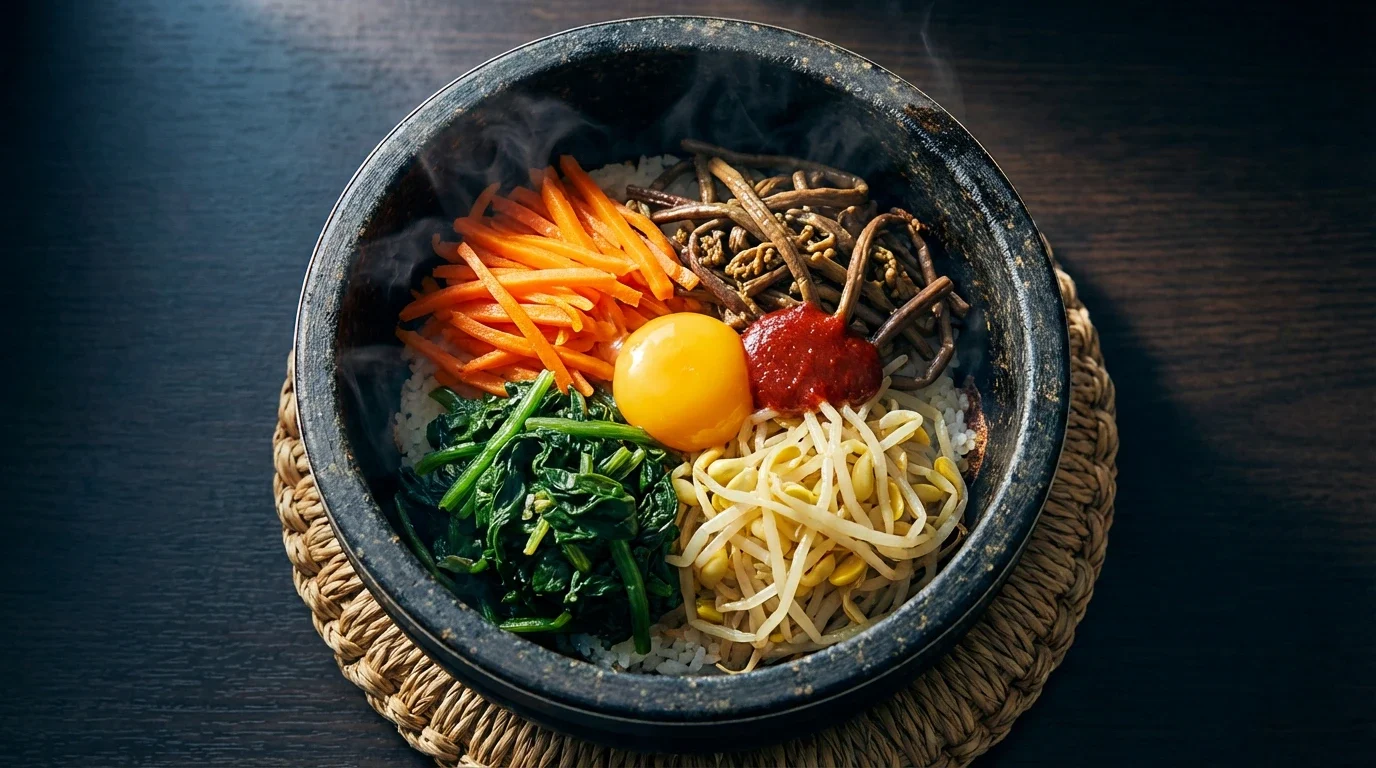
    A proper bibimbap arrives at the table like a colour wheel. White rice in the centre, and around it: deep green spinach, pale bean sprouts, carrots, dark fernbrake, yellow strips of egg, and seasoned beef. A fried egg on top. A spoonful of red gochujang (Korean fermented chili paste) off to one side, waiting.

    Then you wreck it.

    You take your spoon and mix everything together until the white rice disappears under colour and sauce. That moment of mixing is the whole point. Korean food bibimbap is one of the most recognised dishes in the world, but it is also one of the most misunderstood. It is not a salad bowl. It is not a leftover fridge clean-out. It is a dish with a name that tells you exactly what to do: bibim means “mixed,” and bap means “rice.” Mix your rice. Eat.

    This post covers what bibimbap actually is, what goes in it, the main versions you will encounter, regional differences, and how to start making it at home.

    What Is Bibimbap? (The Short Answer)

    Bibimbap (Korean mixed rice bowl) is a bowl of steamed white rice topped with individually prepared namul (Korean seasoned vegetable side dishes), sliced meat, a fried or raw egg, and gochujang. Everything is mixed together before eating. It is an everyday Korean dish, not a special-occasion food, and it appears on tables across Korea at lunch counters, home kitchens, and restaurants alike.

    The Role of Bibimbap in Korean Food Culture

    Bibimbap is often presented internationally as something exotic or elaborate. In Korea, it is closer to the opposite. It is ordinary. It is Tuesday lunch. It is what you eat when the fridge has three kinds of namul left over from yesterday’s dinner and a bit of rice. That ordinariness is precisely what makes it important.

    The dish has roots that are difficult to pin to a single origin story. Some food historians trace it to the practice of mixing rice with banchan (Korean side dishes) on the eve of Lunar New Year, when families would use up leftovers before starting fresh. Others connect it to farmers eating mixed rice in the fields, where carrying separate dishes was impractical. A third origin theory links it to jesa (ancestral memorial rites), where offerings of rice, vegetables, and meat were combined and eaten after the ceremony.

    None of these origins are definitively proven. What is clear is that the logic of bibimbap, combining rice with whatever prepared toppings are available, fits seamlessly into how Koreans already eat. A standard Korean meal is rice, soup, and several banchan. Bibimbap just puts the rice and banchan into the same bowl and adds gochujang. The leap is small.

    What makes bibimbap different from simply dumping leftovers on rice is the care taken with each component. Every namul is prepared individually: blanched, seasoned, and dressed with sesame oil and garlic. The vegetables are cooked to their own ideal texture. The rice is freshly steamed. The gochujang ties it all together. The result is a single bowl where five or six distinct flavours and textures merge into something unified but still varied with every bite.

    What Goes in Bibimbap

    A standard bibimbap has five categories of topping on a base of steamed white rice. Whether you are ordering korean food bibimbap at a restaurant or making it yourself, the specifics vary by cook, season, and region, but the categories stay consistent.

    Namul (seasoned vegetables): These are the core. A classic combination includes sigeumchi namul (seasoned spinach), kongnamul (soybean sprouts), gosari namul (seasoned fernbrake), julienned carrots, and julienned zucchini. Each is prepared separately. The spinach is blanched and dressed with sesame oil and garlic. The kongnamul is boiled until just tender. The gosari is rehydrated, sautéed, and seasoned with soy sauce. This individual preparation is what separates bibimbap from a stir-fry. The vegetables keep their own character even after mixing.

    Meat: Thinly sliced beef, often prepared bulgogi-style (Korean marinated grilled beef) with soy sauce, sesame oil, garlic, and a touch of sugar. Minced beef seasoned the same way is also common. Some versions skip meat entirely.

    Egg: A fried egg with a runny yolk is the standard. When you mix bibimbap, the yolk breaks and coats the rice. Some regional versions use a raw egg yolk instead.

    Gochujang sauce: The red chili paste that binds the bowl. Sometimes served straight from the jar, sometimes mixed with sesame oil and a little sugar to make a smoother sauce. The amount is up to you. Start with a tablespoon and adjust.

    Sesame oil: A drizzle of toasted sesame oil goes in just before mixing. It rounds out the flavour and gives the rice a nutty richness.

    I have eaten bibimbap at a potluck where every friend brought one topping they wanted to add. We mixed it all together in a large bowl and ate while talking. It was chaotic, generous, and completely in the spirit of the dish. Bibimbap rewards that kind of informality.

    Regular Bibimbap vs. Dolsot Bibimbap

    There are two main ways bibimbap is served, and the difference matters.

    Regular bibimbap comes in an ordinary bowl at room temperature (or slightly warm). The rice is soft throughout. This is the version you are most likely to make at home and the version served at most casual Korean restaurants. It is simple, quick, and satisfying.

    Dolsot bibimbap (stone pot bibimbap with crispy rice) is served in a dolsot, a thick stone pot heated until screaming hot. The rice is pressed into the pot before the toppings go on, and as you eat, the bottom layer of rice crisps into a golden, crunchy crust called nurungji. The egg, if cracked raw onto the rice, cooks against the searing stone. The sizzle when the bowl arrives at the table is part of the experience.

    The nurungji is the reason many people prefer dolsot bibimbap. That contrast between soft, saucy rice on top and shatteringly crisp rice at the bottom changes the dish completely. If you have only ever had regular bibimbap, the stone pot version is worth seeking out.

    A word of caution: the pot stays dangerously hot for the entire meal. Use the spoon, not your fingers, and do not touch the rim.

    Regional Variations: Jeonju and Beyond

    Bibimbap is eaten everywhere in Korea, but the most famous regional version comes from Jeonju, a city in North Jeolla Province known as Korea’s food capital.

    Jeonju bibimbap is more elaborate than the everyday version. The rice is cooked in beef bone broth instead of plain water, which gives it a savoury depth before any toppings go on. The number of namul increases, sometimes to over a dozen, including ingredients like bellflower root, crown daisy, and raw beef tartare (yukhoe). A raw egg yolk often replaces the fried egg. Pine nuts and ginkgo nuts appear as garnish. It is a composed, ceremonial version of what is otherwise a casual dish.

    Other regional versions exist too. Tongyeong, on the southern coast, makes bibimbap with fresh seafood. Jinju bibimbap, from nearby Jinju, uses raw beef and a clear broth served alongside. In temple cuisine, bibimbap goes fully vegan, using only seasonal mountain vegetables and no alliums (garlic, onion, spring onion) per Buddhist dietary practice.

    I once ate a vegan bibimbap served by an ahjumma in a small restaurant near a temple in Hwacheon. No meat, no egg. Just seasonal local vegetables from the surrounding mountains, each one prepared simply. It made everything else feel overworked. Sometimes the best bibimbap is the quietest one.

    Common Misconceptions About Korean Food Bibimbap

    “Bibimbap is a leftover dish.” Western food media often describes bibimbap as Korea’s way of using up fridge scraps. This framing misses the point. While bibimbap can use leftover namul, the dish is not defined by leftovers any more than a sandwich is defined by stale bread. Restaurants and home cooks regularly prepare bibimbap toppings from scratch. The dish has a specific structure and intention. Calling it a “leftover dish” reduces it to something accidental, when the reality is deliberate.

    “You can put anything in bibimbap.” Technically you can, but traditional bibimbap follows a pattern: seasoned vegetables, protein, egg, and gochujang on rice. Not every bowl of rice with toppings is bibimbap. The preparation of each namul individually, the inclusion of gochujang, and the act of mixing are what make it bibimbap rather than just a rice bowl.

    “Bibimbap is always spicy.” Gochujang has heat, but it is not a fire-alarm chili paste. The spice level depends entirely on how much you add. With a small amount of gochujang, bibimbap is mild and savoury. You control it. Many Korean children eat bibimbap with very little or no gochujang at all.

    How to Make Bibimbap at Home

    Bibimbap looks impressive but the actual cooking is straightforward. The key is to prepare each topping separately, arrange them on rice, and mix at the table.

    Start with three or four namul. Spinach, soybean sprouts, and carrots are the easiest starting combination. Season each simply with sesame oil, a pinch of salt, and minced garlic. Cook your rice, fry an egg, and buy a jar of gochujang. That is a complete bibimbap.

    The common mistake is trying to replicate a restaurant version with eight toppings on the first attempt. You will spend two hours preparing vegetables and burn out before the rice is done. Start small. Add one new namul each time you make it. Within a few rounds, you will have a version that looks and tastes like the real thing.

    For dolsot bibimbap at home, you will need a stone pot (available at Korean grocery stores or online for around $25–40 USD). Heat it with a little sesame oil, press rice into the bottom, add toppings, and let it sit on medium heat for a few minutes until you hear the rice crackling. The nurungji forms on its own.

    Frequently Asked Questions

    What is bibimbap made of?

    Bibimbap is made from steamed white rice topped with individually seasoned vegetables (namul), sliced or minced beef, a fried egg, and gochujang (Korean fermented chili paste). Common vegetables include spinach, soybean sprouts, fernbrake, carrots, and zucchini. Toasted sesame oil is added before mixing. The exact toppings vary by region, season, and personal preference, but the base structure of rice, vegetables, protein, egg, and gochujang stays consistent.

    What does bibimbap taste like?

    Bibimbap tastes savoury, slightly sweet, nutty, and mildly spicy. The gochujang gives it a warm chili heat balanced by fermented sweetness. The sesame oil adds nuttiness. Each vegetable brings its own flavour: earthy spinach, crunchy bean sprouts, chewy fernbrake. When mixed together, the flavours blend into something greater than any single component. The spice level depends on how much gochujang you add.

    Is bibimbap healthy?

    Bibimbap is generally a well-balanced meal. Korean food bibimbap contains complex carbohydrates from rice, fibre and vitamins from multiple vegetables, protein from beef and egg, and healthy fats from sesame oil. A typical serving runs between 500 and 700 calories depending on the amount of rice and meat. The vegetable-to-rice ratio is high compared to many rice dishes. Vegan and vegetarian versions, which skip the meat and egg, are lower in calories and still nutritionally complete.

    Is bibimbap served hot or cold?

    Regular bibimbap is served at room temperature or slightly warm. The rice is warm, and the vegetable toppings range from room temperature to slightly cool. Dolsot bibimbap is served very hot in a sizzling stone pot and stays hot throughout the meal. There is no cold version of bibimbap, though the related dish bibim naengmyeon (Korean cold buckwheat noodles) uses a similar mixing concept with cold noodles instead of rice.

    What is dolsot bibimbap?

    Dolsot bibimbap is bibimbap served in a dolsot, a thick, pre-heated stone pot. The intense heat of the pot crisps the bottom layer of rice into a golden crust called nurungji. The egg cooks against the side of the pot, and the dish stays sizzling hot as you eat. The crispy rice adds a texture that regular bibimbap does not have. Dolsot bibimbap is widely considered the superior version for its contrast between soft and crunchy rice.