
Category: Korean Food Culture

  • Why Korean Fried Chicken Is So Crispy (And How It’s Different)

    Why Korean Fried Chicken Is So Crispy (And How It’s Different)

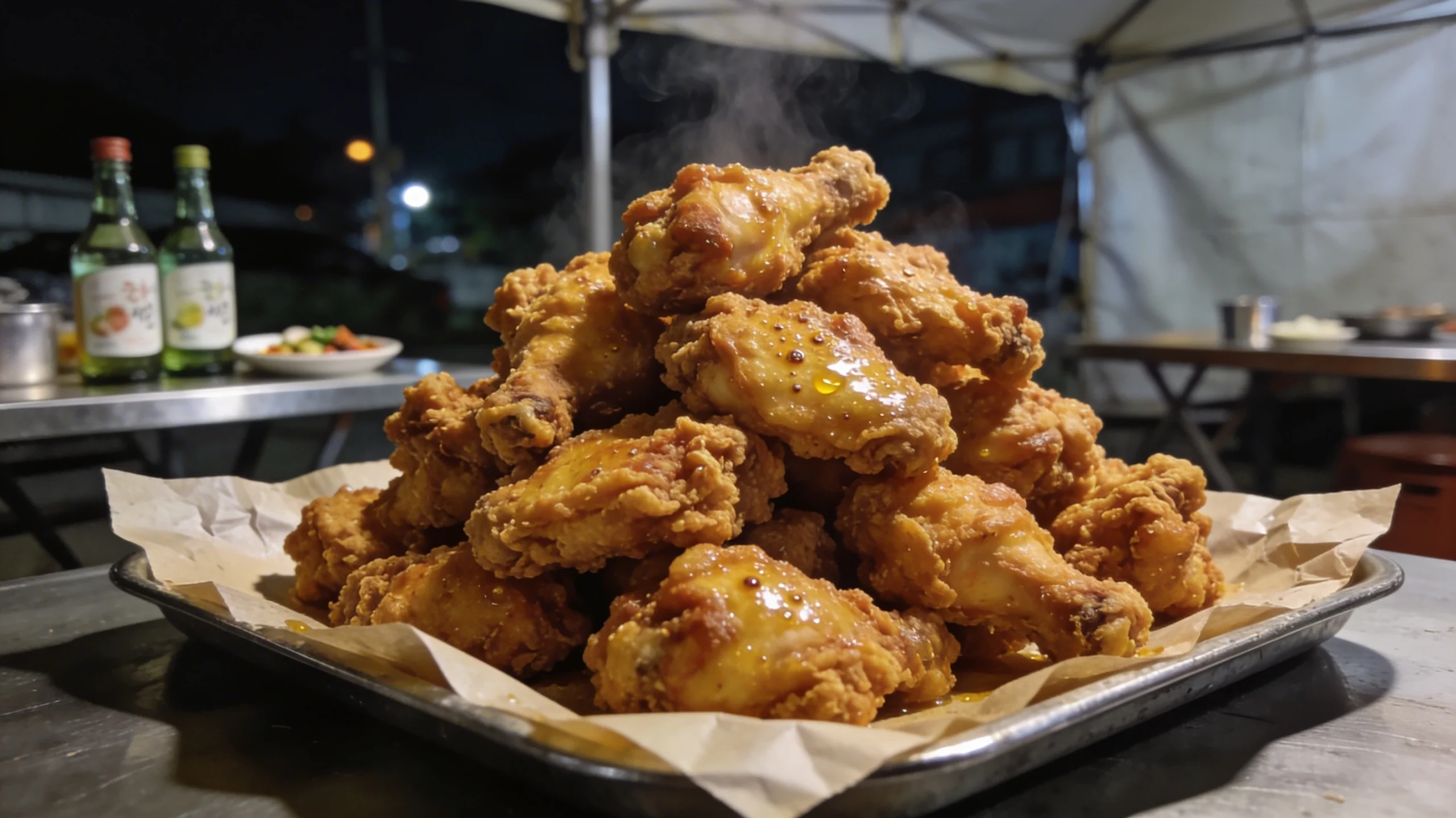
    If you’ve ever bitten into Korean fried chicken and wondered why the coating shatters so cleanly, why it stays crisp even when drowned in sauce, why it feels lighter than what you grew up calling fried chicken — the answer is technical, deliberate, and completely different from the American or Japanese approach.

    If you don’t know what I’m talking about. You need to try it today.

    Korean fried chicken is double-fried, uses a thinner batter, and fries at a lower initial temperature. These three methods work together to create a coating that’s thin, brittle, and engineered to resist sogginess. It’s not just crispy. It’s structurally crisp.

    Double-frying is the foundation

    The first fry happens at a lower temperature, usually around 160°C (320°F). The chicken cooks through, and fat renders out. The coating firms up but doesn’t brown much. Then the chicken rests.

    The second fry happens at a higher temperature, between 180–190°C (350–375°F). This time, the goal is pure surface treatment. The coating dries out completely, browns fast, and develops that glass-like crunch. The interior has already been cooked, so you’re not risking underdone meat while you chase the right exterior.

    Double-frying does two things at once: it removes moisture from the coating more thoroughly than a single fry ever could, and it creates a layered structure where the outer surface has been heat-shocked into brittleness. The result is a shell that snaps audibly when you bite it.

    American fried chicken is typically fried once, at a steady medium-high heat. The coating is thicker, softer, and more bready. It absorbs moisture from the meat as it sits. Japanese karaage also fries once, though at a higher heat and with a lighter starch coating. But it doesn’t go through that second structural transformation that Korean chicken does.

    The batter is thin and starch-heavy

    Korean fried chicken batter is not thick. It’s often a mix of potato starch, cornstarch, and a small amount of flour, whisked with cold water or a lightly carbonated liquid. Some recipes skip flour entirely.

    Starch fries differently than flour. Flour contains gluten, which creates chew and structure. Starch doesn’t. It crisps up brittle and light. The coating on Korean fried chicken is more like a shell than a crust. It doesn’t absorb oil or steam the way a flour-heavy batter does.

    The thinness matters because a thick coating traps moisture. Even if you fry it twice, a dense batter will hold onto steam between the layers. Korean chicken batter is applied in a thin, even layer. When it hits the oil, it sets fast and fries dry.

    American-style fried chicken often uses buttermilk, flour, and sometimes breadcrumbs. The coating is thick and fluffy. Japanese karaage uses potato starch too, but it’s applied dry, more like a dusting than a wet batter. Korean chicken splits the difference. It is wet enough to coat evenly, starchy enough to fry brittle.

    Lower temperature on the first fry makes all the difference

    That first fry at 160°C does something most people don’t realise. It gives the moisture inside the chicken time to escape without the coating seizing up too fast. If you fry at high heat from the start, the outside hardens before the inside has finished releasing steam. That steam has nowhere to go, so it gets trapped under the coating. Later, it softens the crust from the inside.

    By starting low, the chicken gently expels moisture while the coating sets slowly. By the time the second fry happens, the chicken is already dry inside. The high heat is just finishing the surface.

    This also explains why Korean fried chicken holds up under sauce better than other styles. The coating isn’t porous. It’s sealed. When you toss it in yangnyeom or ganjang sauce, the glaze sits on top of the shell rather than soaking in. You get sweet, spicy, sticky chicken that still cracks when you bite it.

    How it compares to other styles

    American fried chicken is all about the coating. It’s thick, flavourful, soft when fresh, and meant to be eaten right away. The juices from the chicken seep into the breading, which is part of the appeal. It’s comforting, rich, heavy.

    Japanese karaage is often marinated first — usually in soy sauce, ginger, and garlic — then dusted in potato starch and fried once at high heat. The coating is light and crisp, but it doesn’t have the structural crunch of Korean chicken. It’s meant to be eaten hot and fresh, often with a squeeze of lemon. It doesn’t hold up as well once it cools.

    Korean fried chicken is designed differently. It’s meant to last. It’s meant to be shared, to sit on the table while you talk, to stay crisp even after being tossed in sauce. The double-fry and starch-based batter make that possible.

    Why the texture is different

    When you bite into Korean fried chicken, the coating doesn’t compress. It shatters. The inside is juicy, but the exterior stays dry. There’s no grease pooling on your fingers, no soft patches where the batter absorbed oil.

    That’s because the batter has been fried to the point where almost all its moisture is gone. The thin application means there’s less mass to hold onto oil. The starch content means it crisps instead of puffing.

    The double-fry also creates micro-layers in the coating. The first fry sets the structure. The second fry blisters and hardens the outer surface. What you end up with is a coating that has both crunch and snap.

    The crispness is engineered, not accidental

    Korean fried chicken is crispy because every step in the process has been optimised for that outcome. The batter composition, the frying temperature, the rest period between fries, the thinness of the coating. None of it is arbitrary.

    It’s a method that prioritises texture over everything else. The chicken itself is seasoned lightly, if at all, before frying. The flavour comes from the sauce, or from eating it with pickled radish and cold beer. The coating’s job is to stay crisp, and it does that better than almost any other fried chicken style in the world.

    If you’ve been chasing that texture at home and coming up short, it’s probably not your technique. It’s the method. Korean fried chicken isn’t just fried chicken done well. It’s fried chicken done differently.
  • Tteok, the Korean Rice Cake That Shows Up at Every Major Moment

    Tteok, the Korean Rice Cake That Shows Up at Every Major Moment

    In Korea, rice cakes show up at almost every moment that matters. A baby’s first birthday. Lunar New Year morning. The Chuseok table in autumn. A wedding. A funeral. The Korean word for all of these is tteok (Korean rice cake), and it covers far more ground than most people outside Korea realize. If your only reference point is the chewy cylinders in a plate of tteokbokki (spicy Korean rice cakes), you are seeing one branch of a very large tree.

    I used to think the same thing, honestly. Tteok meant tteokbokki, and that was it. Then I had tteok grilled over an open flame and dipped in honey, and suddenly the category opened wide. But the one that really changed my understanding was tteokguk (Korean rice cake soup): just a simple, clear broth with sliced rice cakes, and it was so warm and satisfying that I couldn’t believe how easy it was to make.

    This guide covers the full world of Korean food rice cake varieties, from everyday street food to ceremonial dishes shaped by hand. You will learn what tteok actually is, the major types, how they taste, and where to find them.


    What Is Tteok? (The Short Answer)

    Tteok is the Korean word for rice cake. It is not a single dish but a broad category of foods made from rice flour, either steamed, pounded, or shaped. Some varieties are savoury, some are sweet, and some are eaten as part of religious rituals. There are over a hundred recognized types across Korea’s regional traditions. The word covers everything from chewy cylinders cooked in spicy sauce to delicate steamed cakes filled with red bean paste.


    Tteok in Korean Culture: More Than a Snack

    Rice cakes are woven into Korean life in ways that go far beyond the kitchen. In Korea, tteok is present at births, deaths, and nearly every milestone in between.

    On a baby’s first birthday (doljanchi), families prepare towers of colourful tteok to share with guests. The act of distributing rice cakes is itself meaningful: the more people who eat them, the more blessings the child receives. At Seollal (Korean Lunar New Year), the entire country eats tteokguk. Finishing a bowl is said to add a year to your age. It is one of the most universally observed food traditions in Korea, cutting across regions, wealth, and generation.

    During Chuseok (Korean harvest festival), families gather to make songpyeon (Korean half-moon rice cakes eaten at Chuseok) together by hand. The rice cakes are stuffed with sesame seeds, sweet red bean, or chestnut paste, then steamed over a bed of pine needles. There is a well-known saying that the person who shapes the prettiest songpyeon will find a good spouse. Parents teach children, grandparents supervise, and the kitchen fills with hours of conversation. The songpyeon itself is secondary to the gathering.

    At jesa (Korean ancestral memorial rites), specific tteok varieties are placed on the ceremonial table according to tradition. The arrangement of food matters. Rice cakes sit alongside jeon (pan-fried dishes), fruit, and soup, all prepared with care and intention. Jesa food carries cultural weight that goes beyond flavour, and tteok occupies a central position on that table.

    Even at weddings and funerals, tteok appears. At a traditional Korean wedding, pyebaek (a post-ceremony family ritual) features stacked rice cakes. At funerals, white baekseolgi (steamed white rice cake) is served because white symbolises purity and mourning. The specific variety chosen for an occasion is never random.


    The Main Types of Korean Rice Cakes

    Tteok comes in more forms than most newcomers expect. Here are four of the most common types you will encounter.

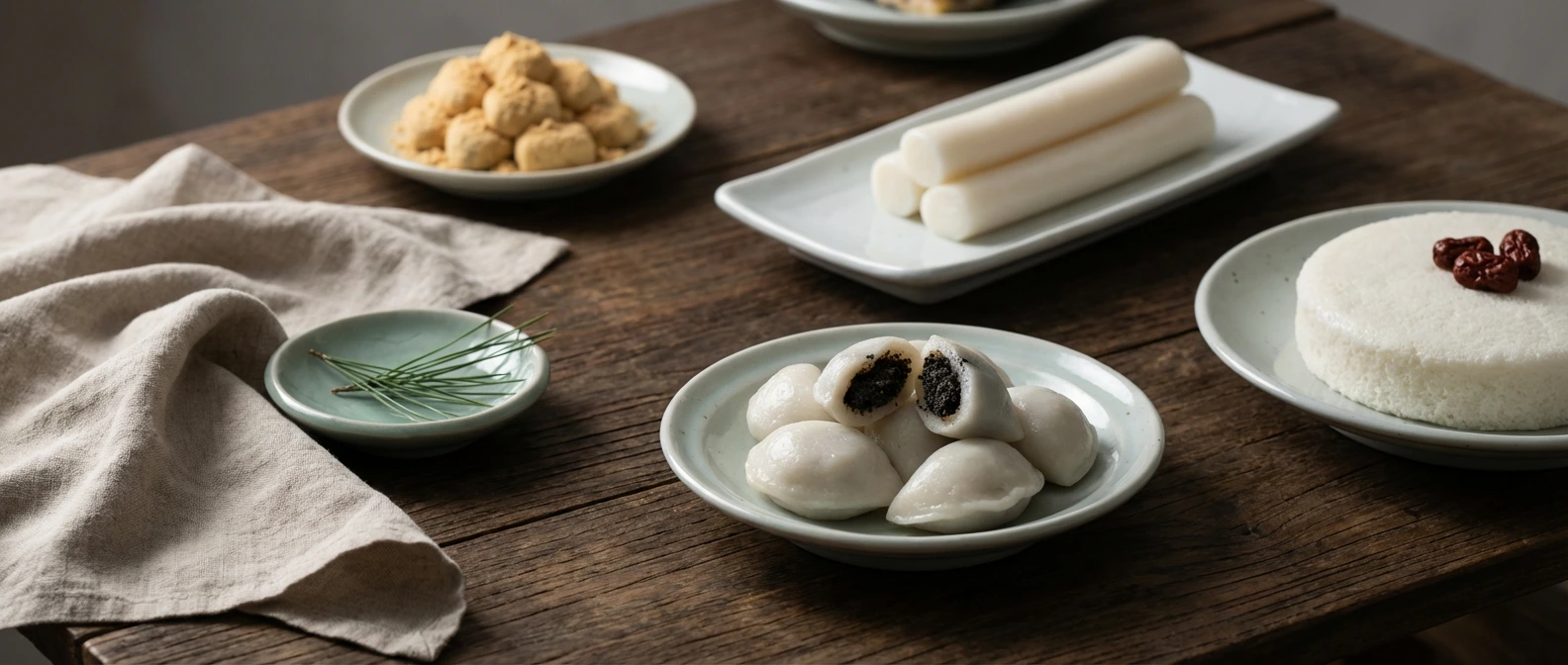
    Garaetteok (cylindrical Korean rice cake) is the variety most people recognize without knowing its name. These are long, smooth, white cylinders made from non-glutinous rice flour. Sliced crosswise, they become the coins floating in tteokguk. Left whole or cut into shorter lengths, they form the base of tteokbokki. Garaetteok has a firm, chewy bite and a clean, neutral rice flavour. It is the workhorse of Korean rice cake cooking.

    Songpyeon is seasonal. Shaped like a half-moon and pinched closed around a sweet filling, songpyeon is tied to Chuseok and rarely eaten outside that holiday. The pine needle steam gives it a subtle woodsy aroma that sets it apart from other tteok.

    Injeolmi is pounded glutinous rice cake coated in roasted soybean powder (kong-garu). It has a softer, stickier chew than garaetteok and a nutty, toasty taste from the powder coating. Injeolmi is popular as a snack, a dessert, and a topping for bingsu (Korean shaved ice). It is one of the most-loved tteok varieties across generations.

    Baekseolgi is a steamed rice cake with a soft, spongy crumb. Its name means “white snow cake,” and it looks the part: pure white, mild, and slightly sweet. Baekseolgi is the classic birthday tteok for a child’s first birthday and is also used at jesa. Its plainness is the point. It represents purity.


    Savoury vs. Sweet: The Divide Most People Miss

    If you have only eaten tteok in tteokbokki, your mental model is locked on savoury. Fair enough. Tteokbokki is Korea’s most famous street food, and it is the entry point for most non-Korean eaters. But the savoury side is actually the smaller half.

    The majority of traditional tteok leans sweet or neutral. Songpyeon is filled with sweetened sesame or red bean. Injeolmi is dusted in sweet soybean powder. Yakshik is a sweet glutinous rice cake made with chestnuts, jujubes, and honey. Hwajeon is a small pan-fried rice cake topped with edible flowers and drizzled with honey. These are closer to confections than to anything you would pair with gochujang (Korean fermented chili paste).

    Then there is the in-between territory. Grilled garaetteok dipped in honey sits right on the line. Tteokguk is savoury, but the rice cake itself is neutral and absorbs whatever broth surrounds it. The same cylinder of garaetteok can be street food or soup, depending on the cut and the sauce.

    This range is what makes tteok difficult to pin down for newcomers, and it is also what makes it interesting. Once you understand that tteok is a format, not a flavour, the category opens up.


    Tteok vs. Mochi vs. Nian Gao: What Is the Difference?

    Korean tteok, Japanese mochi, and Chinese nian gao are all made from rice, and all get called “rice cake” in English. That shared label creates confusion. They are not the same thing.

    Mochi is made from glutinous (sweet) rice that is steamed and then pounded until extremely smooth and elastic. The result is very soft, very stretchy, and almost gummy when fresh. Most mochi is sweet and eaten as a dessert or snack, often filled with red bean paste or ice cream.

    Nian gao (Chinese New Year cake) is a dense, sticky cake made from glutinous rice flour, often sliced and pan-fried. It is sweet, caramelised at the edges, and chewy through the centre.

    Tteok overlaps with both but is broader than either. Tteok uses both glutinous and non-glutinous rice flour, depending on the variety. Garaetteok (the type used in tteokbokki and tteokguk) is made from non-glutinous rice, which gives it a firmer, bouncier chew than mochi. Injeolmi, on the other hand, uses glutinous rice and is closer to mochi in texture. The textures, preparation methods, and culinary roles vary widely within the tteok category itself.

    The simplest way to remember it: mochi is one thing. Nian gao is one thing. Tteok is an entire family.


    Where to Buy Tteok

    Your best option is a Korean grocery store. Fresh garaetteok is often available in the refrigerated section, sometimes made in-house that morning. Fresh tteok has a noticeably better texture than frozen: softer bite, more pliable, and less likely to crack when you cook it. If your city has a Koreatown or a well-stocked Korean supermarket (H Mart, Lotte, Hannam Chain), check there first.

    Frozen tteok is the most reliable option for most people. Bags of sliced garaetteok for tteokguk and cylindrical pieces for tteokbokki are widely available in the freezer aisle of Korean and general Asian grocery stores. Frozen tteok keeps for months and cooks well straight from the freezer. No thawing needed for most recipes.

    Online retailers carry frozen tteok too, though shipping costs for frozen goods can be high. Search for “Korean rice cake tteokbokki” or “sliced rice cake tteokguk” on Korean grocery delivery sites.

    For specialty types like songpyeon or injeolmi, you will typically need a Korean bakery or a Korean grocery that makes fresh tteok. These varieties are harder to find outside Korean communities, and quality drops significantly in frozen form. If you spot them fresh, buy them that day.


    How to Store Tteok

    Fresh tteok lasts 2 to 3 days at room temperature and up to a week in the refrigerator. It hardens as it cools. That firmness is normal and reversible.

    Frozen tteok keeps for 3 to 6 months in the freezer. Keep the bag sealed tightly. If you buy fresh tteok and cannot use it within a few days, freeze it immediately. Spread the pieces on a baking tray in a single layer, freeze until solid, then transfer to a resealable bag. This prevents them from sticking together in a single block.

    To soften hardened tteok, soak it in room-temperature water for 30 minutes to an hour, depending on thickness. For faster results, soak in warm (not boiling) water for 15 to 20 minutes. Do not microwave dry tteok. It turns rubbery and uneven. Soaking restores the chew properly.


    Frequently Asked Questions

    What does tteok taste like?

    Most tteok has a mild, clean rice flavour. It tastes like freshly cooked rice compressed into a denser, chewier form. The flavour is intentionally neutral because tteok is designed to absorb sauces, broths, and seasonings. Sweeter varieties like injeolmi or songpyeon carry additional flavour from their coatings or fillings, but the rice base itself stays subtle.

    Is tteok the same as mochi?

    No. Tteok and mochi are both rice cakes, but they differ in ingredients, texture, and culinary use. Mochi is made exclusively from glutinous rice and is very soft and stretchy. Tteok includes varieties made from both glutinous and non-glutinous rice, which produces a wider range of textures from bouncy and firm (garaetteok) to soft and sticky (injeolmi). They are related concepts from different food cultures, not interchangeable products.

    Can you eat tteok raw?

    Tteok is cooked during production (steamed or pounded), so it is safe to eat without further cooking. Fresh tteok, still soft from the steamer, is eaten as-is in Korea. However, most store-bought tteok is sold chilled or frozen and has firmed up, so it benefits from being cooked again: boiled in soup, stir-fried in sauce, or grilled. Eating it cold and firm is safe but not particularly pleasant.

    Why is tteok so chewy?

    The chew comes from the starch structure of rice. When rice flour is steamed and pounded, the starch molecules align and form a dense, elastic network. Non-glutinous rice (used for garaetteok) produces a firm, bouncy chew. Glutinous rice (used for injeolmi) produces a softer, stickier chew. The pounding process is what creates the characteristic texture. The more the rice is worked, the chewier it becomes.

    Where can I buy tteok?

    Korean grocery stores are the best source. Check the refrigerated section for fresh garaetteok and the freezer aisle for frozen tteok in pre-cut shapes (cylinders for tteokbokki, ovals for tteokguk). General Asian supermarkets often carry frozen options as well. For specialty types like songpyeon or injeolmi, look for a Korean bakery or a store that makes tteok fresh. Online Korean grocery retailers also stock frozen tteok.

  • What is Bibimbap? Explaining Korea’s Mixed Rice Bowl

    What is Bibimbap? Explaining Korea’s Mixed Rice Bowl

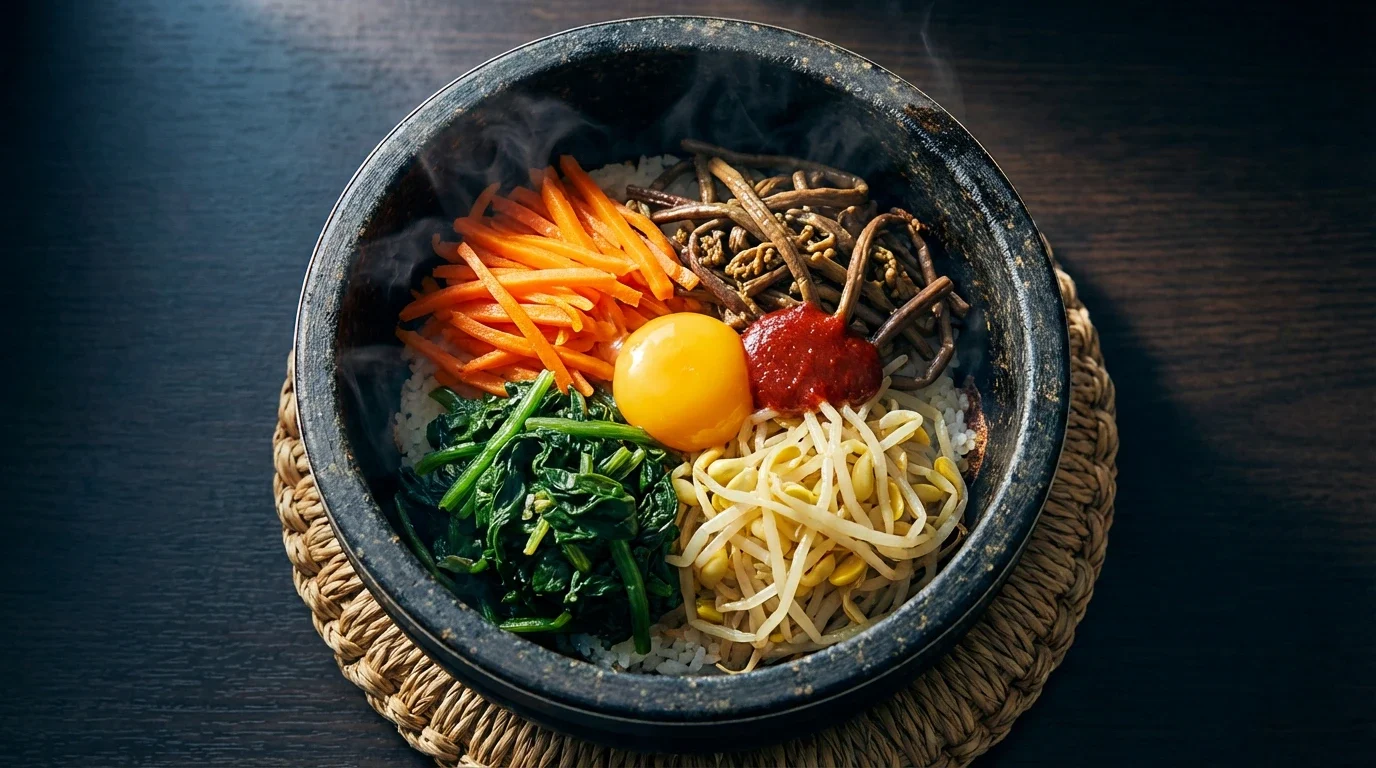
    A proper bibimbap arrives at the table like a colour wheel. White rice in the centre, and around it: deep green spinach, pale bean sprouts, carrots, dark fernbrake, yellow strips of egg, and seasoned beef. A fried egg on top. A spoonful of red gochujang (Korean fermented chili paste) off to one side, waiting.

    Then you wreck it.

    You take your spoon and mix everything together until the white rice disappears under colour and sauce. That moment of mixing is the whole point. Korean food bibimbap is one of the most recognised dishes in the world, but it is also one of the most misunderstood. It is not a salad bowl. It is not a leftover fridge clean-out. It is a dish with a name that tells you exactly what to do: bibim means “mixed,” and bap means “rice.” Mix your rice. Eat.

    This post covers what bibimbap actually is, what goes in it, the main versions you will encounter, regional differences, and how to start making it at home.

    What Is Bibimbap? (The Short Answer)

    Bibimbap (Korean mixed rice bowl) is a bowl of steamed white rice topped with individually prepared namul (Korean seasoned vegetable side dishes), sliced meat, a fried or raw egg, and gochujang. Everything is mixed together before eating. It is an everyday Korean dish, not a special-occasion food, and it appears on tables across Korea at lunch counters, home kitchens, and restaurants alike.

    The Role of Bibimbap in Korean Food Culture

    Bibimbap is often presented internationally as something exotic or elaborate. In Korea, it is closer to the opposite. It is ordinary. It is Tuesday lunch. It is what you eat when the fridge has three kinds of namul left over from yesterday’s dinner and a bit of rice. That ordinariness is precisely what makes it important.

    The dish has roots that are difficult to pin to a single origin story. Some food historians trace it to the practice of mixing rice with banchan (Korean side dishes) on the eve of Lunar New Year, when families would use up leftovers before starting fresh. Others connect it to farmers eating mixed rice in the fields, where carrying separate dishes was impractical. A third origin theory links it to jesa (ancestral memorial rites), where offerings of rice, vegetables, and meat were combined and eaten after the ceremony.

    None of these origins are definitively proven. What is clear is that the logic of bibimbap, combining rice with whatever prepared toppings are available, fits seamlessly into how Koreans already eat. A standard Korean meal is rice, soup, and several banchan. Bibimbap just puts the rice and banchan into the same bowl and adds gochujang. The leap is small.

    What makes bibimbap different from simply dumping leftovers on rice is the care taken with each component. Every namul is prepared individually: blanched, seasoned, and dressed with sesame oil and garlic. The vegetables are cooked to their own ideal texture. The rice is freshly steamed. The gochujang ties it all together. The result is a single bowl where five or six distinct flavours and textures merge into something unified but still varied with every bite.

    What Goes in Bibimbap

    A standard bibimbap has five categories of topping on a base of steamed white rice. Whether you are ordering korean food bibimbap at a restaurant or making it yourself, the specifics vary by cook, season, and region, but the categories stay consistent.

    Namul (seasoned vegetables): These are the core. A classic combination includes sigeumchi namul (seasoned spinach), kongnamul (soybean sprouts), gosari namul (seasoned fernbrake), julienned carrots, and julienned zucchini. Each is prepared separately. The spinach is blanched and dressed with sesame oil and garlic. The kongnamul is boiled until just tender. The gosari is rehydrated, sautéed, and seasoned with soy sauce. This individual preparation is what separates bibimbap from a stir-fry. The vegetables keep their own character even after mixing.

    Meat: Thinly sliced beef, often prepared bulgogi-style (Korean marinated grilled beef) with soy sauce, sesame oil, garlic, and a touch of sugar. Minced beef seasoned the same way is also common. Some versions skip meat entirely.

    Egg: A fried egg with a runny yolk is the standard. When you mix bibimbap, the yolk breaks and coats the rice. Some regional versions use a raw egg yolk instead.

    Gochujang sauce: The red chili paste that binds the bowl. Sometimes served straight from the jar, sometimes mixed with sesame oil and a little sugar to make a smoother sauce. The amount is up to you. Start with a tablespoon and adjust.

    Sesame oil: A drizzle of toasted sesame oil goes in just before mixing. It rounds out the flavour and gives the rice a nutty richness.

    I have eaten bibimbap at a potluck where every friend brought one topping they wanted to add. We mixed it all together in a large bowl and ate while talking. It was chaotic, generous, and completely in the spirit of the dish. Bibimbap rewards that kind of informality.

    Regular Bibimbap vs. Dolsot Bibimbap

    There are two main ways bibimbap is served, and the difference matters.

    Regular bibimbap comes in an ordinary bowl at room temperature (or slightly warm). The rice is soft throughout. This is the version you are most likely to make at home and the version served at most casual Korean restaurants. It is simple, quick, and satisfying.

    Dolsot bibimbap (stone pot bibimbap with crispy rice) is served in a dolsot, a thick stone pot heated until screaming hot. The rice is pressed into the pot before the toppings go on, and as you eat, the bottom layer of rice crisps into a golden, crunchy crust called nurungji. The egg, if cracked raw onto the rice, cooks against the searing stone. The sizzle when the bowl arrives at the table is part of the experience.

    The nurungji is the reason many people prefer dolsot bibimbap. That contrast between soft, saucy rice on top and shatteringly crisp rice at the bottom changes the dish completely. If you have only ever had regular bibimbap, the stone pot version is worth seeking out.

    A word of caution: the pot stays dangerously hot for the entire meal. Use the spoon, not your fingers, and do not touch the rim.

    Regional Variations: Jeonju and Beyond

    Bibimbap is eaten everywhere in Korea, but the most famous regional version comes from Jeonju, a city in North Jeolla Province known as Korea’s food capital.

    Jeonju bibimbap is more elaborate than the everyday version. The rice is cooked in beef bone broth instead of plain water, which gives it a savoury depth before any toppings go on. The number of namul increases, sometimes to over a dozen, including ingredients like bellflower root, crown daisy, and raw beef tartare (yukhoe). A raw egg yolk often replaces the fried egg. Pine nuts and ginkgo nuts appear as garnish. It is a composed, ceremonial version of what is otherwise a casual dish.

    Other regional versions exist too. Tongyeong, on the southern coast, makes bibimbap with fresh seafood. Jinju bibimbap, from nearby Jinju, uses raw beef and a clear broth served alongside. In temple cuisine, bibimbap goes fully vegan, using only seasonal mountain vegetables and no alliums (garlic, onion, spring onion) per Buddhist dietary practice.

    I once ate a vegan bibimbap served by an ahjumma in a small restaurant near a temple in Hwacheon. No meat, no egg. Just seasonal local vegetables from the surrounding mountains, each one prepared simply. It made everything else feel overworked. Sometimes the best bibimbap is the quietest one.

    Common Misconceptions About Korean Food Bibimbap

    “Bibimbap is a leftover dish.” Western food media often describes bibimbap as Korea’s way of using up fridge scraps. This framing misses the point. While bibimbap can use leftover namul, the dish is not defined by leftovers any more than a sandwich is defined by stale bread. Restaurants and home cooks regularly prepare bibimbap toppings from scratch. The dish has a specific structure and intention. Calling it a “leftover dish” reduces it to something accidental, when the reality is deliberate.

    “You can put anything in bibimbap.” Technically you can, but traditional bibimbap follows a pattern: seasoned vegetables, protein, egg, and gochujang on rice. Not every bowl of rice with toppings is bibimbap. The preparation of each namul individually, the inclusion of gochujang, and the act of mixing are what make it bibimbap rather than just a rice bowl.

    “Bibimbap is always spicy.” Gochujang has heat, but it is not a fire-alarm chili paste. The spice level depends entirely on how much you add. With a small amount of gochujang, bibimbap is mild and savoury. You control it. Many Korean children eat bibimbap with very little or no gochujang at all.

    How to Make Bibimbap at Home

    Bibimbap looks impressive but the actual cooking is straightforward. The key is to prepare each topping separately, arrange them on rice, and mix at the table.

    Start with three or four namul. Spinach, soybean sprouts, and carrots are the easiest starting combination. Season each simply with sesame oil, a pinch of salt, and minced garlic. Cook your rice, fry an egg, and buy a jar of gochujang. That is a complete bibimbap.

    The common mistake is trying to replicate a restaurant version with eight toppings on the first attempt. You will spend two hours preparing vegetables and burn out before the rice is done. Start small. Add one new namul each time you make it. Within a few rounds, you will have a version that looks and tastes like the real thing.

    For dolsot bibimbap at home, you will need a stone pot (available at Korean grocery stores or online for around $25–40 USD). Heat it with a little sesame oil, press rice into the bottom, add toppings, and let it sit on medium heat for a few minutes until you hear the rice crackling. The nurungji forms on its own.

    Frequently Asked Questions

    What is bibimbap made of?

    Bibimbap is made from steamed white rice topped with individually seasoned vegetables (namul), sliced or minced beef, a fried egg, and gochujang (Korean fermented chili paste). Common vegetables include spinach, soybean sprouts, fernbrake, carrots, and zucchini. Toasted sesame oil is added before mixing. The exact toppings vary by region, season, and personal preference, but the base structure of rice, vegetables, protein, egg, and gochujang stays consistent.

    What does bibimbap taste like?

    Bibimbap tastes savoury, slightly sweet, nutty, and mildly spicy. The gochujang gives it a warm chili heat balanced by fermented sweetness. The sesame oil adds nuttiness. Each vegetable brings its own flavour: earthy spinach, crunchy bean sprouts, chewy fernbrake. When mixed together, the flavours blend into something greater than any single component. The spice level depends on how much gochujang you add.

    Is bibimbap healthy?

    Bibimbap is generally a well-balanced meal. Korean food bibimbap contains complex carbohydrates from rice, fibre and vitamins from multiple vegetables, protein from beef and egg, and healthy fats from sesame oil. A typical serving runs between 500 and 700 calories depending on the amount of rice and meat. The vegetable-to-rice ratio is high compared to many rice dishes. Vegan and vegetarian versions, which skip the meat and egg, are lower in calories and still nutritionally complete.

    Is bibimbap served hot or cold?

    Regular bibimbap is served at room temperature or slightly warm. The rice is warm, and the vegetable toppings range from room temperature to slightly cool. Dolsot bibimbap is served very hot in a sizzling stone pot and stays hot throughout the meal. There is no cold version of bibimbap, though the related dish bibim naengmyeon (Korean cold buckwheat noodles) uses a similar mixing concept with cold noodles instead of rice.

    What is dolsot bibimbap?

    Dolsot bibimbap is bibimbap served in a dolsot, a thick, pre-heated stone pot. The intense heat of the pot crisps the bottom layer of rice into a golden crust called nurungji. The egg cooks against the side of the pot, and the dish stays sizzling hot as you eat. The crispy rice adds a texture that regular bibimbap does not have. Dolsot bibimbap is widely considered the superior version for its contrast between soft and crunchy rice.