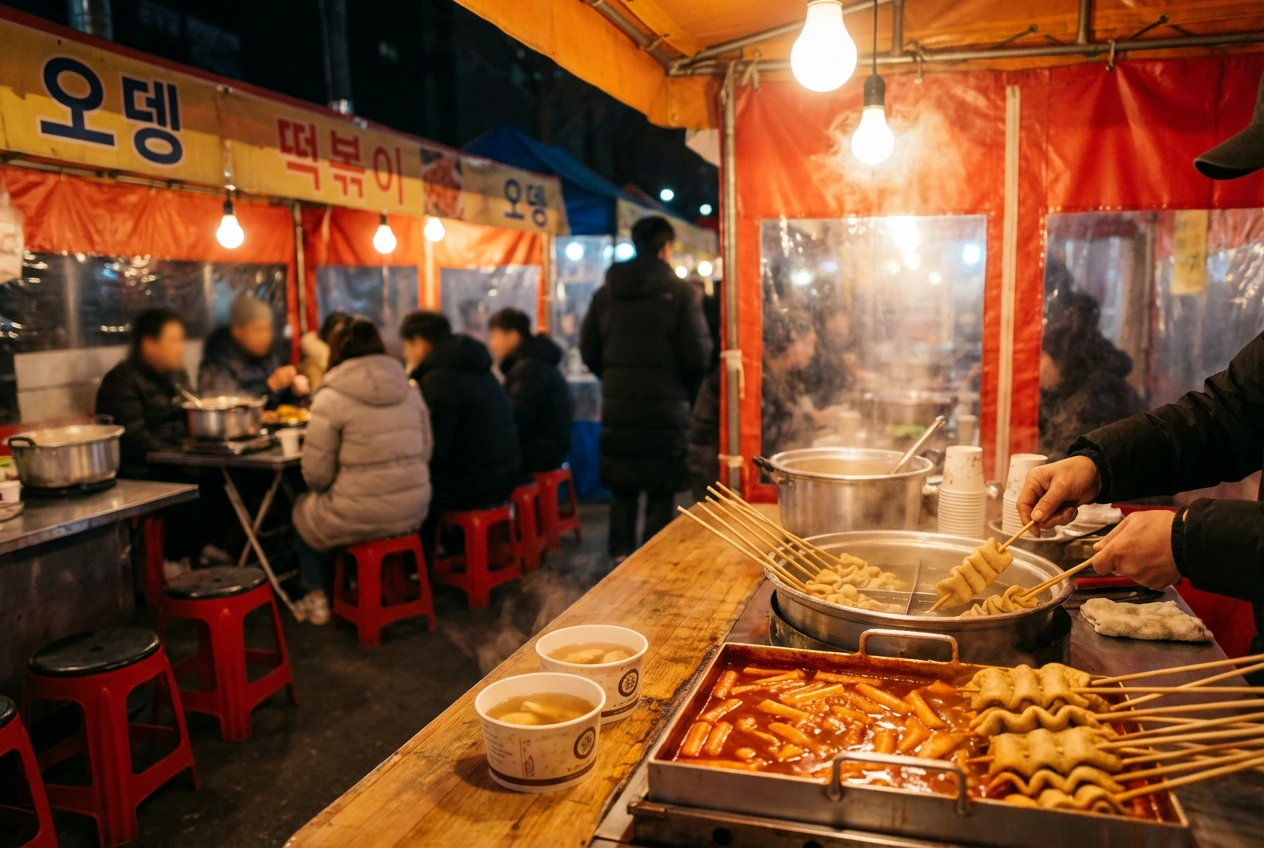
Steam curling off a paper cup of fish cake broth. A griddle of hotteok turning golden in the cold. The red glow of tteokbokki sauce under fluorescent strip lights. Korean street food is best understood from a pojangmacha (Korean street food tent) on a cold night, when you are hungry and everything smells good and doesn’t cost you a leg.
This guide covers 20 of the most popular Korean street food finds at markets and pojangmacha across Korea. Some are savoury, some are sweet, and a few are both. Most can be made at home.
Whether you first spotted these in a K-drama or you have been eating them your whole life, this is the full picture.
1. Tteokbokki (Spicy Korean Rice Cakes)
Tteokbokki (spicy Korean rice cakes) is the single most popular Korean street food. Chewy cylinders of garaetteok (Korean rice cake) sit in a sweet, spicy gochujang (Korean fermented chili paste) sauce alongside slices of eomuk (Korean fish cake) and boiled eggs. The sauce is thick, sticky, and clings to everything.
You will find tteokbokki at nearly every Korean street food stall. At home, soak your rice cakes in water before cooking so they soften evenly. The whole dish comes together in under 30 minutes. If you want less heat, rose tteokbokki uses a cream-based sauce and is a popular variation.
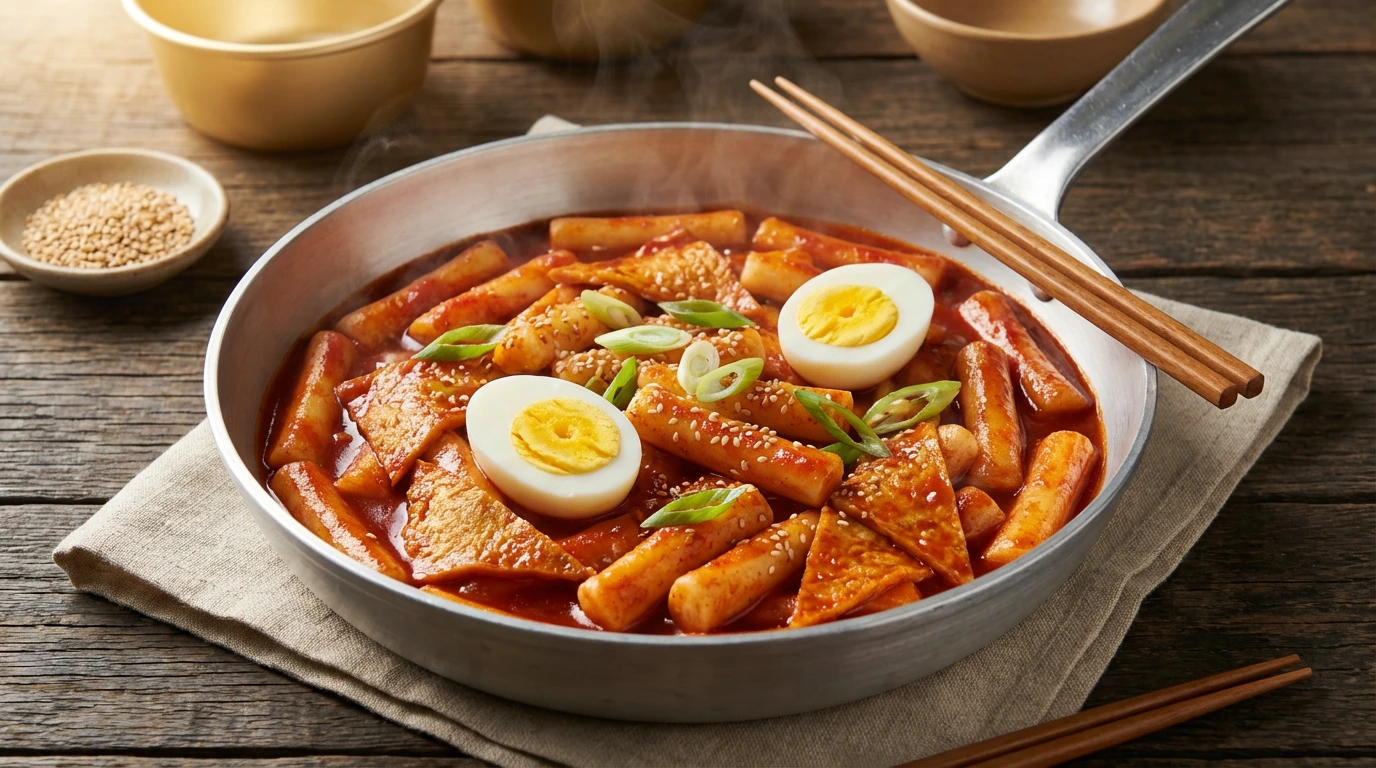
Tteokbokki: Spicy Korean Rice Cakes in Gochujang Sauce
This tteokbokki recipe makes chewy Korean rice cakes in glossy gochujang sauce with fish cakes and boiled eggs. Classic street food, ready in 30 minutes.
2. Eomuk (Fish Cake Skewers)
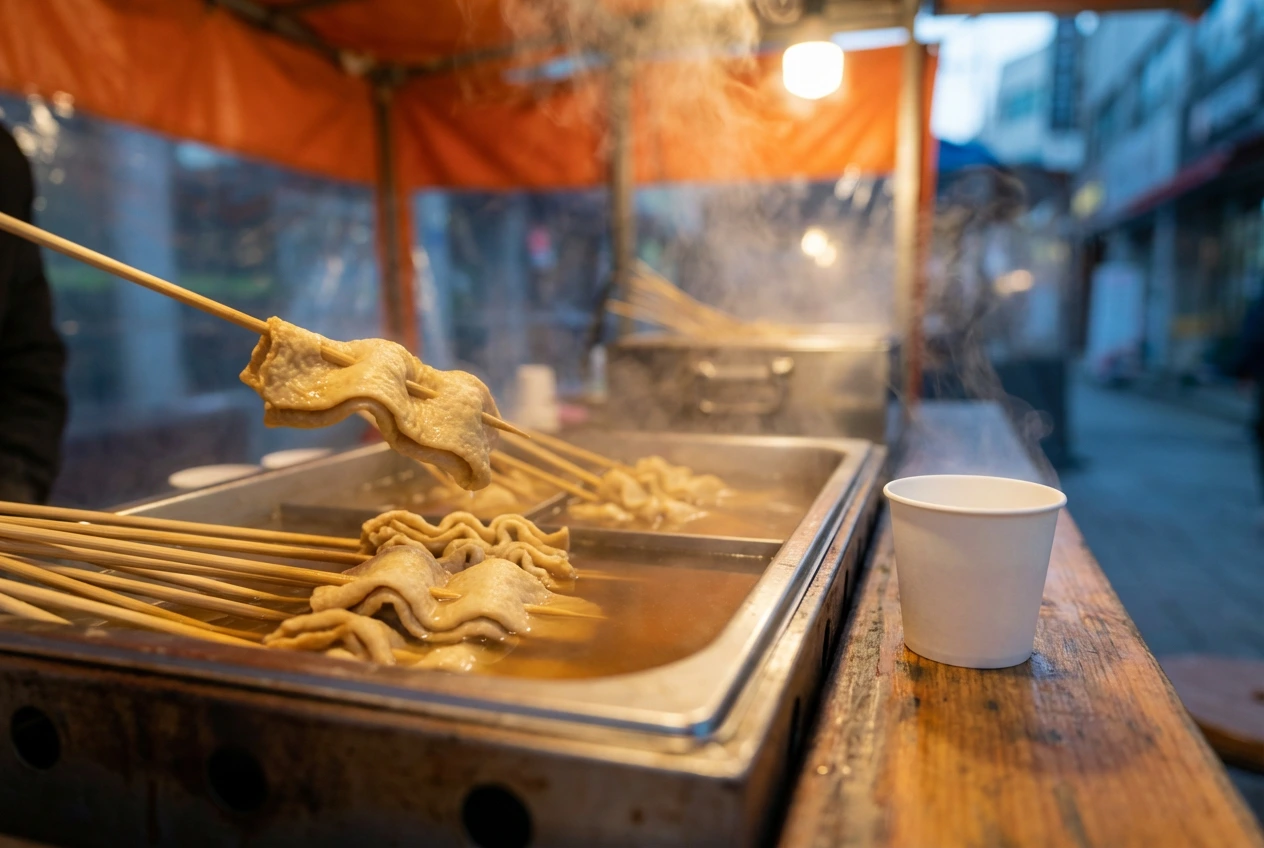
Eomuk (Korean fish cake) skewers are sheets of fish cake threaded onto bamboo sticks in a zigzag fold, then simmered in a light anchovy and kelp broth. The fish cake is mild and slightly chewy. The broth is the real draw.
Come autumn in Korea, I would always default to eomuk to fill the craving for something warm and savoury. There is nothing complicated about it. You stand at the stall, hold the skewer, sip the broth from a paper cup, and that is the whole experience. At home, frozen fish cake sheets from any Korean grocery store work well. Simmer them in dashima (kelp) and dried anchovy broth for ten minutes.
3. Eomuk Tang (Fish Cake Broth)
Eomuk tang is the warm broth that eomuk skewers cook in, served free at most street stalls in a shared pot with ladles and paper cups. It is made from dried anchovies, kelp, and sometimes radish.
Many visitors overlook the broth and focus on the skewers. That is a mistake. Vendors keep the pot simmering all day, and by evening it has real depth. Recreate this at home with myeolchi (dried anchovies) and dashima in about 20 minutes. It doubles as a base for noodle soups.
4. Hotteok (Sweet Stuffed Pancake)
Hotteok (Korean sweet stuffed pancake) is a fried dough disc filled with brown sugar, cinnamon, and crushed nuts. The sugar melts during cooking and turns into a molten, caramelised syrup inside. Chinese merchants brought the concept to Korea in the late 19th century. It became one of the country’s most loved winter street foods.
My go-to has always been hotteok regardless of season. It is filling, it is tasty, and it is cheap. The original is sweet, but there is a famous vegetable hotteok at Namdaemun Market, approved and recommended by Lee Young Ja, one of my all-time favourite Korean comedians. At home, use a yeasted dough and a flat press to flatten each piece on the pan.
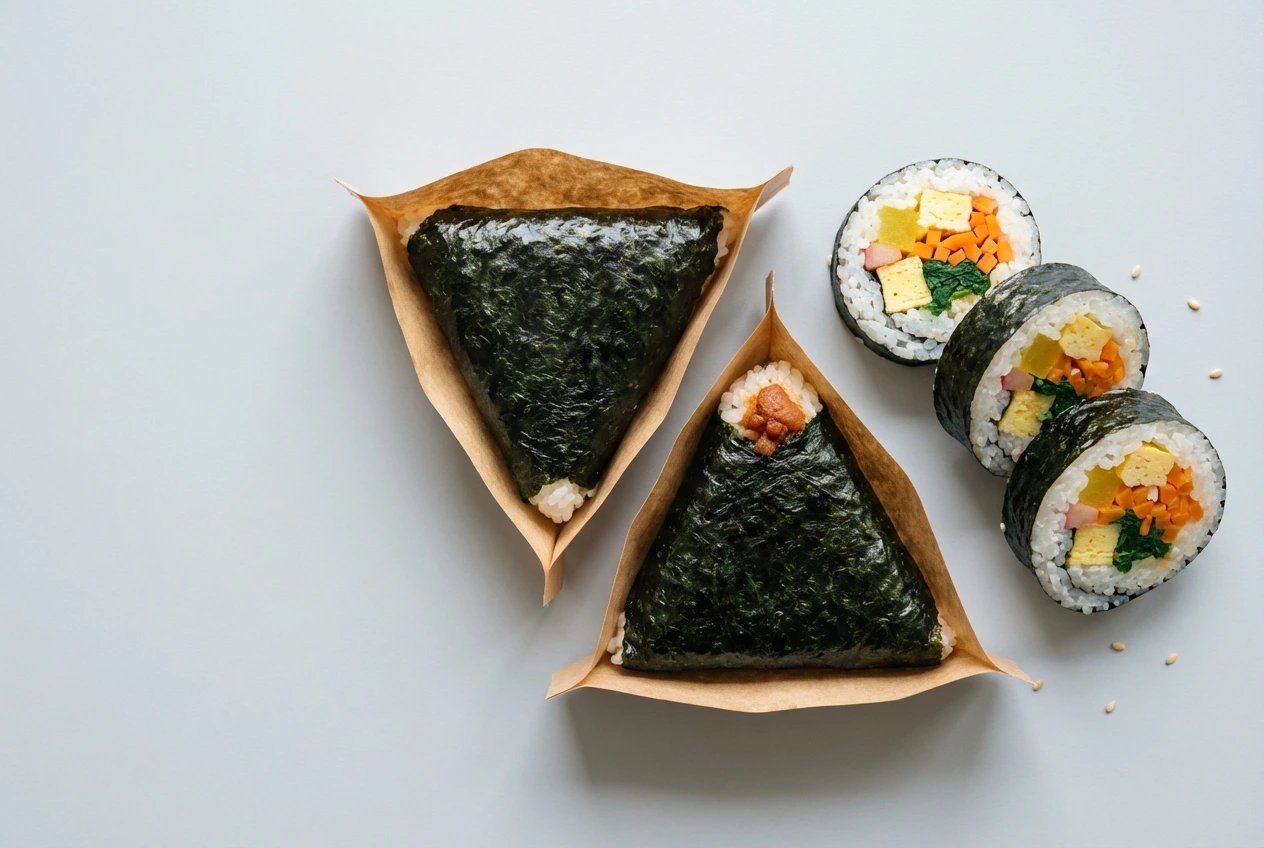
5. Kimbap (Korean Seaweed Rice Rolls)
Kimbap, also written as Gimbap, is rice and fillings rolled tightly in dried seaweed (gim), then sliced into bite-sized rounds. Common fillings include pickled radish (danmuji), spinach, carrot, egg, and beef or crab stick. It is Korea’s go-to packed lunch, picnic food, and portable street snack.
Kimbap is not sushi. The rice is seasoned with sesame oil and salt, not vinegar. The fillings are cooked, not raw. At a street stall, kimbap is usually pre-made and sold by the roll, wrapped in foil. At home, the rolling technique takes a few tries. Start with fewer fillings until you get the feel of it.
6. Samgak Gimbap (Triangle Kimbap)
Samgak gimbap is a triangular rice ball wrapped in seaweed, filled with tuna mayo, kimchi, bulgogi (Korean marinated grilled beef), or other fillings. It is sold at every convenience store in Korea and costs roughly 1,000 to 1,500 won (under $1.50 USD).
Think of it as Korea’s answer to the Japanese onigiri, with its own fillings and flavour profile. The seaweed wrapper has a pull-tab system that keeps the gim crisp until you open it. This is a grab-and-go staple, not really a “cook at home” food, though triangular moulds are available online.
7. Sundae (Korean Blood Sausage)
Sundae (Korean blood sausage) is a steamed sausage made with pig intestine, glass noodles, barley, and pig’s blood. It is sliced into thick rounds and served with salt and a dried shrimp dipping powder. The texture is soft, dense, and unlike any Western sausage.
For many visitors, sundae is the most unfamiliar item on a Korean street food stall. The flavour is mild and earthy, with a slightly grainy bite from the barley and noodle filling. Traditionally a working-class food, sold from carts and at market stalls. Either you love it on the first try or you need a second one.
8. Soondae Guk (Blood Sausage Soup)
Soondae guk is a rich, bone-based soup loaded with sliced sundae, offal, and sometimes noodles. It is a full meal, not a snack, and sits somewhere between street food and restaurant food. Many of the best soondae guk spots are small, counter-service places near traditional markets.
The broth is milky and deep. Diners season their own bowl at the table with salt, pepper, and chopped chillies. This is a dish you are far more likely to eat at a dedicated soondae guk restaurant than make at home. If you see one near a Korean market, go in.
9. Twigim (Korean-Style Fried Fritters)
Twigim (Korean-style deep-fried fritters) covers a whole category of battered and fried items sold at street stalls: sweet potato, squid, boiled egg, vegetables, and glass noodle rolls. The batter is light wheat-based, and the fritters come with a soy-based dipping sauce or a drizzle of tteokbokki sauce.
Twigim stalls usually sit right next to tteokbokki stalls for a reason. Dipping a crispy sweet potato fritter into that spicy red sauce is one of the best bites in Korean street food. At home, slice vegetables thinly, keep the batter cold, and fry at 170°C (340°F).
10. Gimmari (Fried Glass Noodle Seaweed Rolls)
Gimmari is dangmyeon (Korean glass noodles made from sweet potato starch) wrapped in dried seaweed, then battered and deep-fried. The result is a crispy shell around slippery, chewy noodles. It is a textural contrast that works better than it sounds.
Gimmari is almost always sold alongside tteokbokki, and the standard move is to dunk it into the tteokbokki sauce. Cheap, simple, and deeply satisfying as a side snack. At home, cook the glass noodles, roll them in half-sheets of gim (dried seaweed), dip in a thin batter, and fry until golden. Takes about 15 minutes.
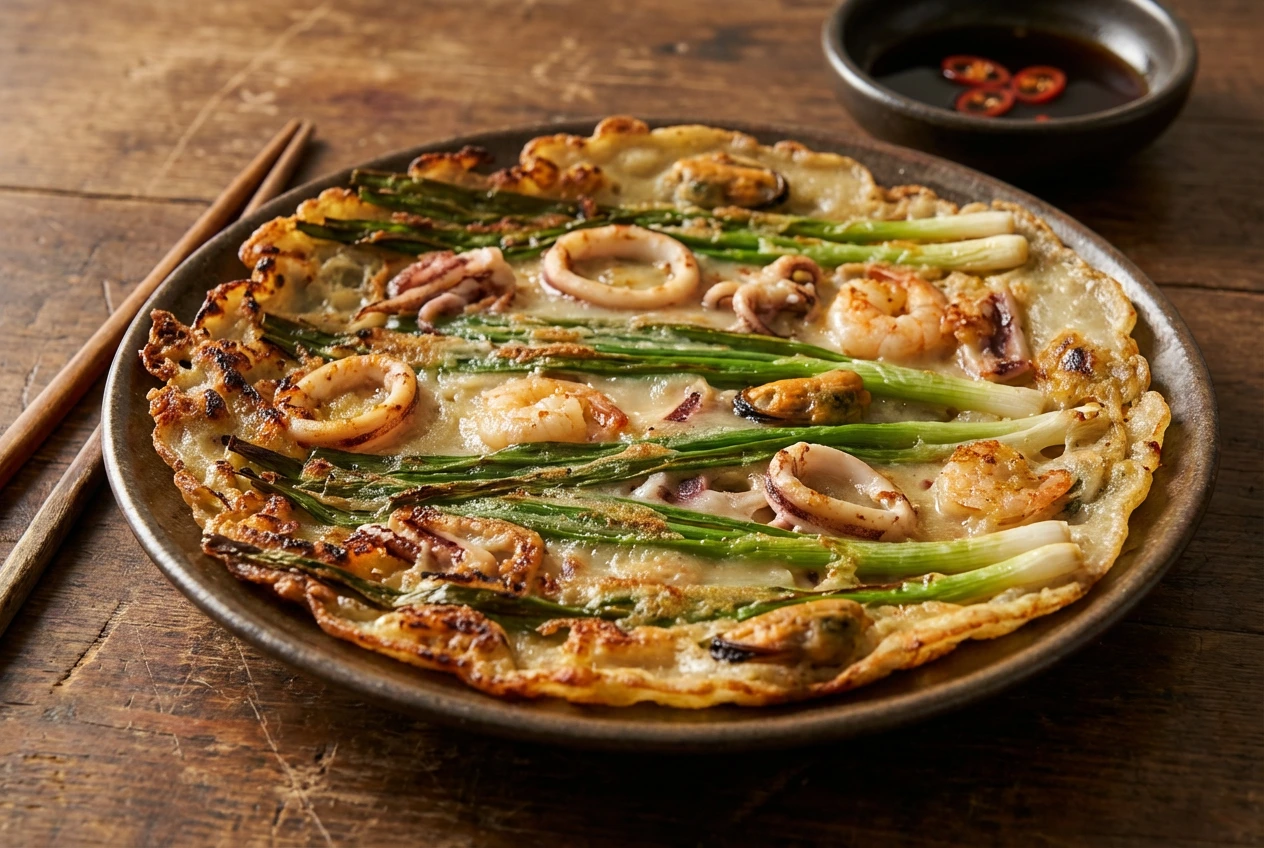
11. Pajeon (Korean Pancake)
Pajeon (Korean-style pancake) is a savoury pancake loaded with many ingredients. The most popular is kimchi, spring onion, or seafood. They are bound by a simple flour-and-egg batter. The outside fries up crispy while the inside stays soft and onion-sweet. It is eaten with a soy-vinegar dipping sauce.
Pajeon is both a street food and a home cooking staple. The seafood version, haemul pajeon (Korean seafood and spring onion pancake), adds shrimp, squid, and sometimes oysters. Koreans say the sound of pajeon frying sounds like rain, which is why it is a rainy-day food. At home, use your flattest pan and press the batter thin for maximum crispiness.
12. Mandu (Korean Street Dumplings)
Mandu (Korean dumplings) at street stalls come steamed, pan-fried, or deep-fried. Fillings typically include ground beef, tofu, kimchi, and vegetables. Street mandu are larger than you might expect, often fist-sized, and sold three or four to an order with a soy and vinegar dipping sauce. The huge mandu is often called Wang Mandu or “King Dumpling”.
The difference between good mandu and average ones comes down to the filling-to-wrapper ratio. You want a thin wrapper and a generous, seasoned filling. Frozen mandu from Korean grocery stores are a reliable shortcut. Pan-fry in a little oil, add water, and cover to steam through.
13. Dakganjeong (Crispy Fried Chicken Bites)
Dakganjeong (Korean crispy fried chicken bites) is double-fried chicken tossed in a sticky, sweet-spicy sauce made with gochujang, garlic, and honey or sugar. The coating stays crunchy even under the glaze. That crunch is the whole point.
One misconception about Korean fried chicken: it is the sauce that makes or breaks the dish.
The frying gets the crunch right, but if the sauce is flat or too sweet, the whole thing falls apart.
Not all Korean fried chicken is made equal, so do not be discouraged if your first experience does not match the hype. At home, the double-fry method is non-negotiable. Fry once at 160°C (320°F), rest, then fry again at 180°C (356°F).
14. Dakkochi (Chicken Skewers)
Dakkochi is bite-sized chicken pieces on bamboo skewers, grilled or pan-fried, then brushed with a sweet soy or spicy sauce. It is one of the cheapest Korean street foods, often 1,000 to 2,000 won a stick.
The chicken is usually thigh meat, which stays juicy over high heat. Some stalls offer a choice of sauces: sweet soy, spicy gochujang, or garlic butter. At home, marinate chicken thigh pieces in ganjang (Korean soy sauce), garlic, and a little honey, thread onto soaked wooden skewers, and grill or pan-fry for about 8 minutes total.
15. Korean Corn Dog
Korean corn dogs are not American corn dogs. The batter is often rice flour or a yeasted, bread-like dough that fries into a thick, pillowy crust. Fillings go beyond hot dogs: mozzarella, rice cakes, or a sausage-and-cheese combination are common. Some versions get rolled in sugar, french fry pieces, or ramen crumbs before frying.
Korean corn dogs went global around 2020 and now appear at Korean street food chains worldwide. At home, get the dough thick enough to coat the stick without sliding off. Fry at 170°C (340°F) until deep golden.
16. Gyeran Bbang (Egg Bread)
Gyeran bbang is a soft, slightly sweet bread roll with a whole egg baked into the top. The bread is fluffy and cake-like. The egg cooks until the yolk is just set. It is sold from small, purpose-built ovens at street stalls and is a popular winter breakfast snack.
The combination sounds plain, but the contrast between sweet bread and savoury egg works. Gyeran bbang is warm, portable, and filling. At home, make it in a muffin tin: pour sweet batter halfway up, crack an egg on top, and bake at 180°C (356°F) for about 15 minutes.
17. Bungeobbang (Fish-Shaped Pastry)
Bungeobbang is a fish-shaped pastry filled with sweet red bean paste (pat) and cooked in a cast-iron mould. The outside is thin, crispy, and slightly sweet. The filling is thick, earthy, and warm. It is one of Korea’s most recognisable winter street treats.
Modern versions come filled with custard cream, chocolate, or sweet potato, but the original red bean filling is still the standard. At a street stall, eat it tail-first. That is where the filling is thickest. At home, you need a bungeobbang mould (fish-shaped waffle iron), available at Korean kitchenware stores or online.
18. Tornado Potato (Hoeori Gamja)
Tornado potato (hoeori gamja) is a whole potato cut into a continuous spiral on a skewer, stretched out, and deep-fried until golden and crunchy. It is dusted with seasoning: cheese, onion, barbecue, or honey butter are popular options. Pure spectacle food.
The visual alone makes it one of the most photographed Korean street foods. The taste is exactly what you would expect from very thin, very crispy fried potato with flavoured powder. A spiral-cutting tool makes this easy at home. Fry at 180°C (356°F) and season immediately while the oil is still tacky.
19. Tteok Skewers
Tteok skewers are small cylindrical rice cakes threaded onto sticks, grilled or fried, and coated in a sweet-spicy gochujang glaze or a soy-based sauce. They are chewy, sticky, and full of flavour. Think of tteokbokki in handheld form.
These are a common snack at street stalls and school-zone food carts. The rice cakes char slightly on the grill, giving them a smoky edge you do not get from boiled tteokbokki. At home, use store-bought garaetteok cut into short pieces, skewer them, and pan-fry until golden. Brush the sauce on at the end so it does not burn.
20. Ramyeon at a Pojangmacha
Eating ramyeon (Korean instant noodles) at a pojangmacha late at night is less about the food and more about the context. The noodles are the same packets you buy at any store. But cooked in a battered aluminium pot on a gas burner inside a plastic-walled tent, eaten on a wobbly folding table, they taste different.
Pojangmacha ramyeon usually gets an egg cracked into it and sometimes rice cakes or mandu on the side. If you have seen it in a K-drama, you already know the scene. At home, the best upgrade to instant ramyeon is a soft-boiled egg and a handful of sliced spring onions. Keep it simple.
Frequently Asked Questions
What is the most popular Korean street food?
The most popular Korean street food is Tteokbokki. It appears at virtually every market, food stall, and pojangmacha in Korea. Eomuk skewers and hotteok are close behind, especially in the colder months
Is Korean street food spicy?
Some Korean street food are spicy. Tteokbokki, dakganjeong, and tteok skewers use gochujang and carry real heat. But hotteok, bungeobbang, gyeran bbang, eomuk, kimbap, and tornado potato have no chilli at all. Most stalls adjust spice on request. If you are from places like South East Asia or Latin America who are familiar with spices, you won’t feel the spiciness.
Is Korean street food cheap?
Korean street foods are largely inexpensive. Most items cost between 1,000 and 4,000 won ($0.75 to $3 USD). A full meal of tteokbokki, twigim, eomuk, and a drink can come in well under 10,000 won ($7.50 USD). Odeng tang broth is often free at stalls that sell eomuk. But, of course, tourist areas will have higher cost.
Can I make Korean street food at home?
Most items on this list are doable. Tteokbokki, pajeon, gimmari, dakkochi, and hotteok need basic ingredients and come together quickly. Others like bungeobbang require a specialty mould. Stock your pantry with gochujang, gochugaru (Korean dried chili flakes), ganjang, sesame oil, and garaetteok rice cakes, and you are most of the way there.