
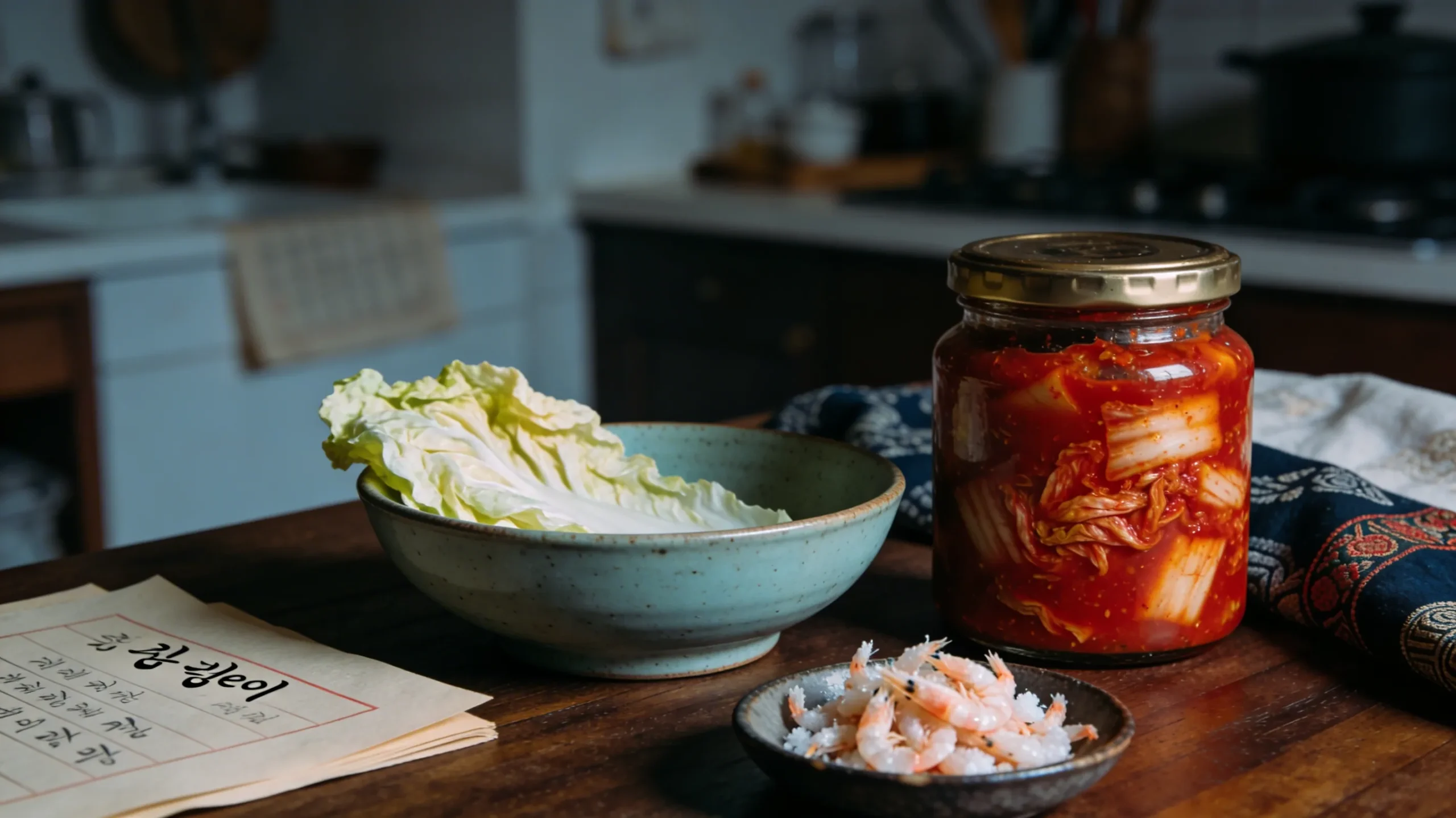
If you’re asking is kimchi vegetarian, the answer is usually no.
Traditional kimchi (even the white ones) contains jeotgal, a salted and fermented seafood ingredient used for seasoning and fermentation. Jeotgal can be made from anchovies, shrimp, oysters, or other shellfish. This means that even though kimchi looks like a simple fermented vegetable dish, it contains animal products.
What is jeotgal and why is it in kimchi?
Jeotgal (젓갈) is a category of salted seafood that has been fermented for weeks or months. The most common types you’ll find in kimchi are saeujeot (salted shrimp) and myeolchijeot (salted anchovies). Sometimes recipes call for aekjeot, which is the clear liquid extracted from fermented seafood.
Jeotgal does three things in kimchi.
First, it adds umami. It’s that deep, savoury flavour that makes kimchi taste complex rather than just spicy and sour.
Second, the salt content helps with fermentation and preservation. Third, the natural enzymes in the seafood encourage the fermentation process and contribute to the texture of the final product.
This is not a modern shortcut. Jeotgal has been part of Korean kimchi-making for centuries. It’s a core ingredient, not an optional add-in.
How to tell if kimchi contains seafood
If you’re shopping for kimchi and need to know whether it’s vegetarian, you need to read the ingredient list. Here’s what to look for:
Korean ingredient names to watch for:
- 새우젓 (saeujeot) — salted shrimp
- 멸치액젓 (myeolchi aekjeot) — anchovy fish sauce
- 까나리액젓 (kkanari aekjeot) — sand lance fish sauce
- 젓갈 (jeotgal) — general term for salted seafood
- 액젓 (aekjeot) — fish sauce or seafood extract
- 굴 (gul) — oyster
English ingredient names to watch for:
- Salted shrimp
- Anchovy sauce
- Fish sauce
- Seafood extract
- Shrimp paste
- Oyster
Some brands write “anchovy extract” or “fermented anchovy sauce” in English. Others only list the Korean name. If you see any of these, the kimchi is not vegetarian.
What about mu saengchae or white kimchi?
This is a common misconception. Baek kimchi (white kimchi) and mu saengchae (seasoned radish salad) look vegetarian because they don’t have gochugaru (red chili flakes). But most traditional versions still contain jeotgal for flavour and fermentation.
Mu saengchae in particular can be tricky. It’s often served as a light, crunchy side dish and doesn’t taste fishy at all. But check the ingredients because many recipes include a small amount of saeujeot or aekjeot to round out the sweetness and vinegar.
Vegetarian kimchi does exist
Vegetarian kimchi is made by replacing jeotgal with other sources of salt and umami. Common substitutions include:
- Doenjang (fermented soybean paste) — adds umami and salt
- Ganjang (soy sauce) — contributes saltiness and fermentation-friendly sodium
- Kelp or dashima — used to make a vegetable-based broth for umami
- Mushroom powder — adds savoury depth
- Plain sea salt in higher quantities
These versions ferment just fine. They taste different from traditional kimchi — less funky, a bit cleaner — but they’re still sour, spicy, and fully fermented.
Where to buy vegetarian kimchi
Some Korean brands now make certified vegetarian or vegan kimchi. Look for labels that say “vegan” or “no seafood” in English. If you’re shopping at a Korean grocery store, ask staff to help you read the ingredient list.
Online options make it easier to filter by dietary needs. Many specialty kimchi companies in the U.S., U.K., and Australia offer vegan versions and clearly label them on their websites.
If you’re buying from a small batch maker at a farmers market or local shop, ask directly. Homemade kimchi recipes vary, and some cooks already make theirs without jeotgal.
Making your own vegetarian kimchi
If you can’t find store-bought vegetarian kimchi or want full control over the ingredients, making it at home is straightforward. Use a standard napa cabbage kimchi recipe and replace the jeotgal with one tablespoon of doenjang and two tablespoons of soy sauce per medium cabbage. Add a piece of dashima to the porridge base if you’re using one.
The fermentation process is identical. Salt the cabbage, rinse it, coat it in the seasoning paste, pack it into a jar, and let it sit at room temperature for one to five days depending on how sour you want it. Then move it to the fridge.
Your kimchi will ferment without seafood. The flavour will be less complex in the first few days, but after two weeks in the fridge, it develops its own character.
Does “no visible seafood” mean vegetarian?
No. Just because you don’t see chunks of shrimp or anchovy in the kimchi doesn’t mean it’s vegetarian. Jeotgal is usually finely minced or used as a liquid extract. It dissolves into the seasoning paste.
This trips up a lot of people who assume that if kimchi doesn’t look or smell fishy, it must be plant-based. The seafood is there, you just can’t see it.
A note on cross-contamination and strict dietary needs
If you’re vegetarian for religious, ethical, or allergy reasons, know that many Korean restaurants and home kitchens use the same tools and surfaces for all types of kimchi. If cross-contamination is a concern, ask whether the kimchi was made in a dedicated vegetarian space.
Some Buddhist temple kimchi (사찰 김치, sachal kimchi) is made without any animal products and also excludes garlic and onions. This is a safe option if you need certainty and can find it.
If you are Muslim, your main concern would be to check whether alcohol is used as an ingredient. Many store-bought kimchi products use alcohol-based seasonings.
Why this matters
Kimchi is served with almost every Korean meal. If you’re vegetarian and eating Korean food regularly, knowing which kimchi you can eat makes a real difference. It’s not about rejecting tradition, it’s about making informed choices that fit your needs.
Traditional kimchi tastes the way it does because of jeotgal. Vegetarian kimchi tastes different, and that’s fine. Both versions are real kimchi. One just happens to contain seafood, and the other doesn’t.