
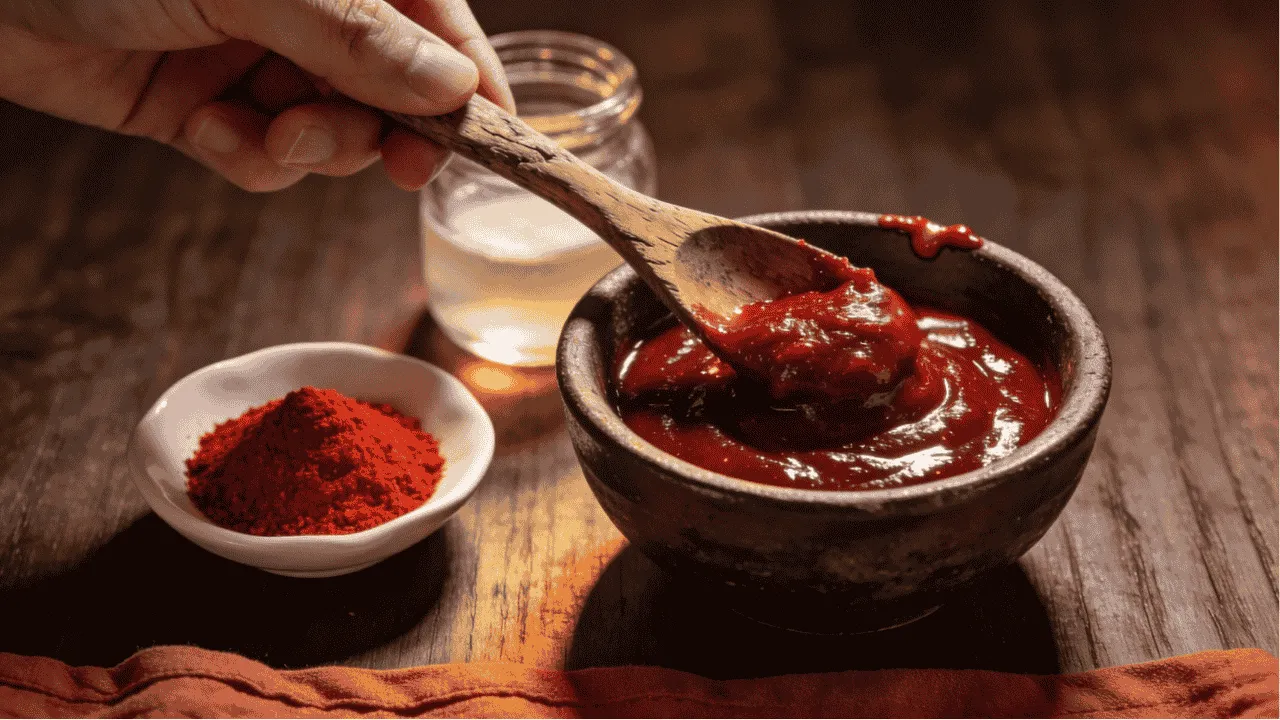
Gochujang (Korean fermented chili paste) has a reputation for being difficult to make. The traditional method involves fermented soybean powder, glutinous rice, earthenware crocks, and months outdoors. Most home cooks will never attempt it. But the quick version is quick and accessible to most homecooks.
I use fine gochugaru for this recipe, not coarse. Fine gochugaru dissolves cleanly in hot water with no gritty patches. Coarse flakes stay textured no matter how long you stir. It tends to cost a little more, but for a paste this simple, the texture is the whole thing.
This paste works anywhere you would reach for store-bought gochujang. Here is how to make it.
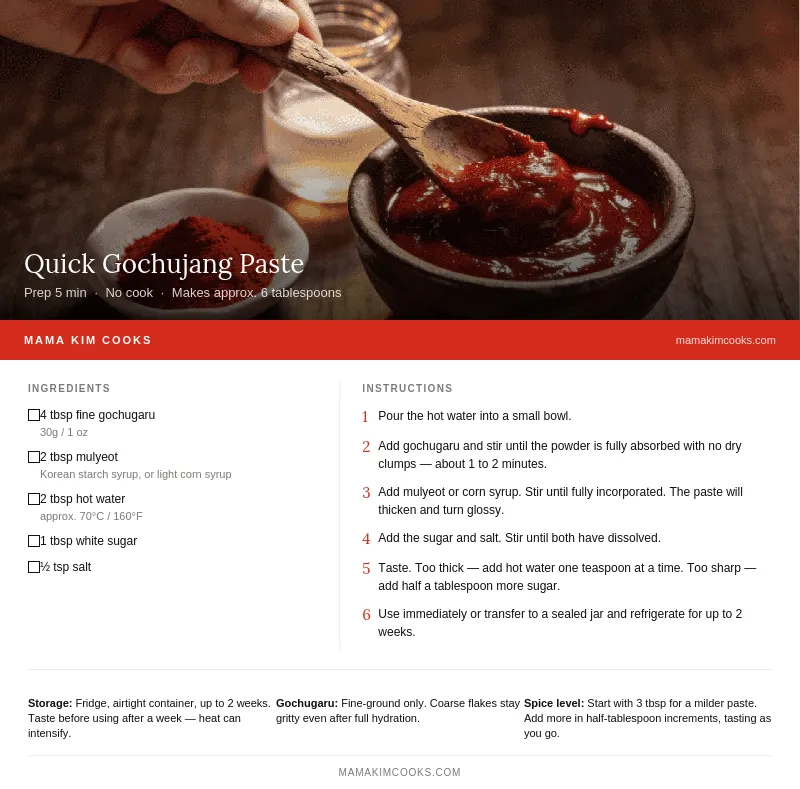
RECIPE NAME: Quick Gochujang Paste
Description: A five-ingredient Korean chili paste made with fine gochugaru, starch syrup, sugar, salt, and hot water. No fermentation needed. Ready in under five minutes and works as an all-purpose paste for bibimbap, stews, marinades, and dipping sauces.
Prep time: 5 minutes
Cook time: 0 minutes
Total time: 5 minutes
Servings: Makes approximately 6 tablespoons (90ml / 3 fl oz)
Ingredients:
- 4 tablespoons fine gochugaru (Korean dried chili flakes) — about 30g (1 oz)
- 2 tablespoons mulyeot (Korean starch syrup) — or light corn syrup
- 2 tablespoons hot water (around 70°C / 160°F — off the boil for one minute)
- 1 tablespoon white sugar
- ½ teaspoon salt
Instructions:
- Pour the hot water into a small bowl.
- Add the gochugaru and stir immediately. Keep stirring until the powder has fully absorbed the liquid and no dry clumps remain — about one to two minutes.
- Add the mulyeot or corn syrup and stir until completely incorporated. The paste will thicken and turn glossy.
- Add the sugar and salt. Stir until both have dissolved.
- Taste. If the paste feels too thick, add hot water one teaspoon at a time and stir through. If the heat is too sharp, add another half tablespoon of sugar.
- Use immediately, or transfer to a sealed jar and refrigerate.
Notes:
- Storage: Keeps in the fridge for up to two weeks in an airtight container. The colour deepens slightly over time and the heat can intensify — taste before using if it has been sitting more than a week.
- Gochugaru type: Fine-ground only. Coarse gochugaru will not absorb the water evenly and will leave a gritty paste regardless of how long you stir.
- Heat level: Start with 3 tablespoons of gochugaru for a milder paste. Add more in half-tablespoon increments, tasting as you go. Easier to calibrate at the start than to fix after mixing.
- Starch syrup: Mulyeot is available at Korean grocery stores and online (H-Mart stocks it across the US). Light corn syrup is a direct substitute. It has the same texture, same neutral sweetness.
- Make ahead: This paste can be made up to two weeks ahead and refrigerated. It is ready to use straight from the fridge.
What Is Gochujang Paste?
Traditional gochujang is made from gochugaru, glutinous rice, meju garu (dried fermented soybean powder), and salt, traditionally fermented outdoors in earthenware crocks for months. The result is complex, intensely savoury, and one of the three foundational Korean fermented pastes alongside doenjang (Korean fermented soybean paste) and ganjang (Korean soy sauce).
This recipe is not that. It is a quick, unfermented version built on the same flavour principle without the fermentation or the specialist ingredients. The method is used by Korean home cooks who want a fresh paste for immediate use.
There is a common misconception that any recipe involving gochujang requires fermentation. It does not. When you use store-bought gochujang in a dish, the fermentation has already happened. When you make a quick paste like this one, you are building the flavour profile from scratch without that step. The result is lighter in fermented depth but gives you something commercial gochujang cannot: complete control over the heat level from the start.
The paste works across a wide range of uses like bibimbap, tteokbokki (Korean spicy rice cakes), stews, marinades, and dipping sauces. Anywhere the recipe calls for gochujang, this paste can step in.
Ingredients and What They Do
Gochugaru is the foundation. It is the sole source of heat in this paste, which is exactly why the heat is controllable. Gochugaru (Korean dried chili flakes) is milder and more nuanced than cayenne or standard chili powder. It has a fruity, slightly smoky quality that raw heat does not. Use fine-ground gochugaru specifically. Coarse flakes are better suited for kimchi and marinades (this is my personal opinion though) where texture is part of the dish. In a paste, coarse flakes remain gritty no matter how long you stir. Fine gochugaru hydrates fully in hot water and produces a smooth, even paste.
Mulyeot (Korean starch syrup) gives the paste its gloss, body, and binding quality. This is the ingredient that makes the paste look like gochujang rather than a bowl of wet chili powder. Mulyeot is available at Korean grocery stores and online, but light corn syrup substitutes directly.
Hot water activates the gochugaru. Cold water will not hydrate fine chili powder evenly. You will see uneven colour and dry patches that do not disappear with stirring. Water at around 70°C (160°F), roughly one minute off a full boil, is the right temperature. The gochugaru absorbs it within one to two minutes of stirring.
White sugar dissolves immediately into the hot paste and balances the heat without adding its own flavour. It is structural, not decorative.
Salt sharpens everything. Add it after the other ingredients are combined so you can taste and calibrate before committing.
Tips for Getting the Paste Right
Temperature is not optional. Hot water is the difference between a smooth paste and a gritty one. The gochugaru needs heat to hydrate fully. If you use warm water, you will see uneven colour and dry patches throughout. Water one minute off the boil — around 70°C (160°F) — absorbs into fine gochugaru within two minutes of stirring.
Set the heat level at the start The gochugaru quantity is the only variable that changes the heat. Three tablespoons produces a paste most cooks find manageable. Four tablespoons gives real heat. Once the paste is mixed, adjusting the heat means adding more dry gochugaru and re-hydrating. It is much easier to calibrate before you begin. Start lower, taste, and add more if needed.
To bring it closer to commercial gochujang Traditional gochujang has fermented soybean depth this paste will not fully replicate. If you want to close that gap, half a teaspoon of white miso stirred in after mixing adds a quiet savoury note without any additional Korean-specific ingredients. It is optional and not part of the original five-ingredient method, but it helps when the paste is the primary seasoning in a dish.
Consistency for different uses Use the paste as-is for bibimbap. For marinades or stews, it will thin naturally into the liquid. For a dipping sauce, add one to two teaspoons of water and stir. It will loosen without losing colour or flavour.
Frequently Asked Questions
Is this gochujang recipe the same as store-bought?
Not exactly. Commercial gochujang is often fermented with glutinous rice and meju garu (dried fermented soybean powder), which gives it a deep umami character this paste does not fully replicate. What this paste delivers: the same heat, colour, and general flavour profile, with complete control over spice level and no specialist ingredients. For most everyday cooking, the difference is workable.
Why does this recipe use hot water instead of cold?
Fine gochugaru needs heat to hydrate properly. Cold water will not dissolve the powder evenly and you will end up with a paste that looks uneven and feels gritty on the tongue. Water at around 70°C (160°F) absorbs into the gochugaru within one to two minutes of stirring and produces a smooth, uniform paste.
Can I use coarse gochugaru instead of fine?
Yes, you can use coarse gochugaru. Coarse gochugaru is the right choice for kimchi and marinades where texture is expected. In a paste, the flakes stay gritty even after full hydration. For this recipe, fine gochugaru is specifically what makes this paste smooth.
Where do I find mulyeot in the US?
Korean grocery stores stock it in the condiments aisle. H-Mart carries it reliably across the US. It is also available online. If you cannot find it, light corn syrup is a direct substitute — same consistency, same neutral sweetness, available at any supermarket. Do not use dark corn syrup, which has a distinct molasses flavour that will compete with the gochugaru.
How long does homemade gochujang paste keep?
Up to two weeks in the fridge in an airtight container. The colour deepens slightly over time and the heat can intensify as it sits. Taste it before using if it has been stored for more than a week, you may want to add a small amount of sugar to rebalance.
Does this gochujang paste contain alcohol?
Not this recipe. Many store-bought gochujang products include alcohol as a preservative. It appears in the ingredient list as ethyl alcohol or fermented ethyl alcohol on several widely available brands. This homemade paste contains none. The five ingredients are gochugaru, starch syrup, sugar, salt, and water.