
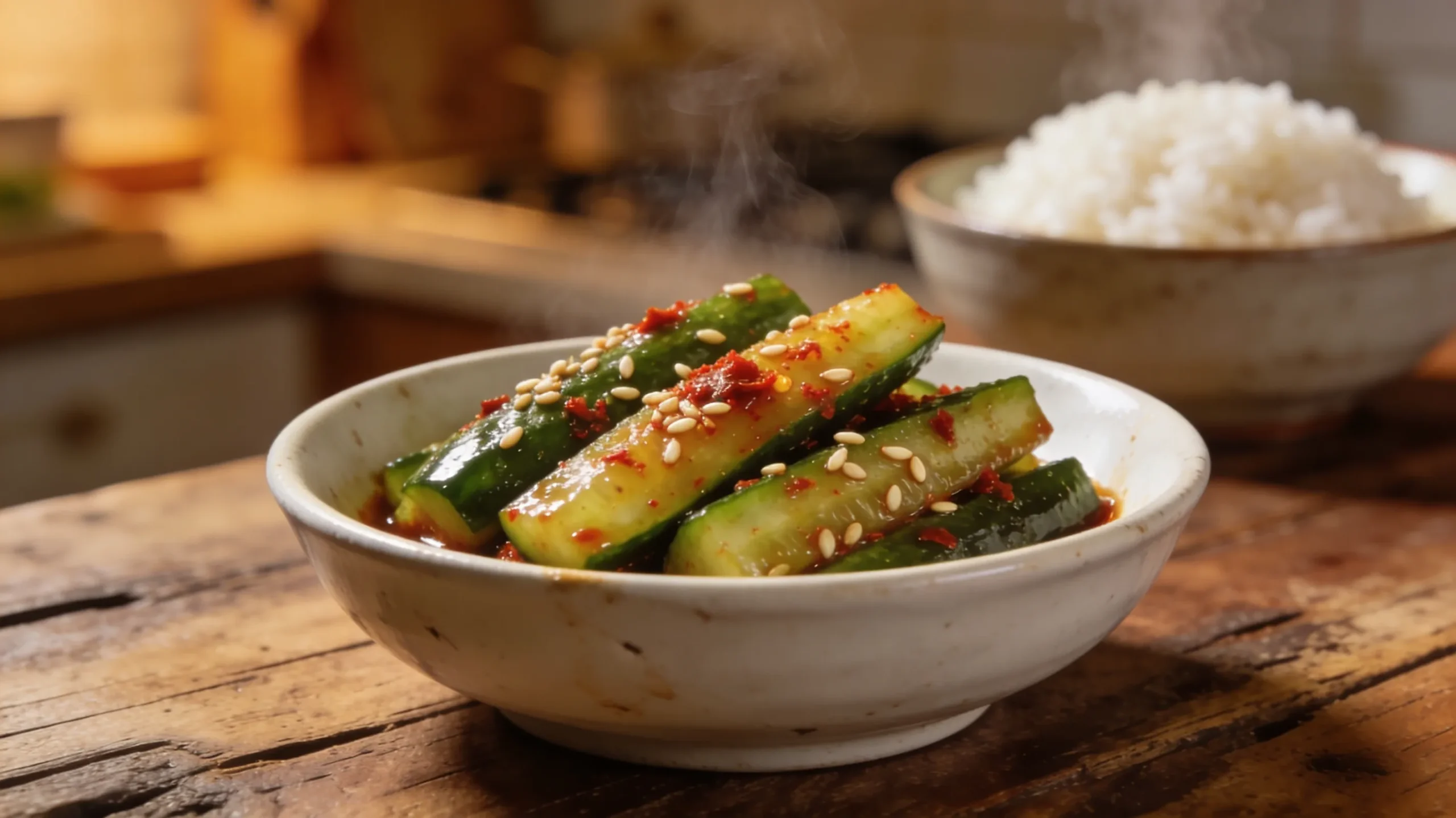
What is oi muchim
Oi muchim is a Korean cucumber banchan that appears on nearly every Korean table, from casual home meals to restaurant spreads. The name tells you what it is: “oi” means cucumber, “muchim” means seasoned or mixed. You’ll find it alongside kimchi, namul, and other small side dishes meant to balance the meal.
This isn’t a creamy cucumber salad or a pickled version. It’s crisp cucumbers tossed with gochugaru, garlic, sesame oil, and rice vinegar. The cucumbers stay crunchy. The seasoning clings to every slice. The knife cut matters as much as what you toss them with. Thin diagonal slices create more surface area, which means more seasoning in every bite and a better texture against your teeth.
You can make oi muchim in fifteen minutes, but only if you understand the steps. Skip the salting or cut the cucumbers wrong, and you’ll end up with a watery, bland bowl that tastes like an afterthought.
The right cucumber makes the difference
Korean cucumbers are short, thin, and have almost no seeds. Persian cucumbers are the closest substitute you’ll find in most grocery stores. Both have thin skin you don’t need to peel, crisp flesh, and very little water content compared to other varieties.
English cucumbers will make this salad watery and limp. The same goes for standard slicing cucumbers. They hold too much water, and even salting won’t pull out enough to keep the salad from turning into a soggy mess within an hour.
Look for cucumbers that are firm when you press them, no longer than six inches, and about an inch in diameter. The skin should be smooth and dark green. If they feel soft or have wrinkled ends, they’re old and won’t stay crisp no matter what you do.
If you can only find larger Persian cucumbers, that’s fine. Just use fewer of them. Two large Persian cucumbers equal three small Korean ones.
Ingredients
This recipe serves 2 to 4 people as a banchan. Double it if you’re serving a larger group or want leftovers.
Allergen note: Contains sesame.
For the cucumbers
- 2 to 3 small Korean cucumbers or Persian cucumbers (about 300g total)
- 1 tsp salt
For the seasoning
- 1 to 2 tbsp gochugaru (Korean chili flakes)
- 2 garlic cloves, minced
- 1 tbsp sesame oil
- 1 tbsp rice vinegar
- 1 tsp sesame seeds
- 1 green onion, sliced thin
- ½ tsp sugar (optional)
The sugar is there to balance the vinegar and garlic, not to make the salad sweet. You can leave it out if you prefer a sharper flavor.
How to cut the cucumbers
Cut each cucumber in half lengthwise. Lay each half flat side down on your cutting board. Slice on the diagonal into thin pieces, about 3 to 4mm thick. You want them thin enough to be tender but thick enough to stay crisp.
The diagonal cut is not decorative. It creates more surface area than straight cuts, which means the seasoning coats better and the texture is more interesting. When you bite into a diagonal slice, your teeth meet less resistance. Straight-cut rounds feel blunt and clumsy in comparison.
If your slices are uneven, the thin ones will go limp while the thick ones stay underseasoned. Try to keep them consistent. It takes an extra thirty seconds and makes the whole dish better.
Why you salt the cucumbers first
Salt draws water out of the cucumbers through osmosis. This step is not optional. If you skip it, the cucumbers will release water after you add the seasoning, and you’ll end up with a diluted, soupy salad that tastes flat.
Toss the sliced cucumbers with one teaspoon of salt in a bowl. Let them sit for ten to fifteen minutes. You’ll see water pool at the bottom. Take a handful of cucumbers and squeeze them over the sink. They should feel drier and slightly more flexible, but still firm.
Pat them with a clean kitchen towel if they still feel wet. You want them damp, not dripping. The cucumbers will taste lightly seasoned from the salt, which is exactly right. Don’t rinse them or you’ll wash away that base layer of flavor.
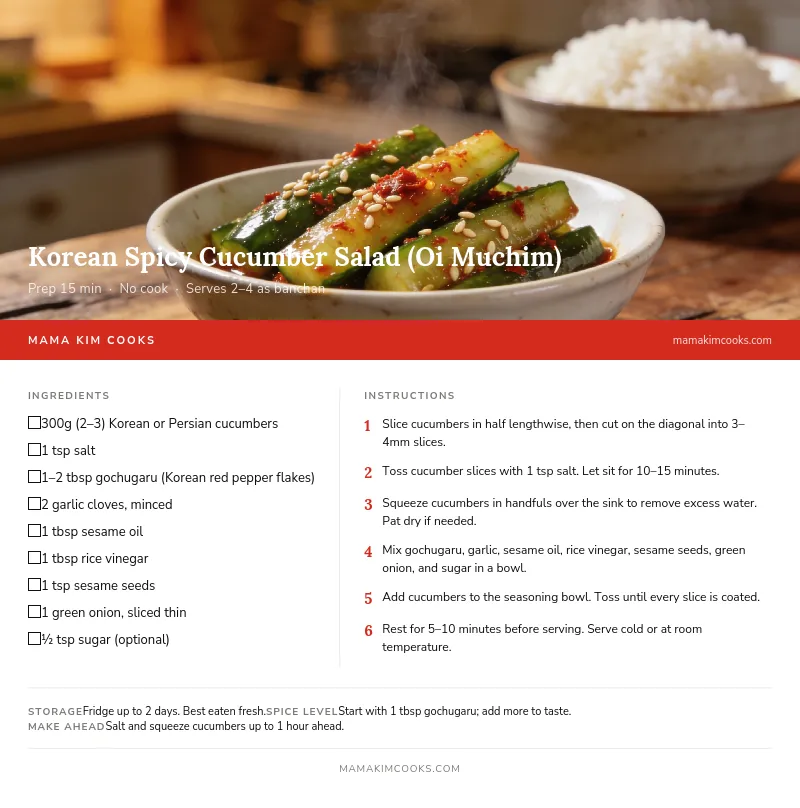
Recipe
Ingredients
- 2 to 3 small Korean or Persian cucumbers (about 300g)
- 1 tsp salt
- 1 to 2 tbsp gochugaru
- 2 garlic cloves, minced
- 1 tbsp sesame oil
- 1 tbsp rice vinegar
- 1 tsp sesame seeds
- 1 green onion, sliced thin
- ½ tsp sugar (optional)
Prep time: 15 minutes (including salting time)
Servings: 2 to 4 as banchan
Instructions
Slice the cucumbers in half lengthwise, then cut each half on the diagonal into thin slices, about 3 to 4mm thick.
Toss the cucumber slices with 1 teaspoon of salt in a bowl. Let sit for 10 to 15 minutes.
Squeeze the cucumbers in handfuls over the sink to remove excess water. Pat dry with a clean kitchen towel if needed.
In a separate bowl, mix the gochugaru, minced garlic, sesame oil, rice vinegar, sesame seeds, green onion, and sugar (if using).
Add the cucumbers to the seasoning bowl. Toss with your hands or a spoon until every slice is coated.
Let the salad rest for 5 to 10 minutes before serving. This gives the flavors time to settle into the cucumbers.
Serve cold or at room temperature.
Adjusting the heat level
Start with one tablespoon of gochugaru if you’re not sure about heat. That will give you a mild warmth with more sweetness than burn. Two tablespoons is moderate. Three tablespoons is properly spicy.
Good gochugaru should be bright red and slightly coarse, not fine like cayenne. It has a fruity, smoky flavor that doesn’t just taste like heat. If your gochugaru is dull brown or brick-colored, it’s old and won’t taste right.
Korean chili flakes are less sharp than other chili flakes. The heat builds slowly instead of hitting you all at once. You can always add more after tasting, but you can’t take it out once it’s in.
How long it keeps and when to serve it
Oi muchim is best within a few hours of making it. The cucumbers stay crispest in that window. You can keep it in the fridge for one to two days, but it will release more water as it sits and lose some of its crunch.
If you’re making it ahead, store the cucumbers and seasoning separately. Toss them together thirty minutes before you plan to serve.
This salad belongs on the table with grilled meats, bibimbap, rice bowls, or any meal that needs something cool and sharp to cut through richer flavors. It’s part of a banchan spread, not a standalone dish. Serve it in a small bowl alongside two or three other sides and let people take as much as they want.
The cucumbers will still taste good on day two, just wetter and softer. Pour off the liquid before serving if that happens.