If you’re asking is kimchi vegetarian, the answer is usually no.
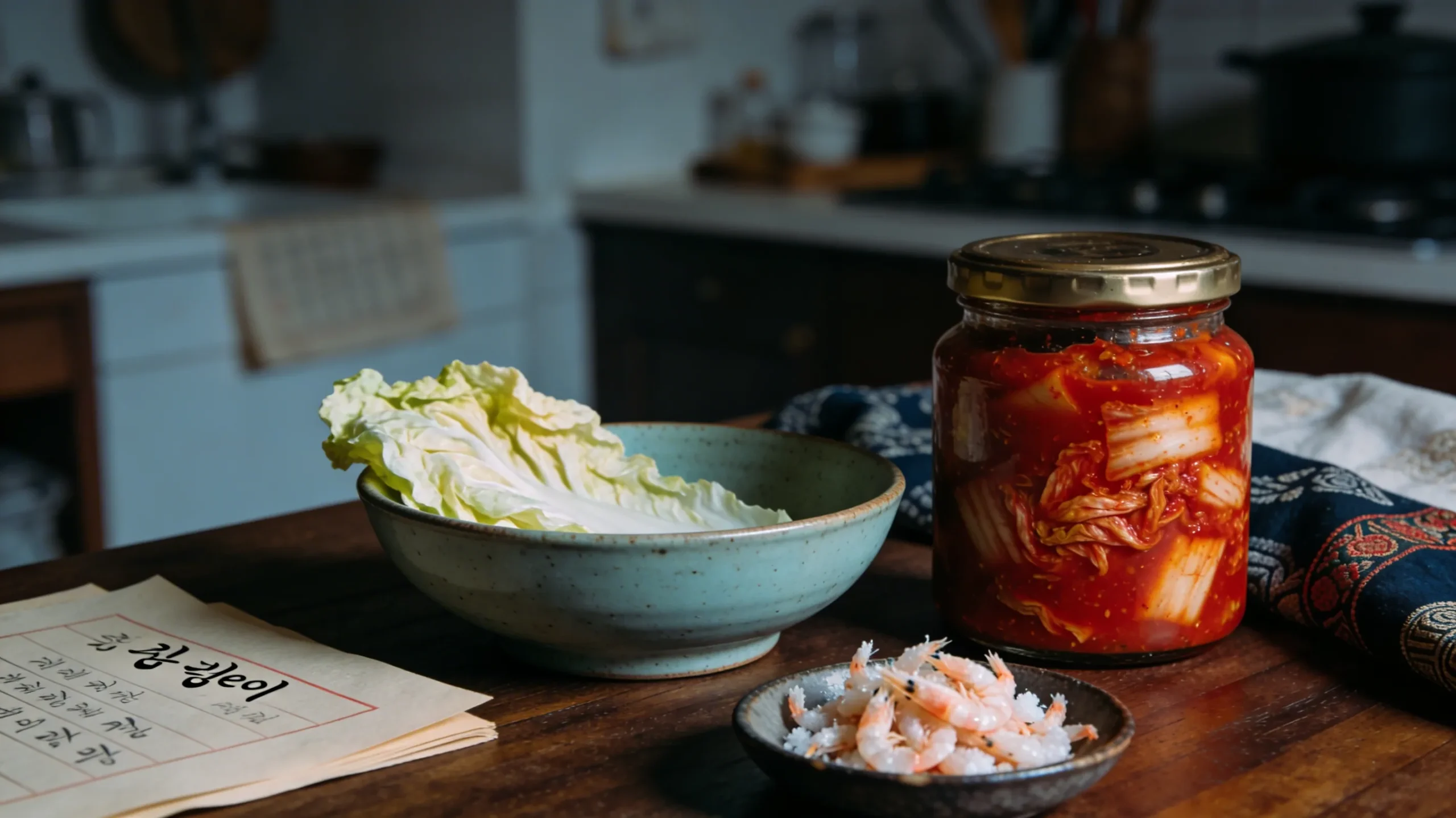
Traditional kimchi (even the white ones) contains jeotgal, a salted and fermented seafood ingredient used for seasoning and fermentation. Jeotgal can be made from anchovies, shrimp, oysters, or other shellfish. This means that even though kimchi looks like a simple fermented vegetable dish, it contains animal products.
What is jeotgal and why is it in kimchi?
Jeotgal (젓갈) is a category of salted seafood that has been fermented for weeks or months. The most common types you’ll find in kimchi are saeujeot (salted shrimp) and myeolchijeot (salted anchovies). Sometimes recipes call for aekjeot, which is the clear liquid extracted from fermented seafood.
Jeotgal does three things in kimchi.
First, it adds umami. It’s that deep, savoury flavour that makes kimchi taste complex rather than just spicy and sour.
Second, the salt content helps with fermentation and preservation. Third, the natural enzymes in the seafood encourage the fermentation process and contribute to the texture of the final product.
This is not a modern shortcut. Jeotgal has been part of Korean kimchi-making for centuries. It’s a core ingredient, not an optional add-in.
How to tell if kimchi contains seafood
If you’re shopping for kimchi and need to know whether it’s vegetarian, you need to read the ingredient list. Here’s what to look for:
Korean ingredient names to watch for:
새우젓 (saeujeot) — salted shrimp
멸치액젓 (myeolchi aekjeot) — anchovy fish sauce
까나리액젓 (kkanari aekjeot) — sand lance fish sauce
젓갈 (jeotgal) — general term for salted seafood
액젓 (aekjeot) — fish sauce or seafood extract
굴 (gul) — oyster
English ingredient names to watch for:
Salted shrimp
Anchovy sauce
Fish sauce
Seafood extract
Shrimp paste
Oyster
Some brands write “anchovy extract” or “fermented anchovy sauce” in English. Others only list the Korean name. If you see any of these, the kimchi is not vegetarian.
What about mu saengchae or white kimchi?
This is a common misconception. Baek kimchi (white kimchi) and mu saengchae (seasoned radish salad) look vegetarian because they don’t have gochugaru (red chili flakes). But most traditional versions still contain jeotgal for flavour and fermentation.
Mu saengchae in particular can be tricky. It’s often served as a light, crunchy side dish and doesn’t taste fishy at all. But check the ingredients because many recipes include a small amount of saeujeot or aekjeot to round out the sweetness and vinegar.
Vegetarian kimchi does exist
Vegetarian kimchi is made by replacing jeotgal with other sources of salt and umami. Common substitutions include:
Doenjang (fermented soybean paste) — adds umami and salt
Ganjang (soy sauce) — contributes saltiness and fermentation-friendly sodium
Kelp or dashima — used to make a vegetable-based broth for umami
Mushroom powder — adds savoury depth
Plain sea salt in higher quantities
These versions ferment just fine. They taste different from traditional kimchi — less funky, a bit cleaner — but they’re still sour, spicy, and fully fermented.
Where to buy vegetarian kimchi
Some Korean brands now make certified vegetarian or vegan kimchi. Look for labels that say “vegan” or “no seafood” in English. If you’re shopping at a Korean grocery store, ask staff to help you read the ingredient list.
Online options make it easier to filter by dietary needs. Many specialty kimchi companies in the U.S., U.K., and Australia offer vegan versions and clearly label them on their websites.
If you’re buying from a small batch maker at a farmers market or local shop, ask directly. Homemade kimchi recipes vary, and some cooks already make theirs without jeotgal.
Making your own vegetarian kimchi
If you can’t find store-bought vegetarian kimchi or want full control over the ingredients, making it at home is straightforward. Use a standard napa cabbage kimchi recipe and replace the jeotgal with one tablespoon of doenjang and two tablespoons of soy sauce per medium cabbage. Add a piece of dashima to the porridge base if you’re using one.
The fermentation process is identical. Salt the cabbage, rinse it, coat it in the seasoning paste, pack it into a jar, and let it sit at room temperature for one to five days depending on how sour you want it. Then move it to the fridge.
Your kimchi will ferment without seafood. The flavour will be less complex in the first few days, but after two weeks in the fridge, it develops its own character.
Does “no visible seafood” mean vegetarian?
No. Just because you don’t see chunks of shrimp or anchovy in the kimchi doesn’t mean it’s vegetarian. Jeotgal is usually finely minced or used as a liquid extract. It dissolves into the seasoning paste.
This trips up a lot of people who assume that if kimchi doesn’t look or smell fishy, it must be plant-based. The seafood is there, you just can’t see it.
A note on cross-contamination and strict dietary needs
If you’re vegetarian for religious, ethical, or allergy reasons, know that many Korean restaurants and home kitchens use the same tools and surfaces for all types of kimchi. If cross-contamination is a concern, ask whether the kimchi was made in a dedicated vegetarian space.
Some Buddhist temple kimchi (사찰 김치, sachal kimchi) is made without any animal products and also excludes garlic and onions. This is a safe option if you need certainty and can find it.
If you are Muslim, your main concern would be to check whether alcohol is used as an ingredient. Many store-bought kimchi products use alcohol-based seasonings.
Why this matters
Kimchi is served with almost every Korean meal. If you’re vegetarian and eating Korean food regularly, knowing which kimchi you can eat makes a real difference. It’s not about rejecting tradition, it’s about making informed choices that fit your needs.
Traditional kimchi tastes the way it does because of jeotgal. Vegetarian kimchi tastes different, and that’s fine. Both versions are real kimchi. One just happens to contain seafood, and the other doesn’t.
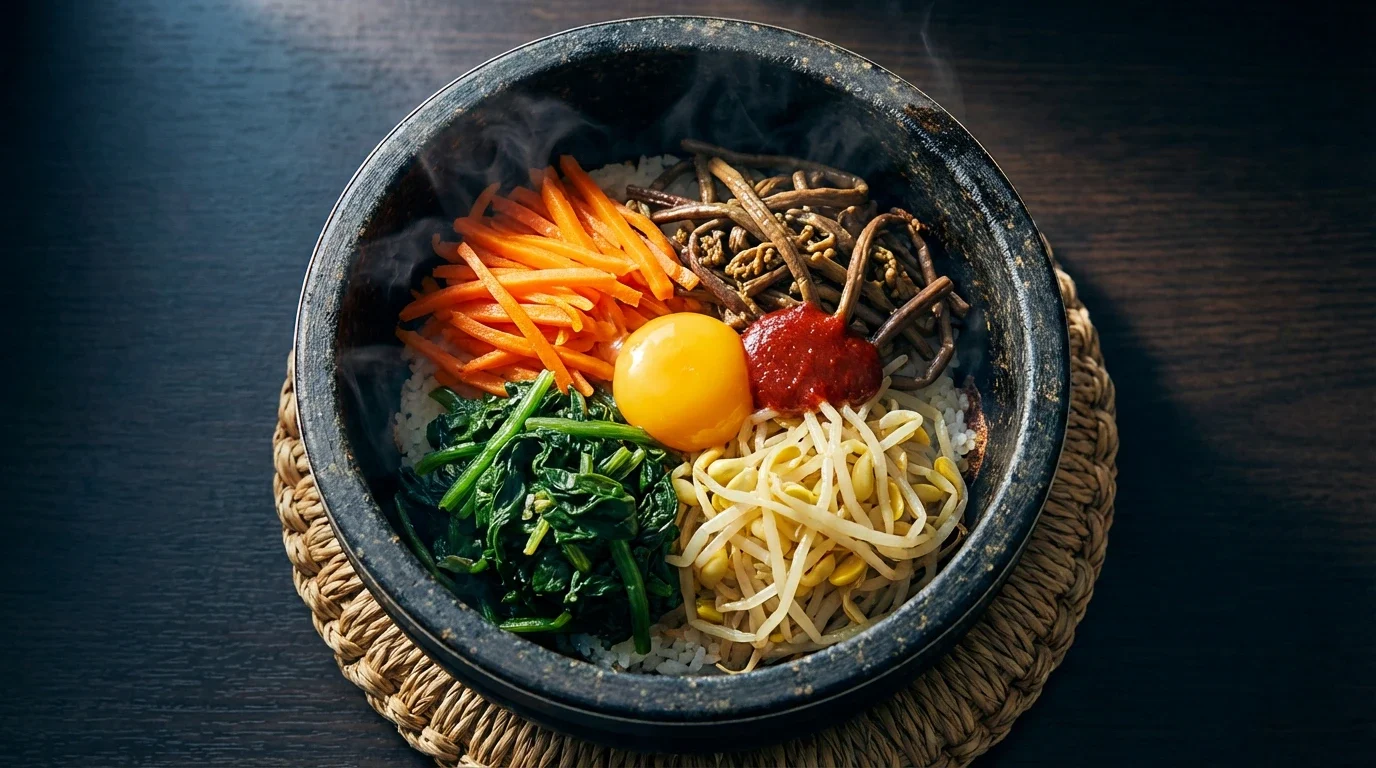
A proper bibimbap arrives at the table like a colour wheel. White rice in the centre, and around it: deep green spinach, pale bean sprouts, carrots, dark fernbrake, yellow strips of egg, and seasoned beef. A fried egg on top. A spoonful of red gochujang (Korean fermented chili paste) off to one side, waiting.
Then you wreck it.
You take your spoon and mix everything together until the white rice disappears under colour and sauce. That moment of mixing is the whole point. Korean food bibimbap is one of the most recognised dishes in the world, but it is also one of the most misunderstood. It is not a salad bowl. It is not a leftover fridge clean-out. It is a dish with a name that tells you exactly what to do: bibim means “mixed,” and bap means “rice.” Mix your rice. Eat.
This post covers what bibimbap actually is, what goes in it, the main versions you will encounter, regional differences, and how to start making it at home.
What Is Bibimbap? (The Short Answer)
Bibimbap (Korean mixed rice bowl) is a bowl of steamed white rice topped with individually prepared namul (Korean seasoned vegetable side dishes), sliced meat, a fried or raw egg, and gochujang. Everything is mixed together before eating. It is an everyday Korean dish, not a special-occasion food, and it appears on tables across Korea at lunch counters, home kitchens, and restaurants alike.
The Role of Bibimbap in Korean Food Culture
Bibimbap is often presented internationally as something exotic or elaborate. In Korea, it is closer to the opposite. It is ordinary. It is Tuesday lunch. It is what you eat when the fridge has three kinds of namul left over from yesterday’s dinner and a bit of rice. That ordinariness is precisely what makes it important.
The dish has roots that are difficult to pin to a single origin story. Some food historians trace it to the practice of mixing rice with banchan (Korean side dishes) on the eve of Lunar New Year, when families would use up leftovers before starting fresh. Others connect it to farmers eating mixed rice in the fields, where carrying separate dishes was impractical. A third origin theory links it to jesa (ancestral memorial rites), where offerings of rice, vegetables, and meat were combined and eaten after the ceremony.
None of these origins are definitively proven. What is clear is that the logic of bibimbap, combining rice with whatever prepared toppings are available, fits seamlessly into how Koreans already eat. A standard Korean meal is rice, soup, and several banchan. Bibimbap just puts the rice and banchan into the same bowl and adds gochujang. The leap is small.
What makes bibimbap different from simply dumping leftovers on rice is the care taken with each component. Every namul is prepared individually: blanched, seasoned, and dressed with sesame oil and garlic. The vegetables are cooked to their own ideal texture. The rice is freshly steamed. The gochujang ties it all together. The result is a single bowl where five or six distinct flavours and textures merge into something unified but still varied with every bite.
What Goes in Bibimbap
A standard bibimbap has five categories of topping on a base of steamed white rice. Whether you are ordering korean food bibimbap at a restaurant or making it yourself, the specifics vary by cook, season, and region, but the categories stay consistent.
Namul (seasoned vegetables): These are the core. A classic combination includes sigeumchi namul (seasoned spinach), kongnamul (soybean sprouts), gosari namul (seasoned fernbrake), julienned carrots, and julienned zucchini. Each is prepared separately. The spinach is blanched and dressed with sesame oil and garlic. The kongnamul is boiled until just tender. The gosari is rehydrated, sautéed, and seasoned with soy sauce. This individual preparation is what separates bibimbap from a stir-fry. The vegetables keep their own character even after mixing.
Meat: Thinly sliced beef, often prepared bulgogi-style (Korean marinated grilled beef) with soy sauce, sesame oil, garlic, and a touch of sugar. Minced beef seasoned the same way is also common. Some versions skip meat entirely.
Egg: A fried egg with a runny yolk is the standard. When you mix bibimbap, the yolk breaks and coats the rice. Some regional versions use a raw egg yolk instead.
Gochujang sauce: The red chili paste that binds the bowl. Sometimes served straight from the jar, sometimes mixed with sesame oil and a little sugar to make a smoother sauce. The amount is up to you. Start with a tablespoon and adjust.
Sesame oil: A drizzle of toasted sesame oil goes in just before mixing. It rounds out the flavour and gives the rice a nutty richness.
I have eaten bibimbap at a potluck where every friend brought one topping they wanted to add. We mixed it all together in a large bowl and ate while talking. It was chaotic, generous, and completely in the spirit of the dish. Bibimbap rewards that kind of informality.
Regular Bibimbap vs. Dolsot Bibimbap
There are two main ways bibimbap is served, and the difference matters.
Regular bibimbap comes in an ordinary bowl at room temperature (or slightly warm). The rice is soft throughout. This is the version you are most likely to make at home and the version served at most casual Korean restaurants. It is simple, quick, and satisfying.
Dolsot bibimbap (stone pot bibimbap with crispy rice) is served in a dolsot, a thick stone pot heated until screaming hot. The rice is pressed into the pot before the toppings go on, and as you eat, the bottom layer of rice crisps into a golden, crunchy crust called nurungji. The egg, if cracked raw onto the rice, cooks against the searing stone. The sizzle when the bowl arrives at the table is part of the experience.
The nurungji is the reason many people prefer dolsot bibimbap. That contrast between soft, saucy rice on top and shatteringly crisp rice at the bottom changes the dish completely. If you have only ever had regular bibimbap, the stone pot version is worth seeking out.
A word of caution: the pot stays dangerously hot for the entire meal. Use the spoon, not your fingers, and do not touch the rim.
Regional Variations: Jeonju and Beyond
Bibimbap is eaten everywhere in Korea, but the most famous regional version comes from Jeonju, a city in North Jeolla Province known as Korea’s food capital.
Jeonju bibimbap is more elaborate than the everyday version. The rice is cooked in beef bone broth instead of plain water, which gives it a savoury depth before any toppings go on. The number of namul increases, sometimes to over a dozen, including ingredients like bellflower root, crown daisy, and raw beef tartare (yukhoe). A raw egg yolk often replaces the fried egg. Pine nuts and ginkgo nuts appear as garnish. It is a composed, ceremonial version of what is otherwise a casual dish.
Other regional versions exist too. Tongyeong, on the southern coast, makes bibimbap with fresh seafood. Jinju bibimbap, from nearby Jinju, uses raw beef and a clear broth served alongside. In temple cuisine, bibimbap goes fully vegan, using only seasonal mountain vegetables and no alliums (garlic, onion, spring onion) per Buddhist dietary practice.
I once ate a vegan bibimbap served by an ahjumma in a small restaurant near a temple in Hwacheon. No meat, no egg. Just seasonal local vegetables from the surrounding mountains, each one prepared simply. It made everything else feel overworked. Sometimes the best bibimbap is the quietest one.
Common Misconceptions About Korean Food Bibimbap
“Bibimbap is a leftover dish.” Western food media often describes bibimbap as Korea’s way of using up fridge scraps. This framing misses the point. While bibimbap can use leftover namul, the dish is not defined by leftovers any more than a sandwich is defined by stale bread. Restaurants and home cooks regularly prepare bibimbap toppings from scratch. The dish has a specific structure and intention. Calling it a “leftover dish” reduces it to something accidental, when the reality is deliberate.
“You can put anything in bibimbap.” Technically you can, but traditional bibimbap follows a pattern: seasoned vegetables, protein, egg, and gochujang on rice. Not every bowl of rice with toppings is bibimbap. The preparation of each namul individually, the inclusion of gochujang, and the act of mixing are what make it bibimbap rather than just a rice bowl.
“Bibimbap is always spicy.” Gochujang has heat, but it is not a fire-alarm chili paste. The spice level depends entirely on how much you add. With a small amount of gochujang, bibimbap is mild and savoury. You control it. Many Korean children eat bibimbap with very little or no gochujang at all.
How to Make Bibimbap at Home
Bibimbap looks impressive but the actual cooking is straightforward. The key is to prepare each topping separately, arrange them on rice, and mix at the table.
Start with three or four namul. Spinach, soybean sprouts, and carrots are the easiest starting combination. Season each simply with sesame oil, a pinch of salt, and minced garlic. Cook your rice, fry an egg, and buy a jar of gochujang. That is a complete bibimbap.
The common mistake is trying to replicate a restaurant version with eight toppings on the first attempt. You will spend two hours preparing vegetables and burn out before the rice is done. Start small. Add one new namul each time you make it. Within a few rounds, you will have a version that looks and tastes like the real thing.
For dolsot bibimbap at home, you will need a stone pot (available at Korean grocery stores or online for around $25–40 USD). Heat it with a little sesame oil, press rice into the bottom, add toppings, and let it sit on medium heat for a few minutes until you hear the rice crackling. The nurungji forms on its own.
Frequently Asked Questions
What is bibimbap made of?
Bibimbap is made from steamed white rice topped with individually seasoned vegetables (namul), sliced or minced beef, a fried egg, and gochujang (Korean fermented chili paste). Common vegetables include spinach, soybean sprouts, fernbrake, carrots, and zucchini. Toasted sesame oil is added before mixing. The exact toppings vary by region, season, and personal preference, but the base structure of rice, vegetables, protein, egg, and gochujang stays consistent.
What does bibimbap taste like?
Bibimbap tastes savoury, slightly sweet, nutty, and mildly spicy. The gochujang gives it a warm chili heat balanced by fermented sweetness. The sesame oil adds nuttiness. Each vegetable brings its own flavour: earthy spinach, crunchy bean sprouts, chewy fernbrake. When mixed together, the flavours blend into something greater than any single component. The spice level depends on how much gochujang you add.
Is bibimbap healthy?
Bibimbap is generally a well-balanced meal. Korean food bibimbap contains complex carbohydrates from rice, fibre and vitamins from multiple vegetables, protein from beef and egg, and healthy fats from sesame oil. A typical serving runs between 500 and 700 calories depending on the amount of rice and meat. The vegetable-to-rice ratio is high compared to many rice dishes. Vegan and vegetarian versions, which skip the meat and egg, are lower in calories and still nutritionally complete.
Is bibimbap served hot or cold?
Regular bibimbap is served at room temperature or slightly warm. The rice is warm, and the vegetable toppings range from room temperature to slightly cool. Dolsot bibimbap is served very hot in a sizzling stone pot and stays hot throughout the meal. There is no cold version of bibimbap, though the related dish bibim naengmyeon (Korean cold buckwheat noodles) uses a similar mixing concept with cold noodles instead of rice.
What is dolsot bibimbap?
Dolsot bibimbap is bibimbap served in a dolsot, a thick, pre-heated stone pot. The intense heat of the pot crisps the bottom layer of rice into a golden crust called nurungji. The egg cooks against the side of the pot, and the dish stays sizzling hot as you eat. The crispy rice adds a texture that regular bibimbap does not have. Dolsot bibimbap is widely considered the superior version for its contrast between soft and crunchy rice.